Decorating styles: is cocooning really right for you?
Hello, Olivia here. Cocooning is for you if you’re looking for a comfortable, soft, and soothing interior without giving up your style or cluttering the room. To find out, notice what makes you feel good in your everyday life: soft lighting, natural materials, or an uncluttered space. In 2026, this desire to turn the home into a refuge is expressed through simple, personal choices. There’s no need to change everything: a few adjustments can already create a warm atmosphere.
What you can do now
- Replace a cool-toned bulb with a warm-toned one.
- Add a throw or a couple of cushions in different textures.
- Choose a soothing color for an accessory or a wall.
- Clear a surface to reduce visual clutter.
- Create a spot where you can read, relax, or have a cup of tea.
The best test is to make these changes gradually, then see whether you feel more inclined to settle into the room. For more ideas, explore these tips for authentic cocooning and these suggestions for softening a small space.
Is cocooning really right for you?
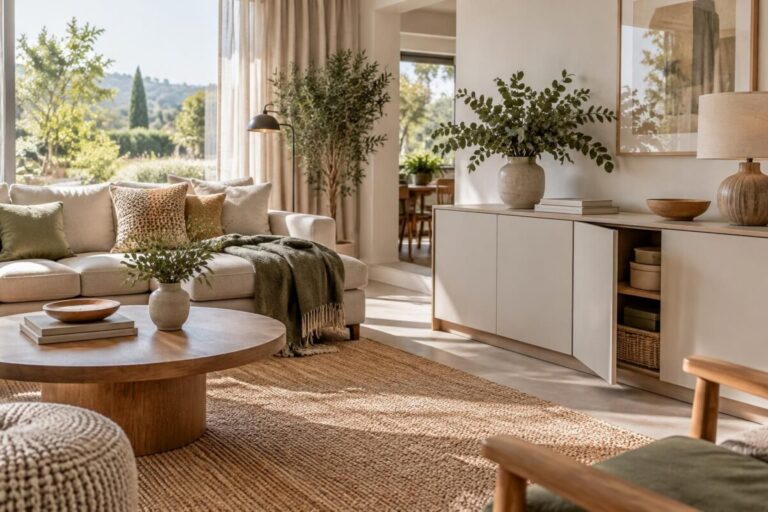
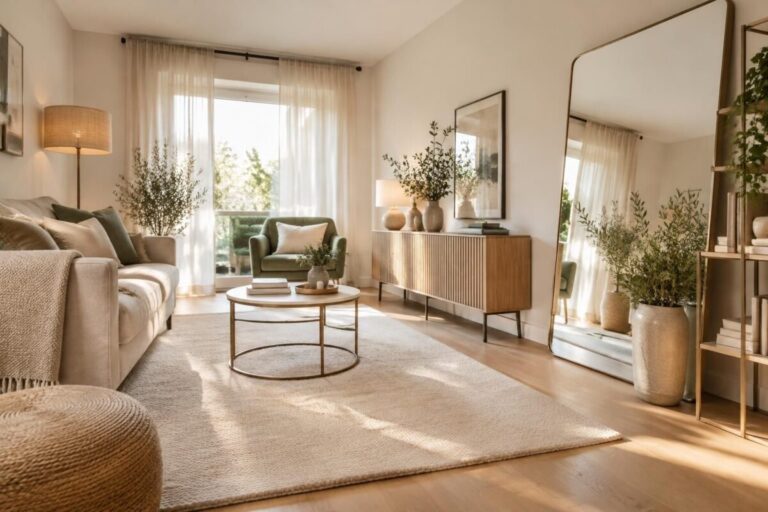
Cocooning isn’t a fixed decorating formula. It’s a way of prioritizing comfort, softness, and well-being at home. An interior can be minimalist, colorful, or modern and still feel welcoming, as long as the materials, lighting, and layout work for you.
Imagine Lina, who was hesitant to embrace this style because she didn’t like living rooms filled with throws. She simply added a soft rug, a low lamp, and a linen cushion: her living room became more welcoming without losing its streamlined look. “Comfort doesn’t have to be over the top.”
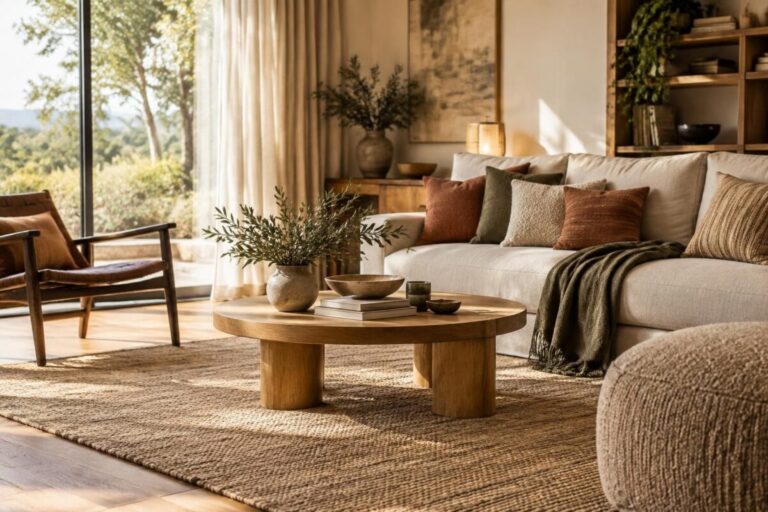
If you like rooms that feel neat and bright, keep accessories to a minimum and go for soothing colors. If you enjoy textures and cozy corners, layer a few soft textiles without adding too many objects.
Three key elements of a cocooning interior
| Key element | What to choose | What to avoid for a soothing room |
|---|---|---|
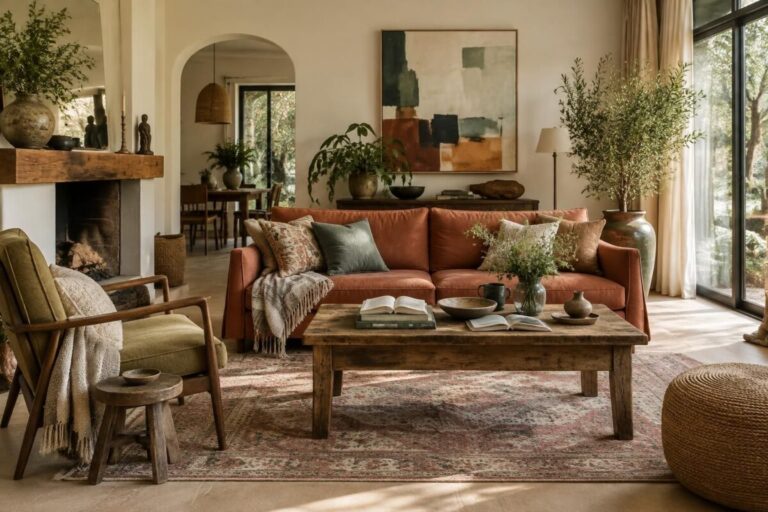
| Colors | Warm beige, terracotta, sage green, soft brown | Combining lots of very bold contrasts |
| Materials | Wool, linen, velvet, wood, and matte ceramics | Relying entirely on cold, shiny surfaces |
| Lighting | Several warm-toned lamps | A powerful ceiling light as the only source |
These are starting points, not strict rules. The best choice is the one that suits your lifestyle and the way you use your living room.
Three steps to try a cocooning atmosphere
- Step 1: Identify what bothers you about the room: lighting that’s too bright and cool, a lack of comfort, or cluttered surfaces.
- Step 2: Choose one thing to improve. Try a lamp, a rug, or natural materials before buying several accessories.
- Step 3: Spend a few days in the room, then make adjustments. Keep what helps you slow down and remove anything that feels unnecessary.
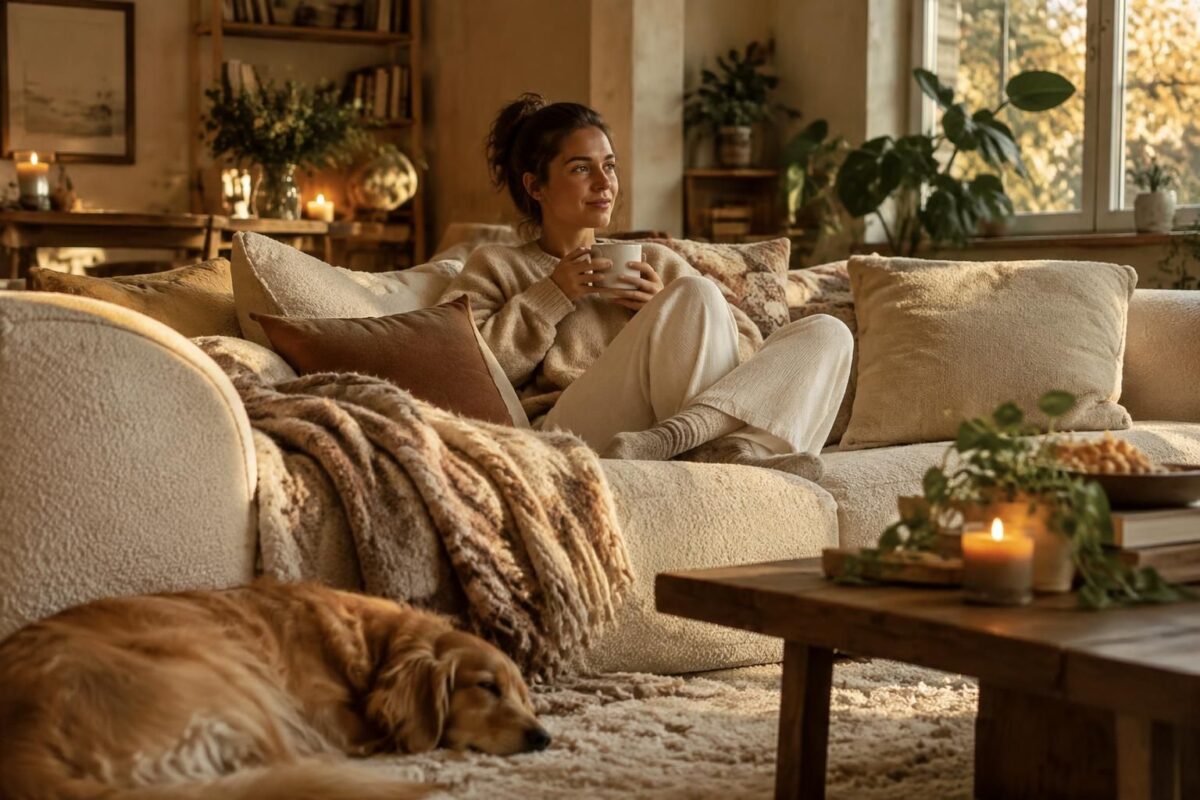
If you prefer a streamlined interior, embrace cocooning in small touches, with soft lighting and a pleasant texture. If you love enveloping atmospheres, combine several textiles with a warm palette, while leaving some space clear.
Lighting and materials set the tone
Three light sources placed at different heights are often enough to make a living room feel more vibrant: a floor lamp, a table lamp, and a small accent light. A bulb rated around 2,700 to 3,000 K generally gives off a warm glow, depending on the model and the room.
Complement them with natural materials such as wood, rattan, or linen. A wool throw draped over a sofa and a basket to store it in add a sense of softness without making the living room feel cluttered.
A personal touch can also make the room feel more welcoming: a few books, a plant, or a photo you love. The goal isn’t to recreate a showroom display, but to create a warm atmosphere that supports your well-being at home.
Frequently asked questions about cocooning style
Is cocooning suitable for a small living room?
Yes. Choose a few pieces of furniture, a rug that suits the room, and several small light sources. Soft textures are enough to add comfort without creating clutter.
Do you need to use dark colors?
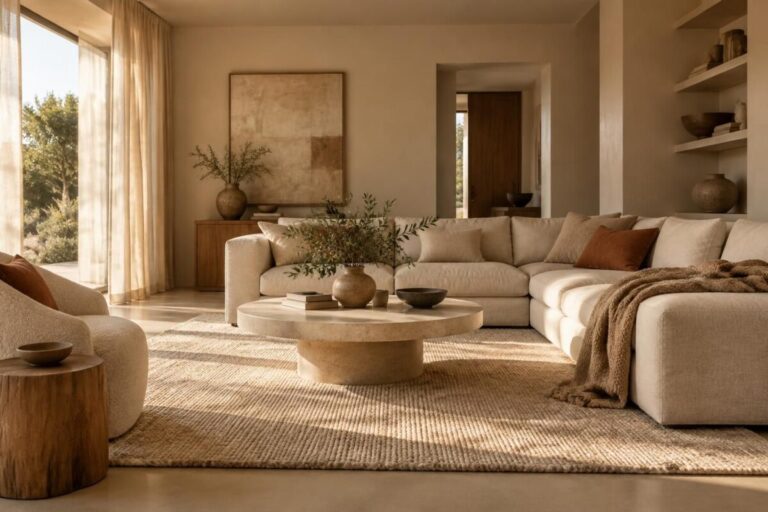
No. Cream, beige, and caramel tones can create an enveloping atmosphere. Dark shades are an option, not a requirement.
What is the least expensive change to make?
Rearranging the furniture, adding a throw you already own, or replacing a cool-toned bulb are simple, inexpensive changes.
How can you avoid an overly cluttered living room?
Keep the objects you truly use or love, and vary the textures rather than accumulating accessories. Open space also contributes to comfort.
Thank you for your interest; Olivia. P.S. I’d be delighted if you left me a comment at the end of the article.