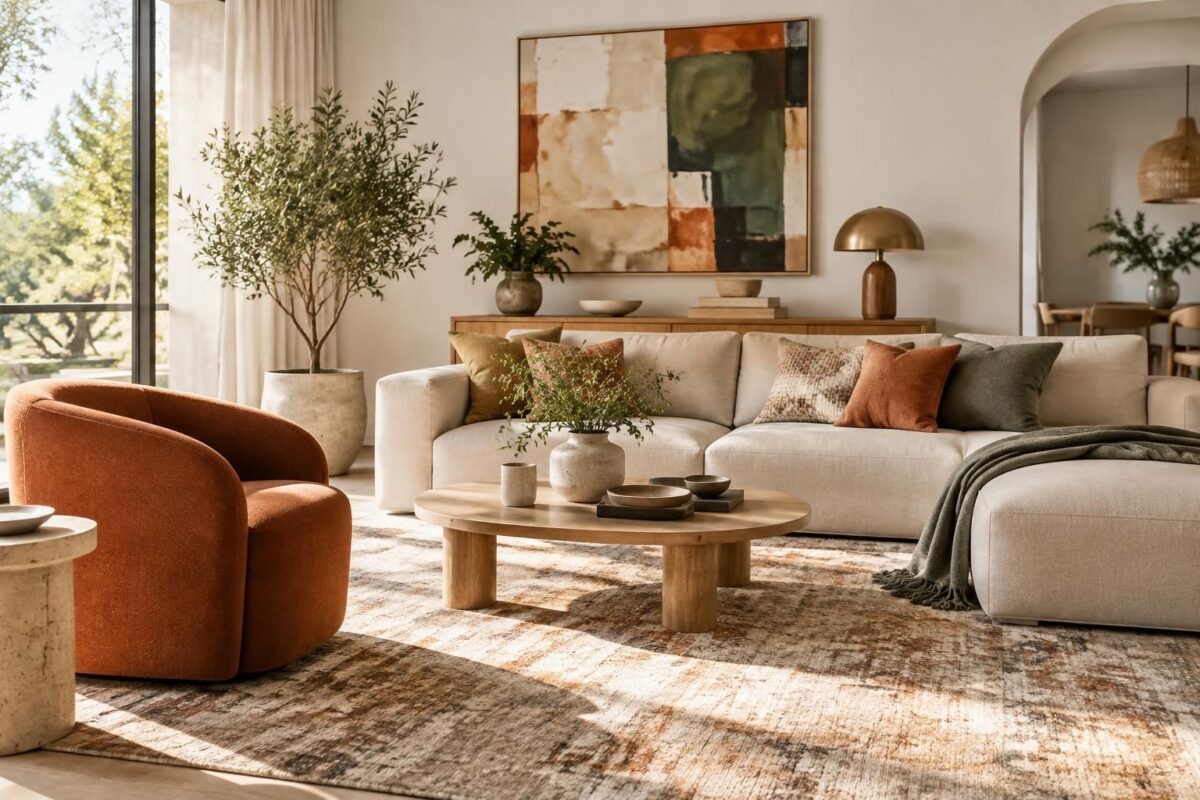
Interiors: what to change when everything feels neutral
Hello, it’s Olivia. To bring a neutral interior to life, add a bold color, varied textures, and warmer lighting without replacing everything. Start with just one room and choose a change that draws the eye. A cushion, rug, or lamp can already change the mood. The idea is to create depth, not fill every corner.
What you can do now
- Choose an accent color you like: deep green, terracotta, or midnight blue.
- Add a different material, such as linen, wood, or wool.
- Replace a white light bulb with a warmer one.
- Display an object that reflects who you are instead of adding lots of accessories.
- Move a piece of furniture to create a focal point in the room.
To narrow down the style that speaks to you, explore these ideas for choosing your decor and also identify what’s missing from a room.
Warm up a neutral interior with colors and textures
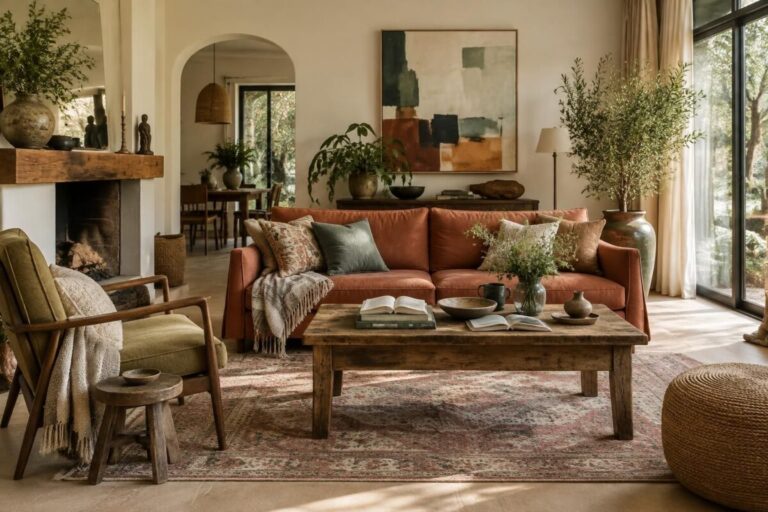
Beige and white make an easy-to-live-with base, but they can feel flat if everything has the same intensity. Add one or two accent colors to elements that are easy to change: cushions, a throw, a vase, or a print.
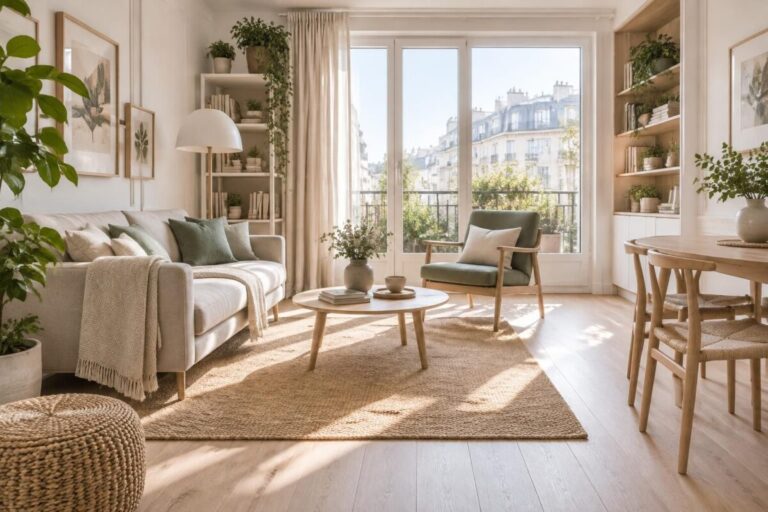
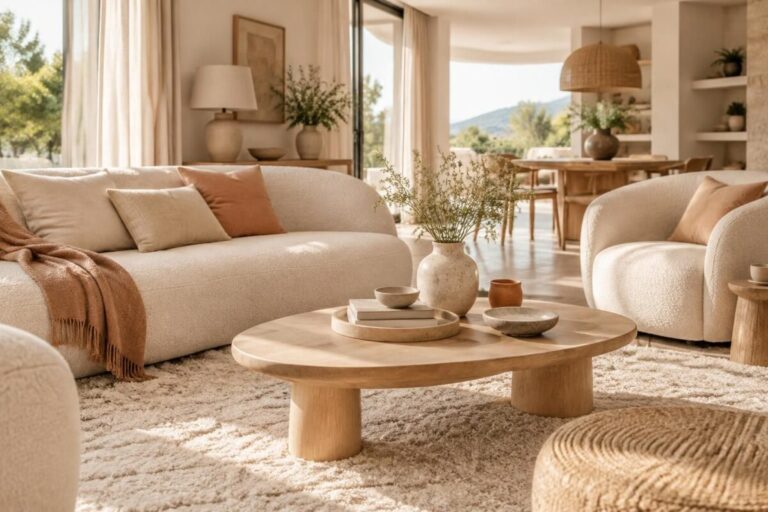
Textures add depth without requiring a new color palette. For example, pair a wool rug with linen curtains and a wooden table. These materials make the whole space feel more lively, even if the colors remain subtle.
A quote sums up the idea nicely: “Contrast gives softness a sense of rhythm.” A dark detail against a light wall, or a matte ceramic piece on a smooth shelf, is often enough to create that movement.
Play with lighting and contrast
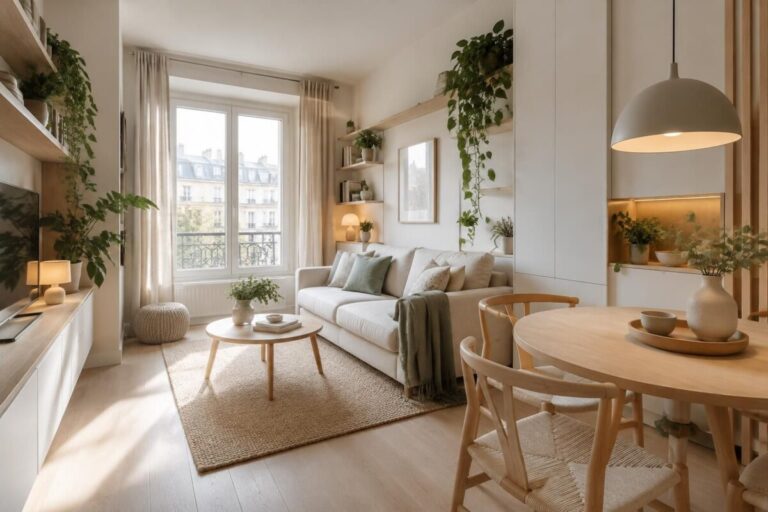
A single ceiling light can sometimes flatten the room. Instead, try several light sources: a lamp beside the sofa, a small accent light on a shelf, and soft ambient lighting. Depending on the size of the room and the light fixtures, two or three points of light are often enough.
Contrast can also come from shapes: a round mirror above a straight-edged piece of furniture, or a cozy armchair in a room with simple lines. Lighting and shapes work together to create a less uniform atmosphere.
Choose the right change for each room
If the living room feels cold, start with a rug, colorful cushions, and an accent lamp. If the bedroom feels impersonal, change the bedding and add an upholstered or wooden headboard.
A friend had a living room that was almost entirely white. By adding a rust-colored throw, a paper lamp, and a plant by the window, she made the room feel more welcoming without changing the furniture.
Plants add a natural shape and a touch of color. For a room with little natural light, choose a variety suited to the spot rather than adding lots of pots.
Compare your options before changing the furniture
| What feels neutral | Simple change | Intended effect |
|---|---|---|
| Very light walls and sofa | Colorful cushions or artwork | Create a focal point |
| Room feels cold in the evening | Accent lamp with warm light | Create a soft atmosphere |
| Smooth, uniform decor | Textured rug, curtains, or basket | Add depth |
| Shelf without character | Personal object and plant | Make it more personal |
Don’t replace all the furniture at once. Keeping the main pieces and refreshing a few details helps you stay within budget and quickly see what works.
A three-step method for personalizing your decor
- Step 1: Observe the room at different times of day. Identify the dullest area and the light it’s missing.
- Step 2: Choose a color, a texture, and an object to highlight. Stick to these three elements to keep your direction clear.
- Step 3: Add the changes, then remove anything that feels excessive. Patterns can complement the overall look, but one eye-catching pattern is often enough.
This method helps you avoid impulse purchases and leaves room for personalization. A harmonious interior doesn’t need to be perfectly coordinated: above all, it should reflect who you are.
Practical questions about bringing neutral decor to life
What color should you add to a neutral interior?
Choose a color you like that goes with the elements already in the room. Deep green, terracotta, and midnight blue often work well as accents.
How can you warm up a room without repainting?
Add textiles, a lamp with warm light, wood, or a plant. These changes add depth without altering the walls.
Do you need to change the furniture to add character?
Not necessarily. Moving a piece of furniture, adding a rug, or highlighting a personal object may be enough to change how the room feels.
How can you add patterns without making the decor feel cluttered?
Start with a single patterned item, such as a cushion or rug. Keep the other accessories more understated to maintain balance.
Thank you for your interest; Olivia P.S., I’d be delighted if you left me a comment at the end of the article.