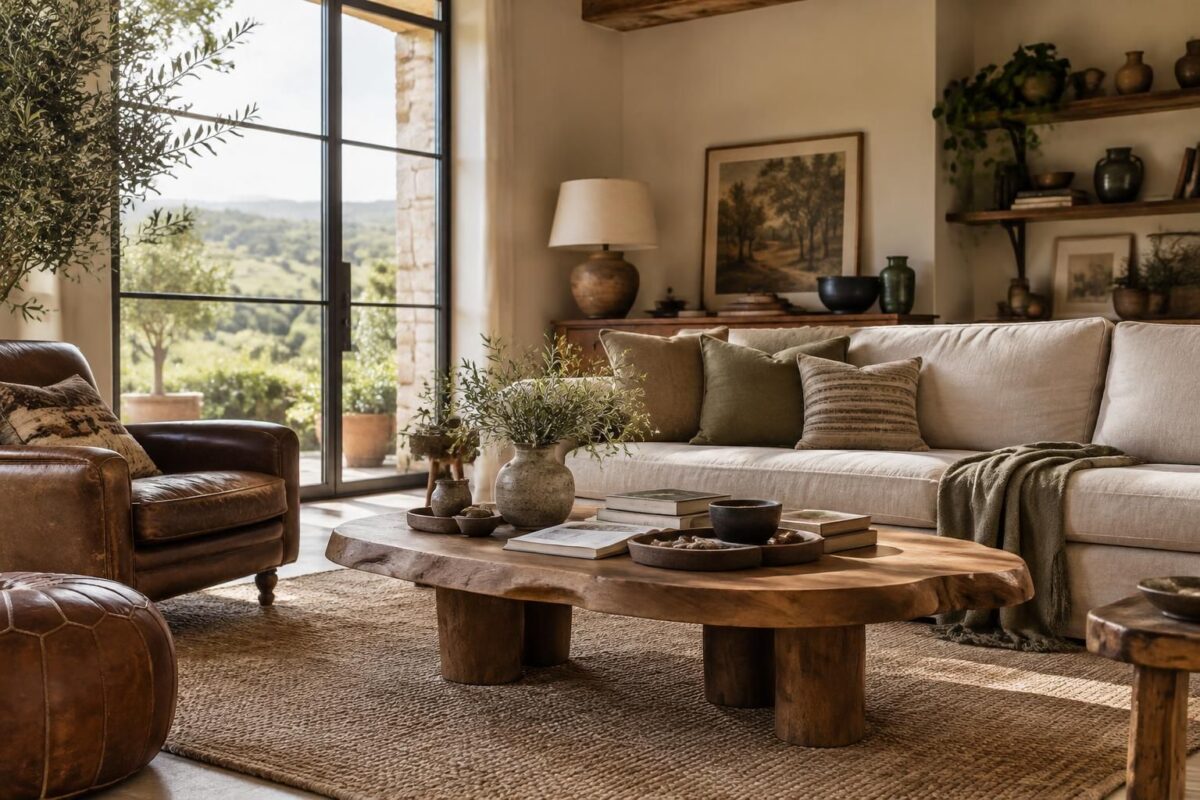
Decorating styles: which choice avoids the showroom look?
Hello, Olivia here. The way to avoid the catalog look is to create an interior guided by your lifestyle, with a few distinctive pieces and a cohesive foundation. Rather than recreating a look you see everywhere, take a look at the light, the proportions and your habits before you buy. The right thread combines comfort, personal memories and choices that can evolve.
What you can do now
- Observe the light and the pathways in each room before moving or buying furniture.
- Choose a simple palette: one dominant color, a secondary shade and a brighter accent.
- Identify one statement piece, such as an antique armchair, a work of art or a bookcase, then give it room to breathe.
- Add natural materials and objects with a story rather than matching accessories bought as a set.
- Save decorative purchases for last: your interior doesn’t need to be finished in a day.
To find a balance between what you want and a cohesive overall look, you can explore ideas for mixing several decor styles and tips on how to choose when you like several different looks.
A decor that looks as if it came straight from a catalog often results from an overly coordinated set of pieces: the same finishes, the same shapes, the same accessories. By contrast, mixing styles adds depth when it’s guided by a clear intention. “A home comes together like a story: every object should have its place.”
Create a personal decor style without overcrowding the room
Start with what you actually do at home. If you read in the evenings, plan for soft lighting and a place to store your books. If you often have guests over, leave space around the table. Personalization works best when it supports the way you live rather than getting in the way.
A story often says more than a rule: after moving in, Léa had bought a matching living room set. A few months later, she replaced a standard table with a small secondhand one she’d inherited from her aunt; the room immediately felt more personal.
Pair different pieces using well-balanced contrasts
A contemporary sofa can work beautifully alongside vintage furniture, as long as you create a few visual links. Repeating a color in a cushion, a frame or a vase is often enough to connect furniture from different eras. Secondhand finds and handcrafted pieces bring a distinctive quality that’s hard to achieve with a complete matching set.
Let textures interact too: wood, linen, ceramic, metal or stone. Natural materials easily warm up a room, while smoother surfaces add contrast. To avoid visual clutter, limit the main colors and repeat a few materials in different places.
Create harmony without copying a ready-made look
Color harmony doesn’t mean that everything has to match. Choose a base you like, then add an accent color to a few elements. Well-balanced contrasts—a dark chair around a light table, for example—add character without weighing down the space.
Choose one focal point per room: a work of art, a fireplace, a statement piece of furniture or a beautiful window. Leave quieter areas around it. Empty space isn’t an oversight; it lets your chosen objects stand out and helps the room breathe.
If you live in a small home, opt for appropriately scaled furniture and well-integrated storage. If your tastes are very different from those of the other person you live with, start with the feelings you both want to create—calm, light or a welcoming atmosphere—rather than insisting on a particular style label.
Follow the right order to create decor that can evolve
Decor that can evolve is built from the most durable elements to the easiest ones to change. Take time to live in your home before making major decisions: the light and your storage needs often become clear as the days go by. Built-in elements can make the most of an awkward corner, while modular furniture can more easily adapt to changing needs.
- Step 1: Observe the proportions, light and how you move around for a few weeks. Note what you really need before choosing a piece of furniture.
- Step 2: Decide on the lasting elements, such as base colors, storage and key furniture pieces. Check their dimensions and purpose.
- Step 3: Add textiles, lighting and personal objects. Move them around if needed before deciding they’ve found their place.
For a permanent constraint, such as a sloped ceiling or a narrow hallway, custom storage may be a good option. For a child’s bedroom or a home office corner that may need to change, modular furniture often offers more flexibility. The key is to choose based on your situation, not according to a single decorating rule.
| Decor choice | Benefit | Things to consider |
|---|---|---|
| Custom furniture | Makes the most of a difficult space and gives the room structure | It’s less easy to move or modify |
| Modular furniture | Adapts to changes in use and layout | Check that it suits the dimensions of your home |
| Secondhand and handcrafted objects | Add character and personal memories | A few carefully chosen pieces are enough |
Simple guidelines to avoid the catalog look
Before each purchase, ask yourself whether the object meets a need, works with your palette or says something about you. If it does none of these things, it may add visual noise. Plants, books and travel souvenirs can bring a room to life, as long as you don’t fill every surface.
A personal interior doesn’t need to be spectacular or adhere to a specific style. It feels more cohesive when the furniture, colors and objects support the same way of life. A few thoughtful choices will often have more impact than a pile of new things.
Frequently asked questions about decor styles and the catalog look
How can you mix several decor styles without creating a messy look?
Choose a common foundation, such as a color palette or a recurring material. Then add a few pieces in different styles and leave space around the statement pieces.
Do you need to follow a trend to personalize your interior?
No. Trends can inspire a color or a texture, but your lifestyle, habits and personal memories offer a more lasting thread.
What objects can help you avoid an impersonal look?
Carefully chosen secondhand finds, handcrafted pieces, books or souvenirs add character. It’s better to select a few than to multiply accessories.
How can you make decor easier to change over time?
Keep the most visible and expensive elements relatively timeless, then change the atmosphere with textiles, lighting and small accessories. Modular furniture can also adapt to changing needs.
Thank you for your interest; Olivia. P.S. I’d be delighted if you left me a comment at the end of the article.