Colors & materials: which textures bring a room to life
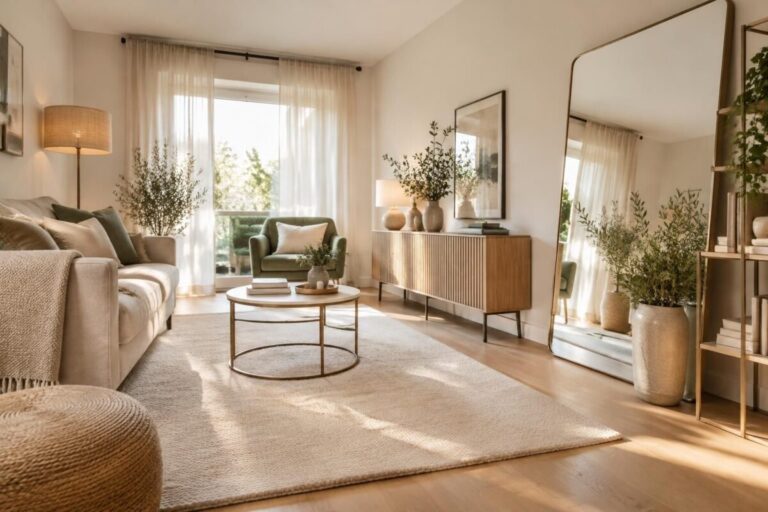
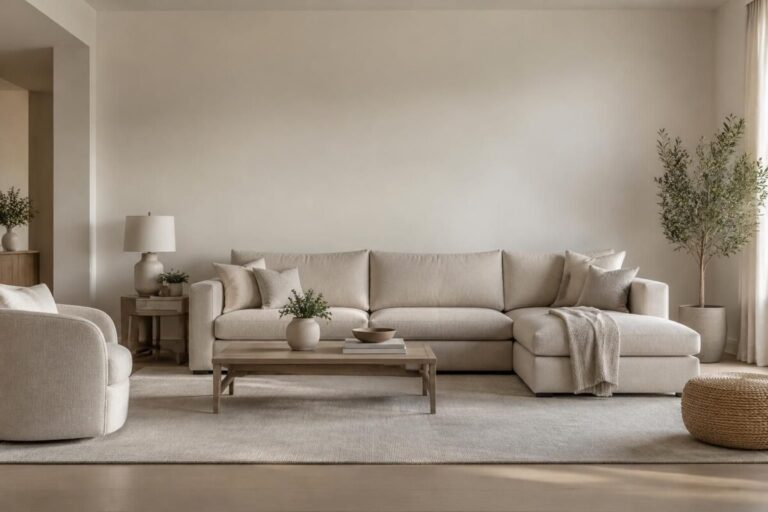
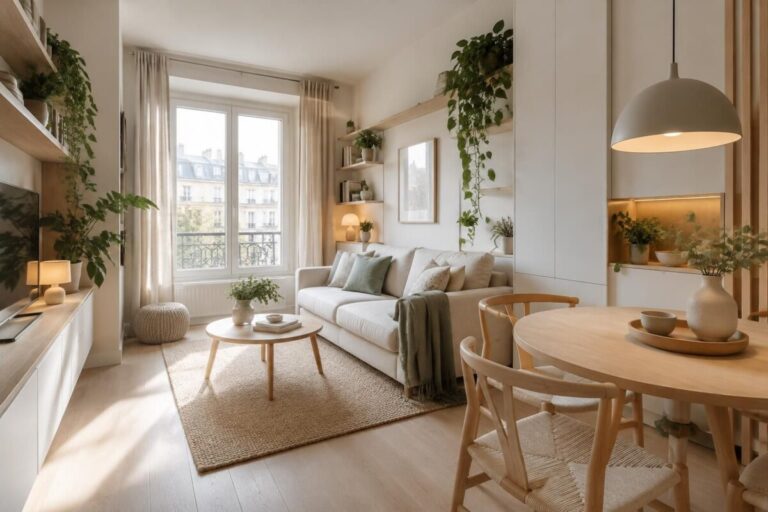
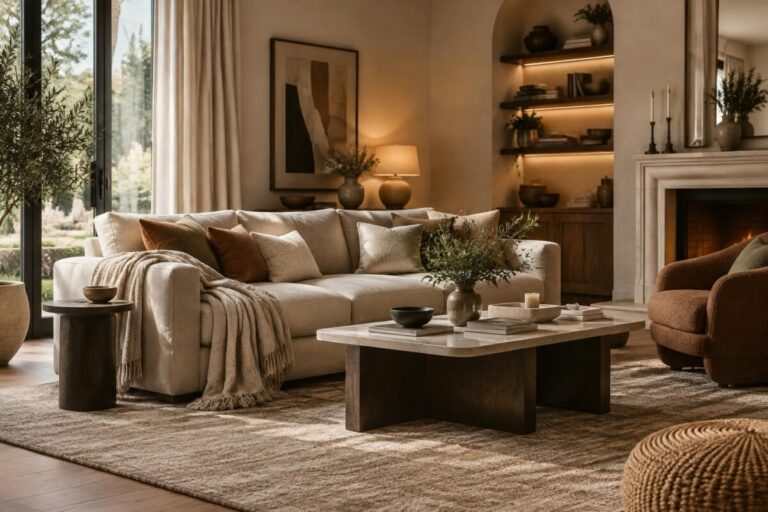
Hello, Olivia here. Contrasts between natural textures, soft textiles, and smooth surfaces add depth and life to a room.
A cohesive palette lets you mix materials without creating a cluttered look. A few well-chosen contrasts are enough to add character, even in a small space.
Do this right away
- Choose a base of three to five colors, such as beige, ivory, and brown.
- Pair a soft material, such as velvet, with a rougher surface.
- Add a natural element: warm wood, rattan, or wool.
- Make one piece of furniture or a wall the room’s focal point.
- Limit bold patterns and let solid surfaces breathe.
To create balanced combinations, check out these tips for avoiding an impersonal living room and these ideas for blending objects into your decor.
Contrasting materials: the secret to a lively room
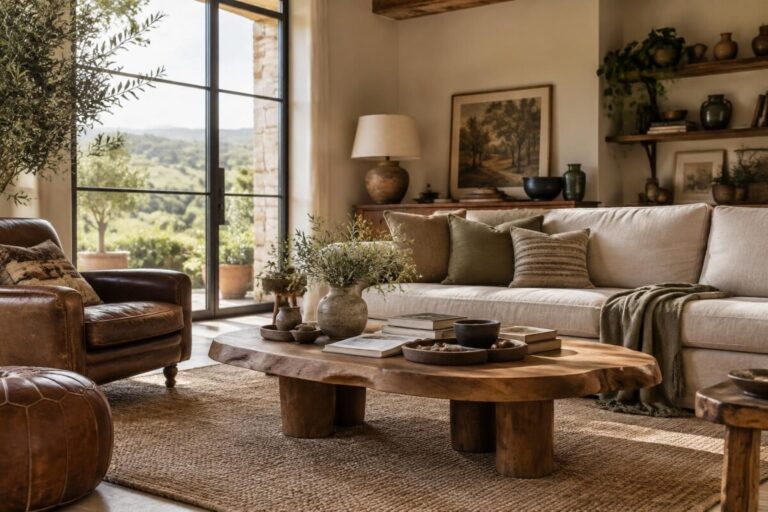
An interior with entirely smooth surfaces can feel cold. By contrast, a jute rug beneath a velvet sofa creates an immediate tactile contrast, while a rough-hewn wooden table warms up a matte wall.
The mix works best when one material dominates and the others complement it. In a living room, wood and textiles can form the foundation, with a few touches of metal or glass to lighten the overall look.
Different materials, one harmonious look
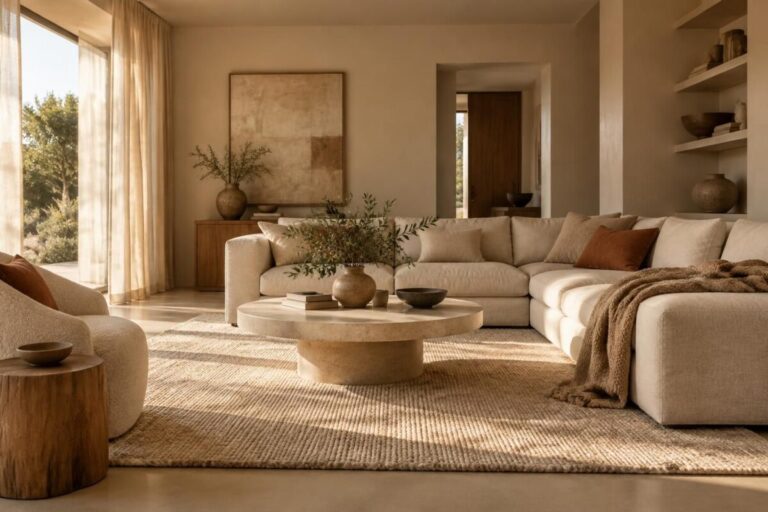
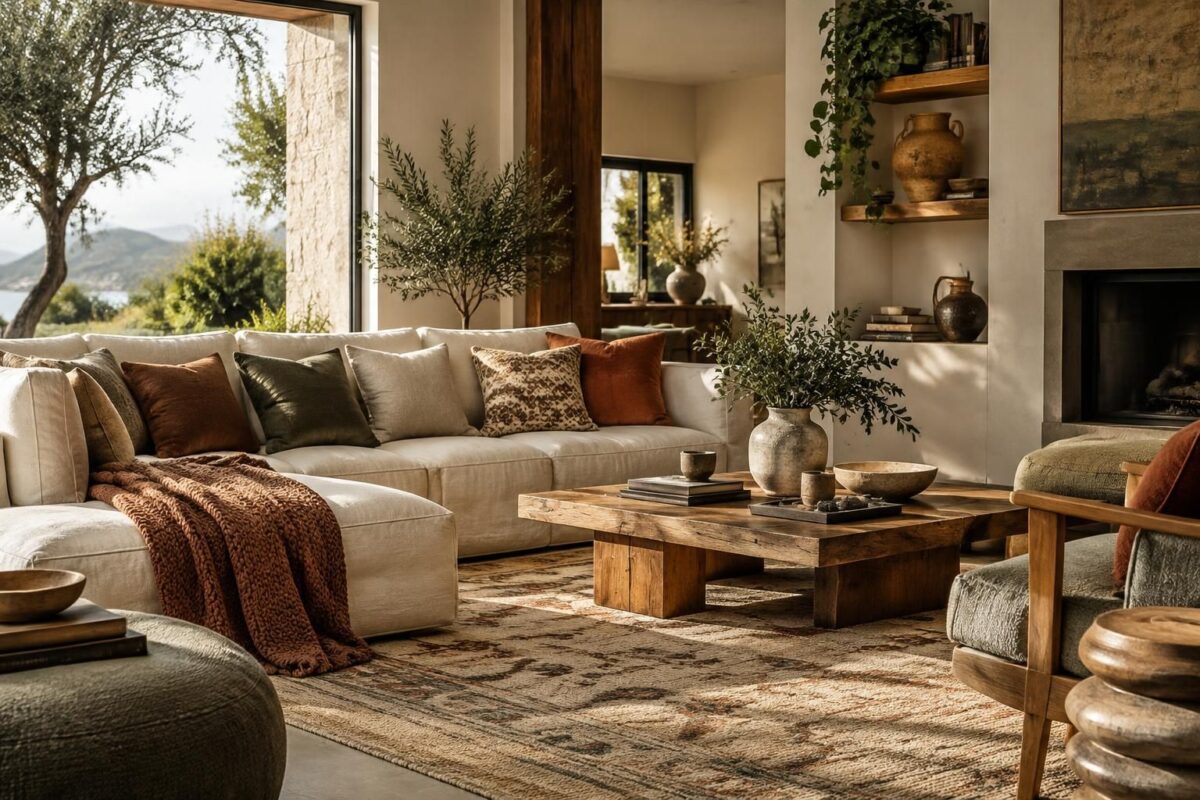
A palette of earthy tones easily ties together a variety of surfaces. For a more energetic look, add one or two vibrant colors on a cushion, vase, or handcrafted ceramic piece, rather than scattering accents everywhere.
Textured linen and bouclé fabrics soften a room, while stone or metal give it a more defined structure. To explore combinations further, check out this guide to mixing materials in interior design and these tips for coordinating colors and materials.
| Material | Effect in the room | Easy pairing |
|---|---|---|
| Rough-hewn wood | Warmth and authenticity | Linen, black metal, or ceramics |
| Velvet | Depth and softness | Jute, light wood, or cotton |
| Rattan | Lightness and a natural feel | Wool, linen, or glass |
| Metal and glass | Reflections and modern lines | Warm wood and soft textiles |
Layering textures without overwhelming the space
Layering creates a sense of comfort, as long as you keep a unifying thread. On a bed, a cotton sheet, a knitted blanket, and two cushions with distinct textures are often enough to create a welcoming look.
In a small room, accessories make a particularly big difference: a rattan basket, a wool throw, or a textured linen curtain adds depth without taking up much space. However, avoid piling several bold patterns into the same field of view.
A focal point to guide the eye
A distinctive armchair, a brick wall, or a rough-hewn wooden bookcase can become the anchor of the decor. Then repeat one color or material from that feature in two or three accessories to create a subtle connection.
This approach also helps you mix old and modern. A vintage dresser paired with a contemporary mirror tells a story, especially when the colors and finishes complement each other.
Three steps to create a cohesive mix
Before buying new accessories, take a look at what’s already there. A room can gain depth with a few targeted adjustments rather than a complete makeover.
- Set your palette. Choose three to five shades, then identify those already present in the furniture and walls.
- Choose your textures. Combine a natural material, a soft textile, and a smooth or glossy surface. Start with three textures, then add another if the overall look still feels clear.
- Test and adjust. Arrange the pieces, observe them in daylight, and remove anything that draws too much attention. The right balance lets each material shine.
A common mistake is to use too many bold patterns and finishes. If the decor feels cluttered, replace a pattern with a solid surface or repeat a material that’s already present to restore balance.
How do you choose textures for each room?
In a living room, a textured rug and cushions add comfort without changing the layout. In a bathroom, a woven basket and a fabric shower curtain create a warmer feel, as long as you choose items suited to humid conditions.
In a kitchen, handcrafted ceramics can become a visual accent on a backsplash or shelf. The key is to keep one material dominant and reserve the most pronounced textures for a few carefully chosen areas.
How many textures should you combine in a room?
Start with three complementary textures. You can use up to four or five if the palette remains cohesive and the patterns don’t compete for attention.
Which materials should you choose for a warm atmosphere?
Wood, linen, wool, and rattan create a natural and welcoming feel. Velvet and bouclé fabrics add visual and tactile softness.
How can you avoid decor that feels too cluttered?
Limit bold patterns, keep some surfaces plain, and choose a focal point. A limited palette also helps tie the materials together.
Can you mix antique furniture with modern pieces?
Yes. A shared palette or a repeated material, such as wood or metal, creates a link between different eras and makes the mix feel more harmonious.
Thanks for reading! If this topic resonates with you, share your experience in the comments. — Olivia