Colors & Materials: How to Mix Wood and Textiles
Hi, it’s Olivia.
To mix wood and textiles, pair a dominant wood species with fabrics in similar tones, then add a soft contrast to create depth.
This combination makes a room feel warmer without overwhelming it. The secret lies in balancing colors, textures, and proportions.
Try this now
- Choose a primary wood species: light oak, walnut, or pine, for example.
- Limit your palette to three shades to maintain color harmony.
- Start with a large textile piece, such as a rug or curtains.
- Mix textures: linen and cotton for a light feel, velvet for a cozier touch.
- Repeat one color twice, in a cushion and a decorative object, to create a unifying thread.
To refine your palette, explore these ideas for mixing wood and colors, then find out how to pair wood with soft materials.
Wood and textiles: finding the right balance
Wood makes a strong visual statement, while textiles soften its lines and bring a sense of comfort. For a cohesive interior, let their shades complement each other rather than trying to match everything exactly.
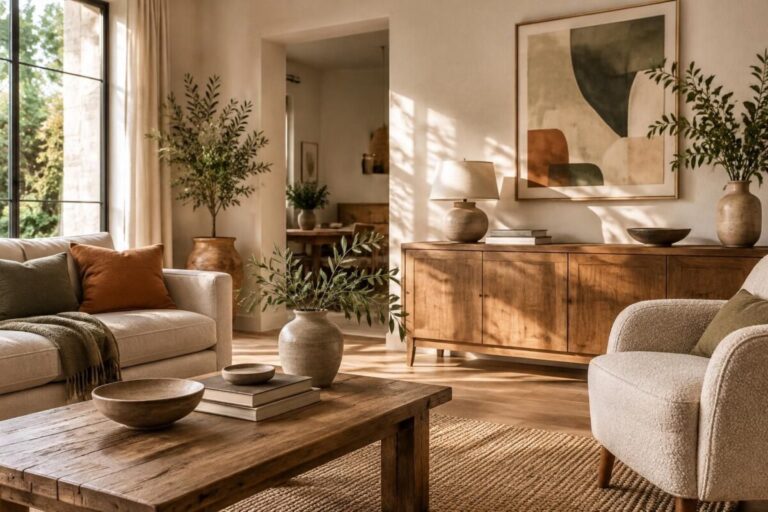
Light wood pairs easily with linen, cotton, and sandy tones. A darker wood species feels lighter with pale fabrics, while a few carefully chosen contrasts keep the result from looking too uniform.
Compare materials to suit the mood you want
| Wood | Suitable textiles | Effect |
|---|---|---|
| Light oak | Linen, off-white cotton | Bright, natural feel |
| Walnut | Velvet, cream cotton | Warm, elegant decor |
| Blond pine | Washed linen, fine wool | Soft, relaxed feel |
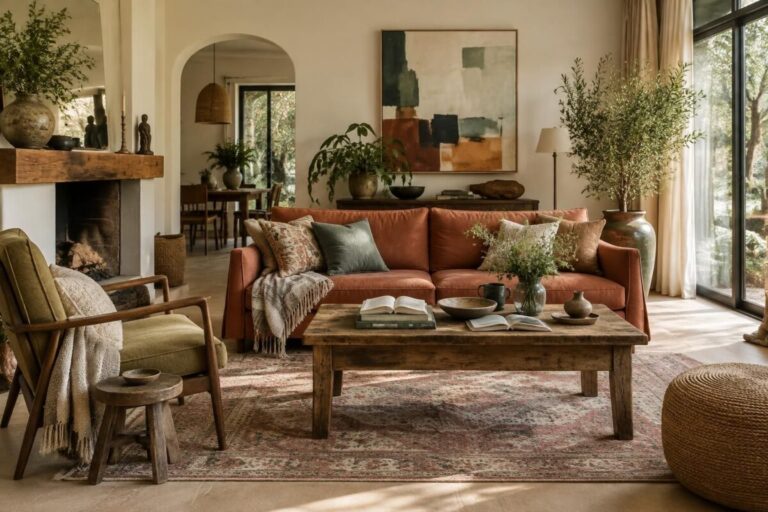
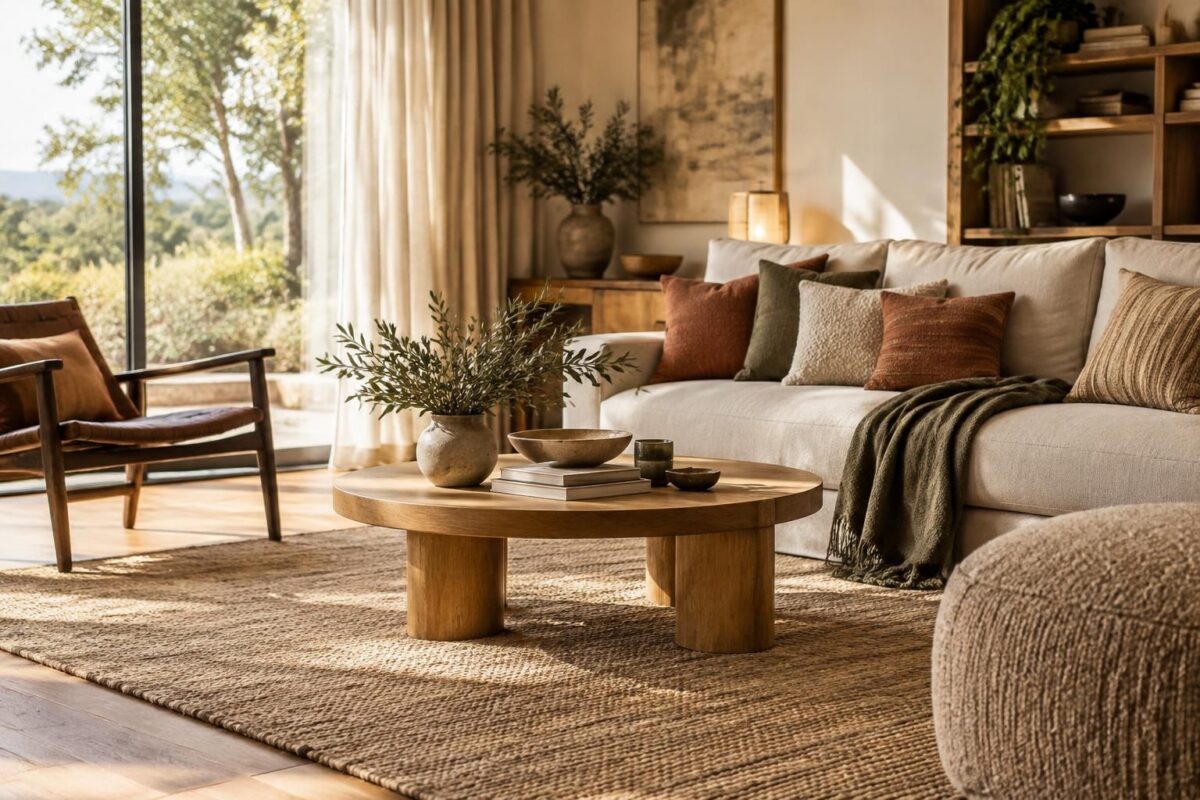
In a small living room, for example, a light oak coffee table can be paired with a beige rug and sage-green cushions. The wood remains visible, while the textiles balance its presence without cluttering the room.
Create soft contrasts between wood and fabrics
A common mistake is to use too many wood species, patterns, and colors in the same space. The eye no longer knows where to settle. Keep one dominant wood and build simple contrasts around it: light against dark, smooth against textured, matte against slightly shiny.
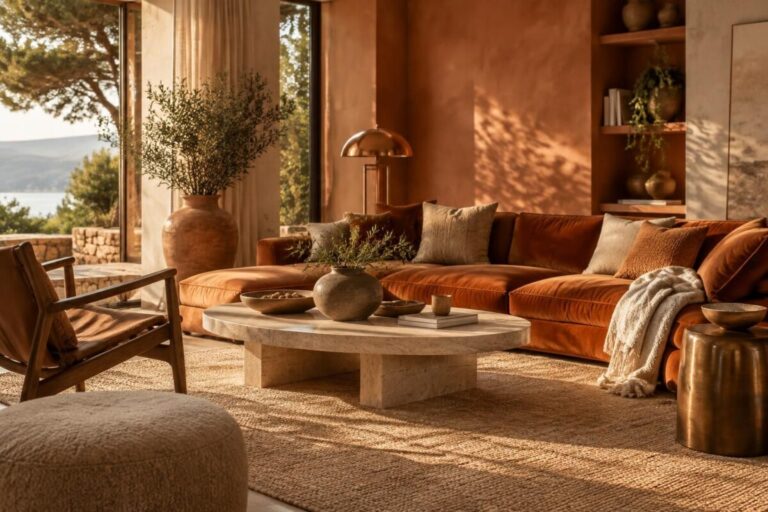
If your furniture is dark, opt for light curtains and natural textiles to make it feel lighter. If the wood is blond, a terracotta or deep-blue velvet cushion can add the dimension that’s missing without transforming the whole room.
A three-step method for harmonizing materials
- Look at the light and the wood. Notice whether the wood species has yellow, red, or gray undertones, then choose fabrics that complement that tone.
- Lay a neutral textile foundation. A cotton rug or linen curtains can easily unify the space and showcase the furniture.
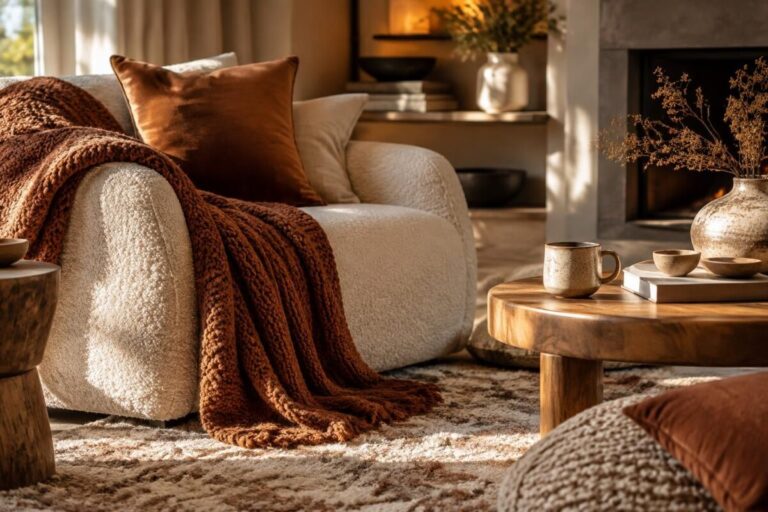
- Add a contrasting accent. One or two velvet accessories or pieces in a more saturated color are enough to add character.
This step-by-step approach prevents scattered purchases: every material has a purpose, and the overall look feels considered without being rigid. The right balance is most noticeable in the sense of comfort it creates every day.
Practical questions about pairing wood and textiles
What colors go with light wood?
Off-white, beige, sage green, and terracotta tones work well. Choose a limited palette to maintain color harmony.
Can you mix linen and velvet?
Yes. Linen adds a matte, lightweight texture, while velvet brings depth. Tie them together with a shared color or a similar shade.
How can you avoid decor that feels too busy?
Stick to one dominant wood species, three main colors, and a few complementary materials. Repeat shades rather than adding new patterns.
Which textile should you choose with dark wood furniture?
Light cotton or linen fabrics visually brighten the furniture. A colorful cushion can then add a controlled contrast.
Thanks for reading! If this topic resonates with you, share your experience in the comments. — Olivia