Decorative Storage: What to Hide for Greater Comfort
Hello, Olivia here. Hide exposed cables, everyday items, and out-of-season laundry in closed storage to reduce visual clutter and make your home feel more restful. In small spaces, a few carefully chosen solutions are often enough to free up surfaces. The idea isn’t to hide everything, but to keep what you really use within easy reach. The result: greater comfort at home, without knocking down walls.
What you can do now
- Identify the surfaces that collect the most visual clutter.
- Gather small everyday items in a basket or catchall tray.
- Hide exposed cables with clips or a discreet cable cover.
- Sort through a drawer and remove anything you no longer use.
- Choose closed storage that fits the available space.
Start with an easy area, like the coffee table or entryway, then notice what changes in your habits. For ideas that suit your needs, also check out these hidden storage ideas and these tips for small spaces.
What should you hide for greater comfort at home?
Prioritize hiding things that catch the eye without adding to the atmosphere: chargers, remote controls, papers, cleaning products, and accessories you rarely use. Closed storage makes a room feel calmer, while an open shelf can hold a few carefully chosen items.
You don’t need to hide everything. Books, a lamp, or a beautiful object add character; laundry waiting to be put away and packaging, on the other hand, can go in storage boxes or decorative baskets.
Discreet storage for every room
| Area | What to hide | Simple solution |
|---|---|---|
| Living room | Remote controls, throws, chargers | Storage ottoman or basket near the sofa |
| Entryway | Shoes and accessories | Storage bench for an organized entryway |
| Bedroom | Out-of-season laundry and small items | Under-bed storage bins or built-in drawers |
| Kitchen | Supplies and rarely used utensils | Divided drawers and cupboards |
Decluttering: the first step toward a more peaceful home
Before buying accessories, do a quick declutter. Keep close at hand what you use often, donate or recycle what you no longer need, then assign a specific place to everything else. “A place for everything, and everything in its place”: this simple principle prevents clutter from returning.
In a small apartment, Lina started by clearing just one shelf. She kept a few books on display and put the papers away in a closed box; the living room corner immediately felt lighter.
Three steps to hide clutter without losing track of things
- Step 1: Choose an area that gets in your way every day and sort through its contents.
- Step 2: Group items by use, then measure the space before choosing a container.
- Step 3: Put rarely used items out of sight and keep essentials accessible.
Allow about 10 to 20 minutes for a small area, depending on its size and how much stuff there is. Storage should make everyday tasks easier, not add another step.
Decor solutions suited to small spaces
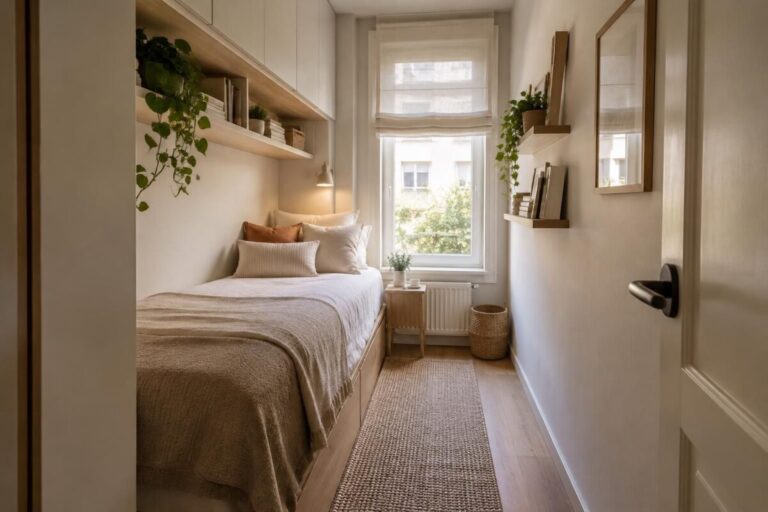
When floor space is limited, make use of the walls with shelves, hooks, or a modular pegboard. In a bedroom, the space under the bed can hold comforters and out-of-season clothes; in the kitchen, a rolling cart can provide extra counter space.
Multifunctional furniture can also help limit the number of pieces you need: a coffee table with a drawer, a storage bench, or a bed with built-in storage. Choose pieces that are in proportion to the room to preserve clear pathways and avoid replacing visible clutter with a room crowded with furniture.
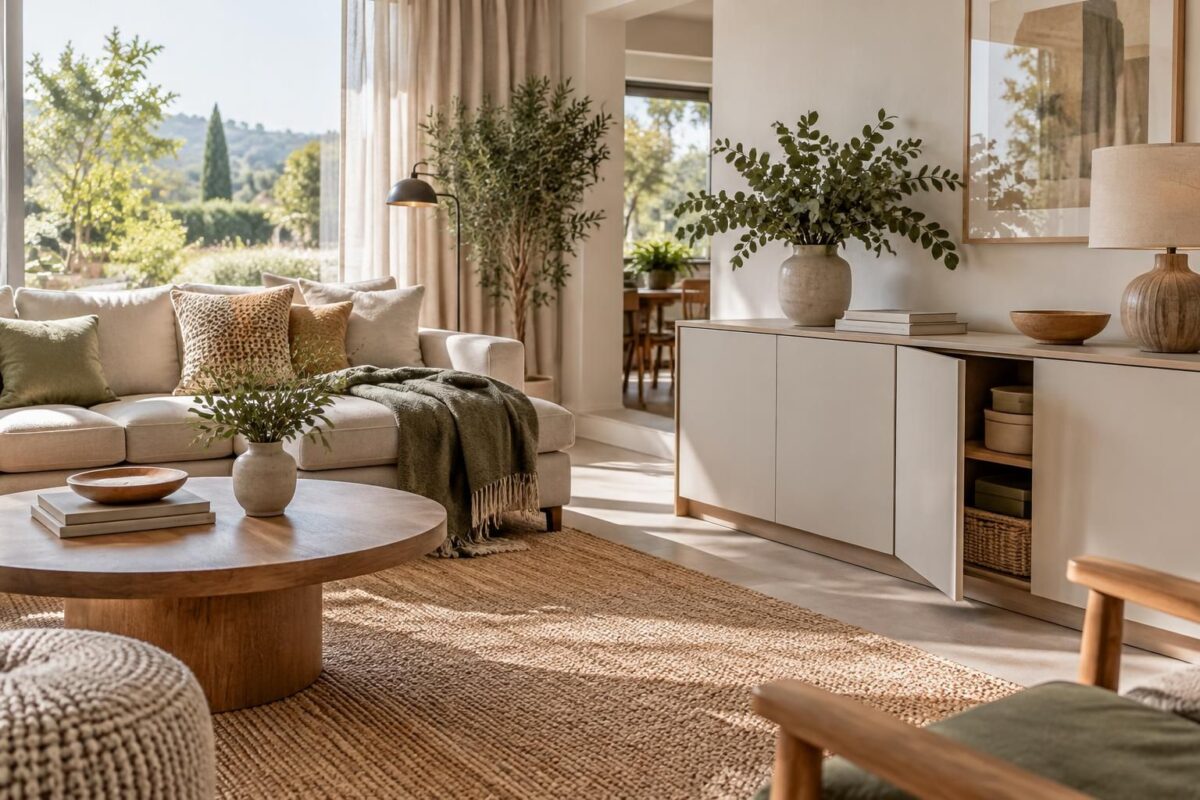
If you have a small living room, choose a low closed-storage unit and matching baskets. If your kitchen is narrow, clear the countertop and reserve the upper cupboards for items you rarely use.
Keep a room tidy without hiding everything
A comfortable home still has a little life in it. Leave a few things you like on display and hide mainly the items that make the room feel cluttered. Containers made of the same material or in similar colors create a cohesive look, even when storage is open.
For exposed cables, secure them behind a piece of furniture or bundle them into a cable cover that matches the wall. For small items, a tray or decorative basket is often enough: cleaning is quicker, and nothing gets lost at the back of a drawer.
What should you hide first for greater comfort?
Start with exposed cables, papers waiting to be dealt with, packaging, and everyday items that pile up on surfaces. Keep the decorative items you love on display.
How can you organize when you’re short on space?
Start by sorting, then make use of wall height, the space under the bed, and multifunctional furniture. Closed storage and well-sized containers help make better use of small spaces.
Are decorative baskets useful?
Yes, they keep throws, toys, or accessories together and prevent them from being scattered around. Choose a size that suits what they’ll hold so they’re easy to move and use.
How can you stop clutter from coming back?
Give every item a place and do a quick sort regularly. Taking a few minutes to put things back is often enough to keep a room pleasant.
Thank you for your interest; Olivia. P.S. I’d be delighted if you left me a comment at the end of the article.