Interiors: why your room lacks presence
Hello, Olivia here. To give your room more presence, balance the proportions, add contrasting textures, and use multiple light sources. A sofa, a table, and storage aren’t always enough to create a finished atmosphere. Most often, what’s missing isn’t another piece of furniture, but a clear intention and a few focal points. With simple choices, you can add depth to your interior without overcrowding it.
What you can do right now
- Add a tall element, such as a plant or a bookcase.
- Dress up a wall with a mirror, a print, or a small arrangement of framed pictures.
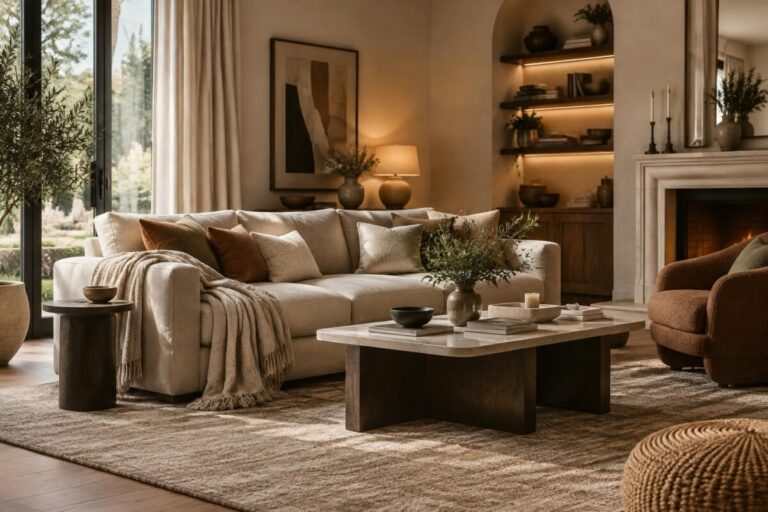
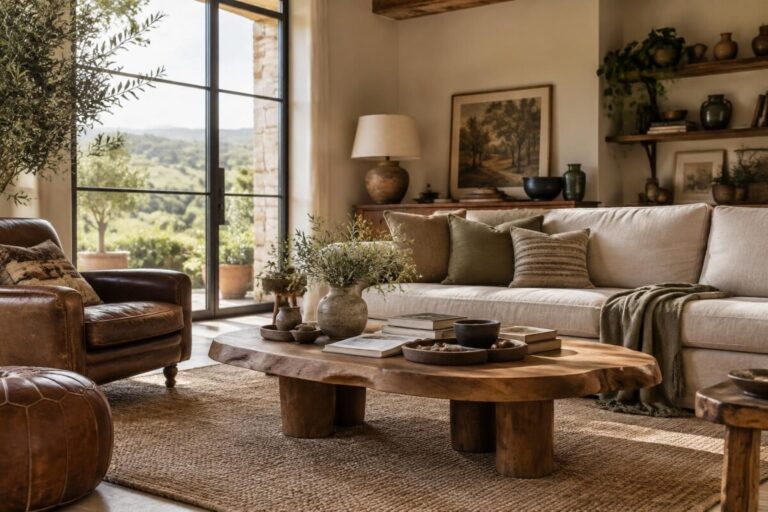
- Mix two or three textures, such as linen, wood, and ceramic.
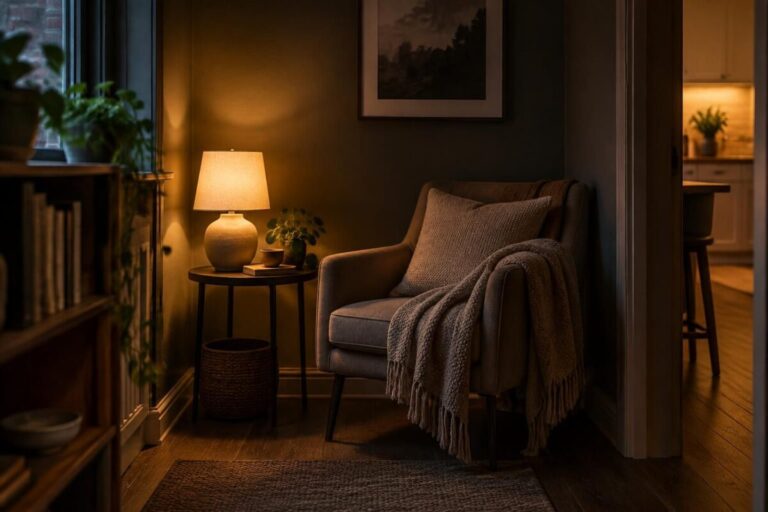
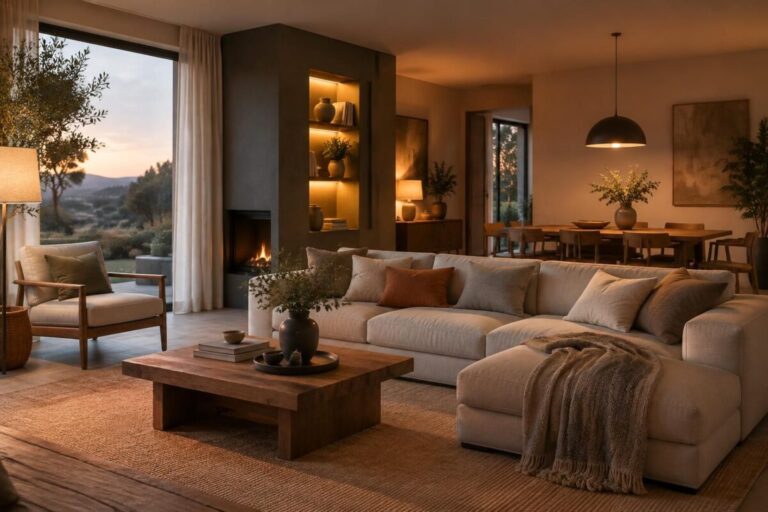
- Create several pools of light with a table lamp and a floor lamp.
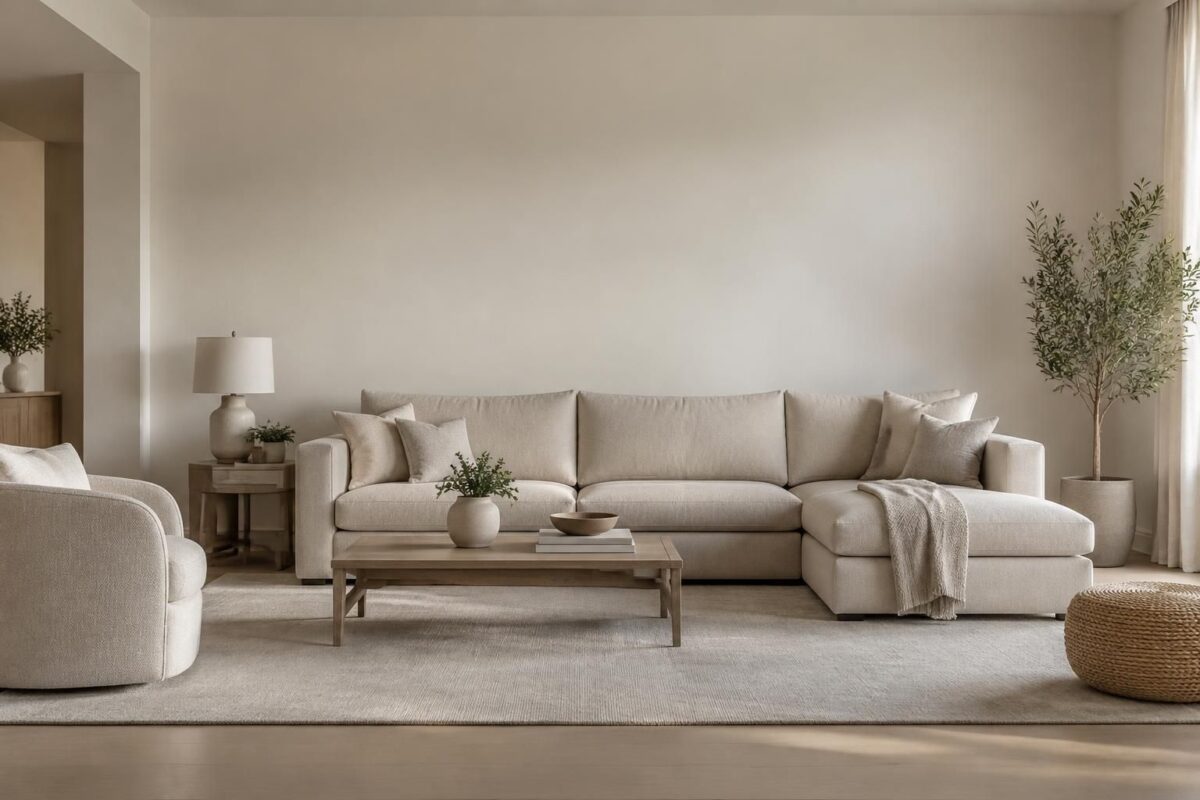
- Choose a limited color palette to tie the elements together.
Start by looking at the room from the entrance: notice what catches your eye and what seems out of balance. To find a design direction, explore these ideas on the style that suits your interior and the first choices to make when decorating your home.
Why your room feels empty despite the furniture
A room can be furnished yet still feel unfinished when its proportions are unbalanced. In a large living room, several low pieces of furniture leave the eye with no points of reference at height; in a small space, an oversized piece takes up all the visual space.
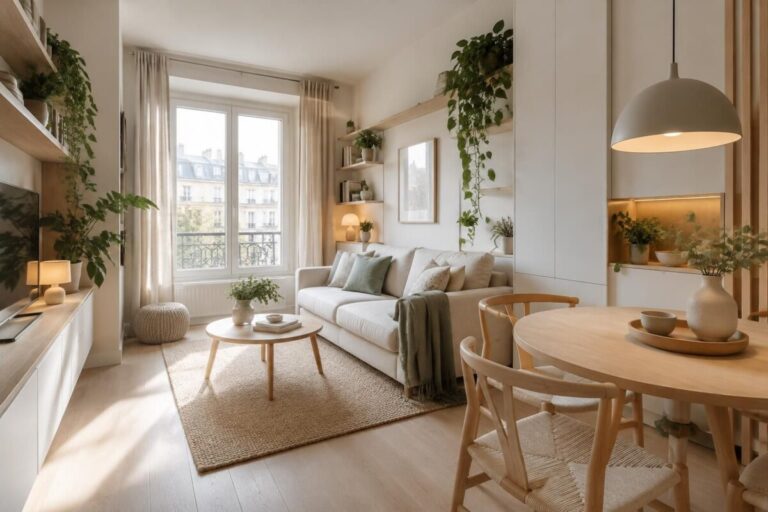
To restore balance, consider curtains hung close to the ceiling, a statement pendant light, or a large plant. These elements strengthen the room’s visual presence without requiring you to add lots of objects on the floor.
If it’s a large room that feels empty, create a focal point at height. If it’s a small living room that feels cramped, lighten up the furniture and keep the pathways clear.
Walls that extend the overall design
Completely bare walls can make a room feel unfinished, but there’s no need to fill them from floor to ceiling. A mirror, a large print, or two thoughtfully arranged shelves are often enough to connect the walls with the furniture.
Once, a simple large mirror placed opposite a window changed how a narrow living room felt: it seemed brighter and better structured. The idea to remember is simple: choose one element that catches the eye, then give it some space.
Textures, colors, and lighting: details that add depth
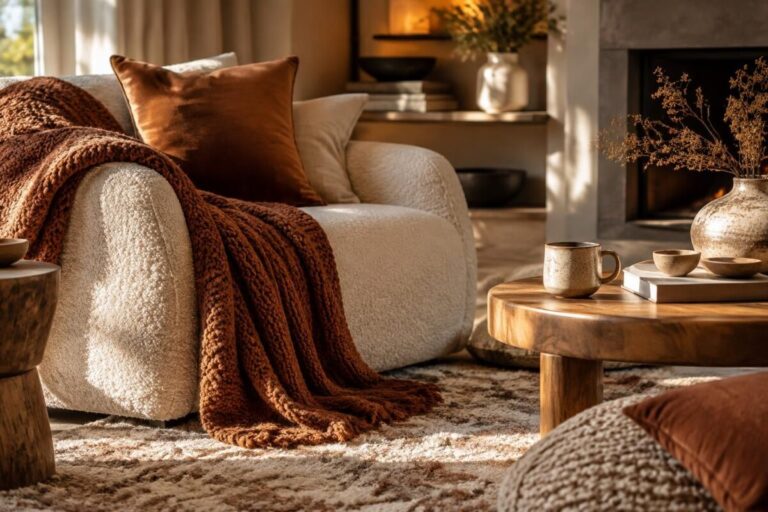
When everything is smooth, uniform, and the same color, interior design can feel flat. Linen, wool, wood, ceramic, and rattan add tactile and visual contrast without the need to pile on accessories.
Color harmony also helps make the whole space feel cohesive. Choose a main color, a complementary shade, and a stronger accent to create a focal touch: a cushion, an artwork, or a vase can become one of the room’s focal points.
“Light reveals the shapes of a room just as much as it illuminates it.” A single ceiling light can leave corners dark or cast uniform light; instead, add a table lamp, a floor lamp, or wall sconces to create different moods.
| What you notice | Possible cause | Simple action |
|---|---|---|
| The room feels empty | Few points of reference at height | Add a tall plant or curtains hung close to the ceiling |
| The space feels cold | Smooth surfaces and uninviting light | Mix textures and choose softer lighting |
| There’s nowhere for the eye to rest | No element serves as a focal point | Highlight a mirror, an artwork, or a distinctive piece of furniture |
| The room feels cluttered | Too many objects or difficult circulation | Remove a few items and clear the pathways |
A three-step method to refresh the room
- Step 1: Observe the room at different times of day. Identify dark areas, empty walls, and cluttered pathways.
- Step 2: Choose an intention, such as a natural, graphic, or warm atmosphere. Limit your palette and select a few materials that support it.
- Step 3: Add a focal point, then adjust the lighting around it. Move or remove objects that unnecessarily draw the eye away.
This approach helps you avoid impulse purchases: every addition meets a specific need. My article offers a gradual approach to making sure your layout remains both functional and personal.
A room with personality, without the clutter
A cohesive interior doesn’t depend on sticking to a strict style. It can bring together vintage finds, natural materials, and modern lines, as long as there’s a common thread connecting them. This personality can come from a color repeated in small touches or an object that has real meaning to you.
Leave an area where the eye can rest. Leaving a wall or part of a shelf clear isn’t a missed opportunity: this empty space highlights the pieces you’ve chosen and makes the whole room easier to take in.
Helpful questions about giving a room more presence
Why does a furnished room still look empty?
The furniture may lack points of reference at height, contrasting materials, or a focal point. Also check that its proportions suit the size of the room.
How can I warm up a room without buying lots of decor?
Add a table lamp, a soft textile, or a natural material, then move a mirror to reflect light more effectively. A few targeted changes are often enough.
Do I need to decorate every wall to add character?
No. A mirror, a print, or a thoughtfully chosen arrangement may be enough. Leave some areas clear to avoid a cluttered look.
What lighting should I choose to make a room more welcoming?
Combine several light sources at different heights. Soft light and lamps directed toward useful areas generally add more depth than a single ceiling light.
Thanks for your interest; Olivia. P.S. I’d be delighted if you leave me a comment at the end of the article.