Decorative storage: which wall can finally work
Hi, Olivia here. The wall that works best is often the one in the living room or entryway, as long as you choose a clear, sturdy, and easily accessible wall. With shelves, hooks, or a shallow cabinet, you can save space without making the room feel crowded. The idea is to store things you use often and maintain a harmonious interior design.
What you can do now
First, find the least cluttered wall, then imagine how it could hold books, baskets, or everyday items. For more ideas, explore these decorative wall storage ideas and these tips for making use of a wall recess.
- Choose a wall that won’t get in the way of a door or passageway.
- Measure the available width and note the maximum depth you want.
- Keep the items you use every day within easy reach.
- Plan for baskets or boxes to hide small items.
- Check the wall type and choose suitable fixings before installation.
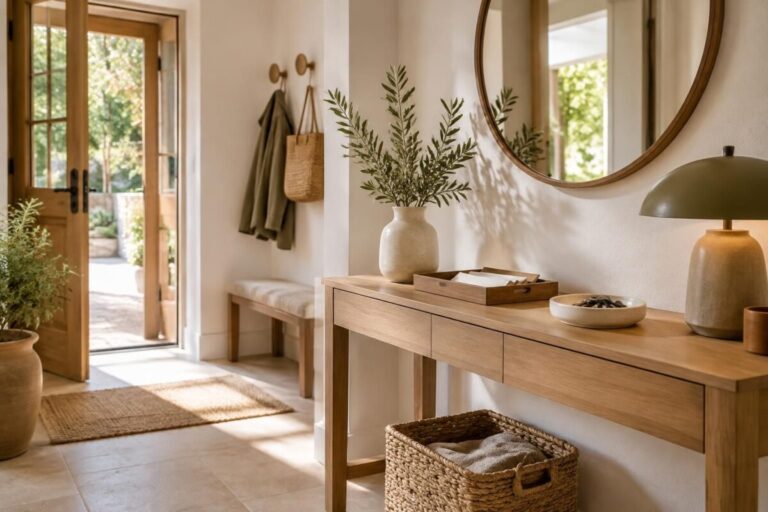
If it’s a small living room, opt for shallow, airy shelves. If it’s an entryway, go for hooks, a mirror, and closed storage for shoes.
Which wall to choose for practical decorative storage
A clear wall near a living area is often the most useful choice: the living room, entryway, office, or kitchen. Avoid walls already taken up by windows, radiators, or doors, and think about everyday use: things should be easy to reach.
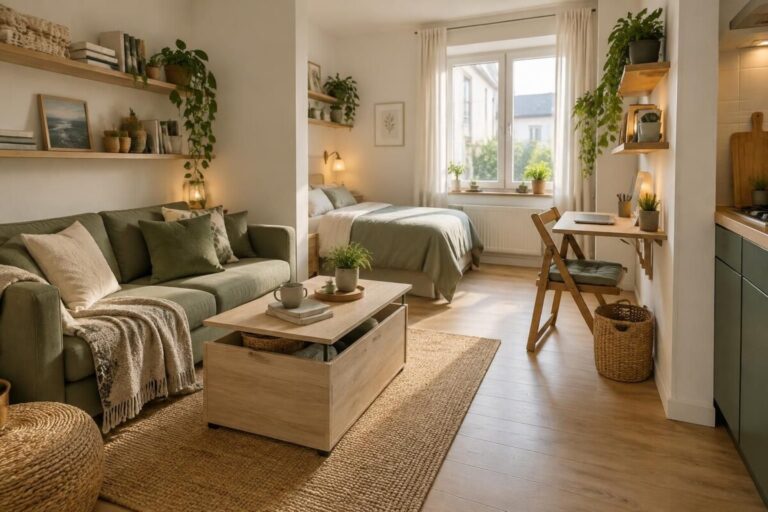
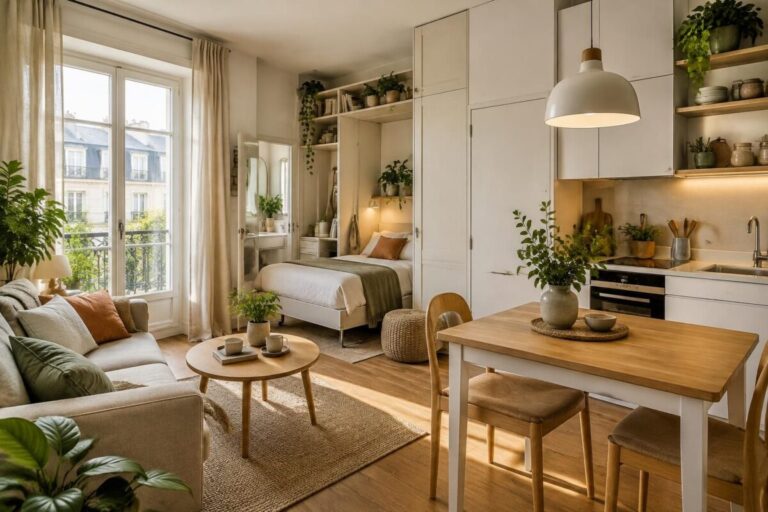
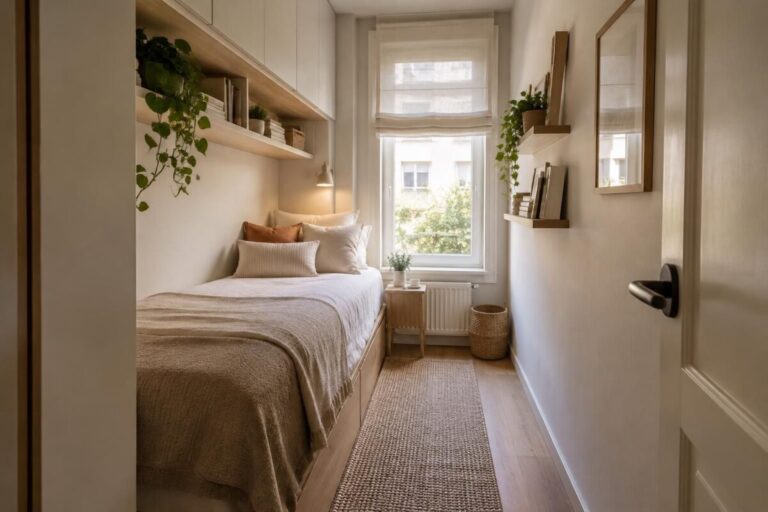
In a small home, vertical walls become an ally in making the most of space. A shelf above a desk or hooks near the entryway free up the floor without adding a bulky piece of furniture. That’s the benefit of a functional wall: it provides storage while also contributing to the atmosphere.
A fictional renter, Lina, installed two shelves above her reading nook. Her books are no longer on the coffee table, and the living room feels more open without losing its cozy feel. “Everything in its place, and the room can breathe,” she says.
Adapt the wall to the room and the items
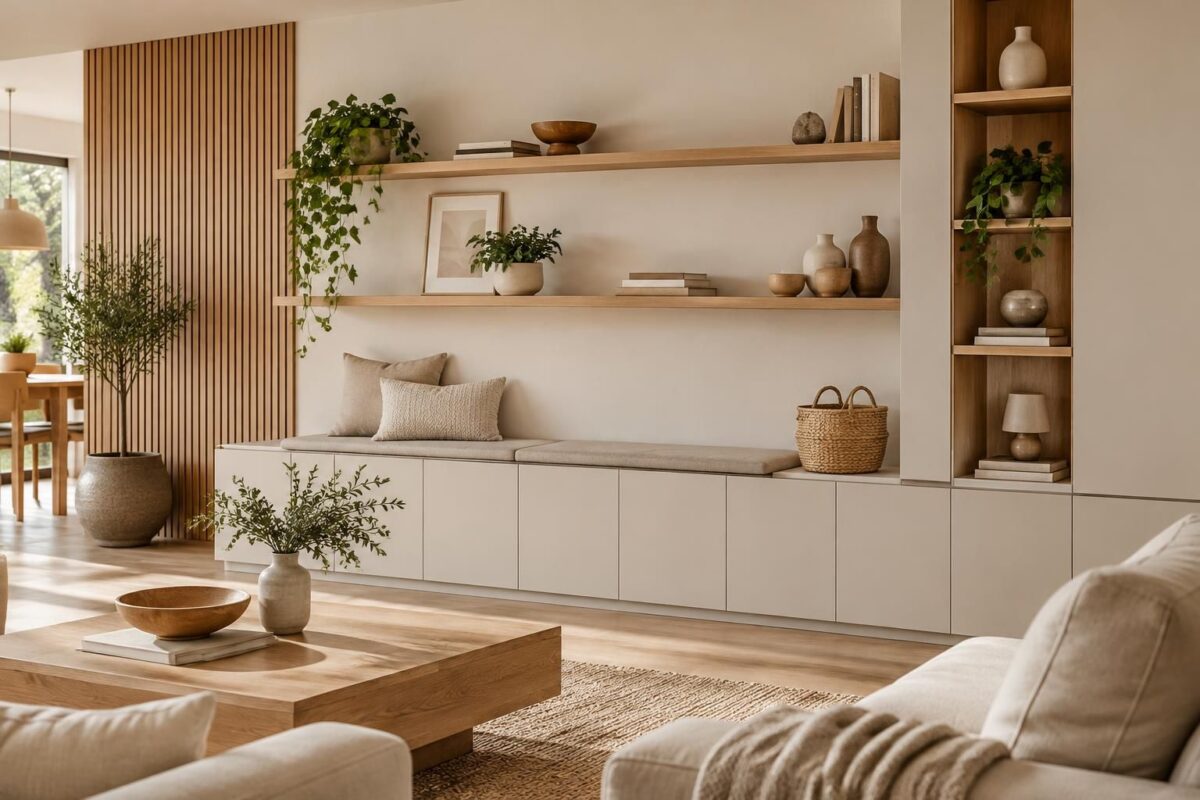
In the living room, an arrangement of wall shelves can hold books and small objects. In the kitchen, a rail with hooks keeps useful utensils close at hand. In the bedroom, niches near the bed can sometimes replace a nightstand.
To save space without making the room feel cluttered, alternate open and closed storage. Baskets hide small items, while a few decorative pieces add visual interest. A palette of light wood, white, or beige helps keep your wall decor cohesive.
Install storage solutions that are easy to live with
Before drilling, check the type of wall and choose fixings suited to the intended weight. Maximum load limits vary depending on the wall, anchors, and model: follow the manufacturer’s instructions rather than judging by the shelf’s appearance alone.
For bookshelves, leave about 30 to 40 cm between shelves, depending on their format and the model you choose. Place heavy items on the lower shelves whenever possible; lighter accessories can go higher. Well-planned storage stays accessible and safe.
A simple three-step method
- Step 1: sort the items you want to store and separate those you use every day from those you use rarely.
- Step 2: sketch out a simple layout, reserving the lower shelves for heavy items and higher spots for things you use less often.
- Step 3: install the pieces using the right hardware, then add baskets, boxes, and decorative items sparingly.
Find the right balance between storage and interior design
A storage wall can quickly look too crowded if every shelf is full. Leave some areas clear and group items by use or color: this makes the whole arrangement easier to take in and highlights a few selected pieces.
Closed storage works well for everyday items that create visual clutter. Open shelves, on the other hand, are practical for books and objects you want to display. For balanced interior design, mix materials sparingly: wood, metal, and natural fibers go together easily.
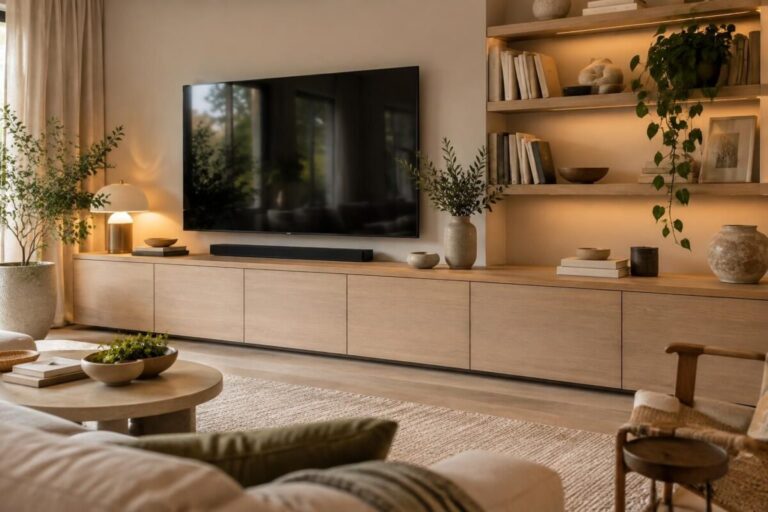
A multifunctional wall unit can also combine shelves, small cabinets, and space for devices. This solution is useful around a TV area or desk, as long as you plan for cable management and avoid blocking outlets.
| Solution | Where to use it | Main benefit |
|---|---|---|
| Open shelves | Living room, office | Display books and objects while freeing up the floor |
| Wall hooks | Entryway, bedroom | Keep bags and clothes within easy reach |
| Hanging baskets | Kitchen, bathroom | Keep small accessories together |
| Closed wall cabinet | Living room, hallway | Hide items and reduce visual clutter |
Keep a storage wall tidy without overloading it
Decorative storage works best when each area has a clear purpose. Set aside a basket for accessories, a shelf for books, or a hook for a specific bag; if things start piling up, it’s often a sign that you need to declutter or rethink the arrangement.
A quick regular sort is often all it takes to keep the wall looking inviting. Remove anything you no longer use, put things back after using them, and leave a few empty spaces: they’re part of the decor too.
Which wall should you choose for decorative storage?
Choose a clear, easily accessible wall that can support the weight of your items. Avoid areas that block a door, radiator, or passageway.
How can you keep a storage wall from looking cluttered?
Alternating open and closed storage, limiting the number of items on display, and leaving some areas clear helps keep the overall look light.
Which shelves should you choose for a small space?
Shallow shelves mounted high up free up floor space. Always check that the fixings are compatible with your wall type and the intended weight.
Thank you for your interest; Olivia. P.S. I’d be delighted if you left me a comment at the end of the article.