Interiors: should all the lighting be reconsidered?
Hello, Olivia here. No, you don’t need to rethink all the lighting: start by brightening the darker areas and varying the light sources. A well-planned interior lighting scheme combines natural light, task lighting, and soft light for relaxing. A few changes to the placement of lights or bulbs can already transform a room. The idea is to create a bright atmosphere suited to how you use the space, without undertaking major work.
What you can do now
- Identify dark corners and the activities that take place there.
- Clear the windows and opt for lightweight curtains to let in natural light.
- Add a lamp near the sofa or reading chair.
- Choose a color temperature suited to each room.
- Try dimmer switches to adjust the brightness depending on the time of day.
To get started, move a lamp to a poorly lit area and see how it looks in the evening. You can also find ideas to make light more useful or rethink the layout with these tips to make a room look bigger.
Rethink your interior lighting without changing everything
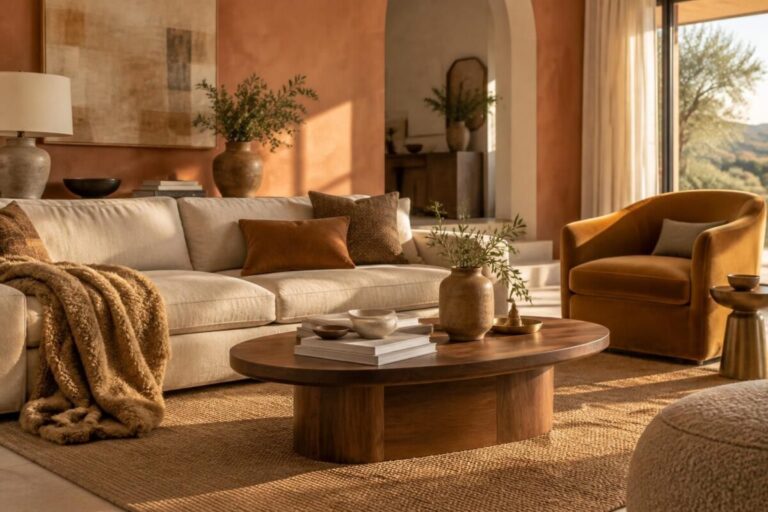
Before buying new light fixtures, observe the room at different times of day. A home office may lack light in the late afternoon, while a living room feels pleasant in the morning, thanks to the sunbeams streaming through the window.
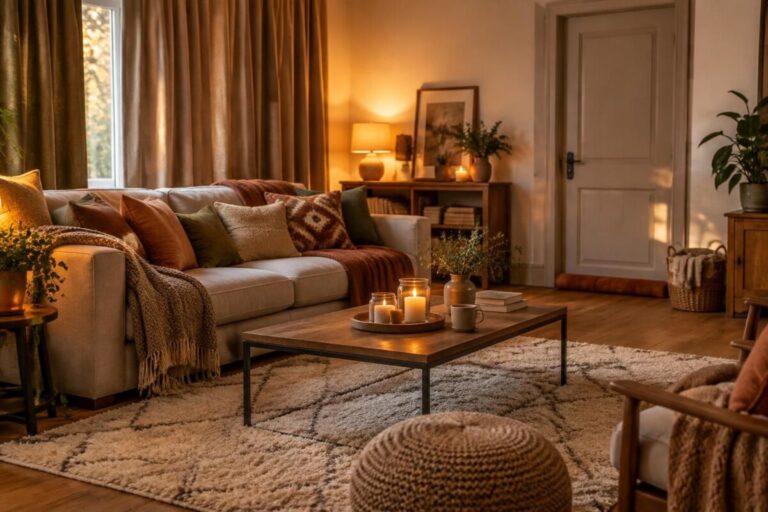
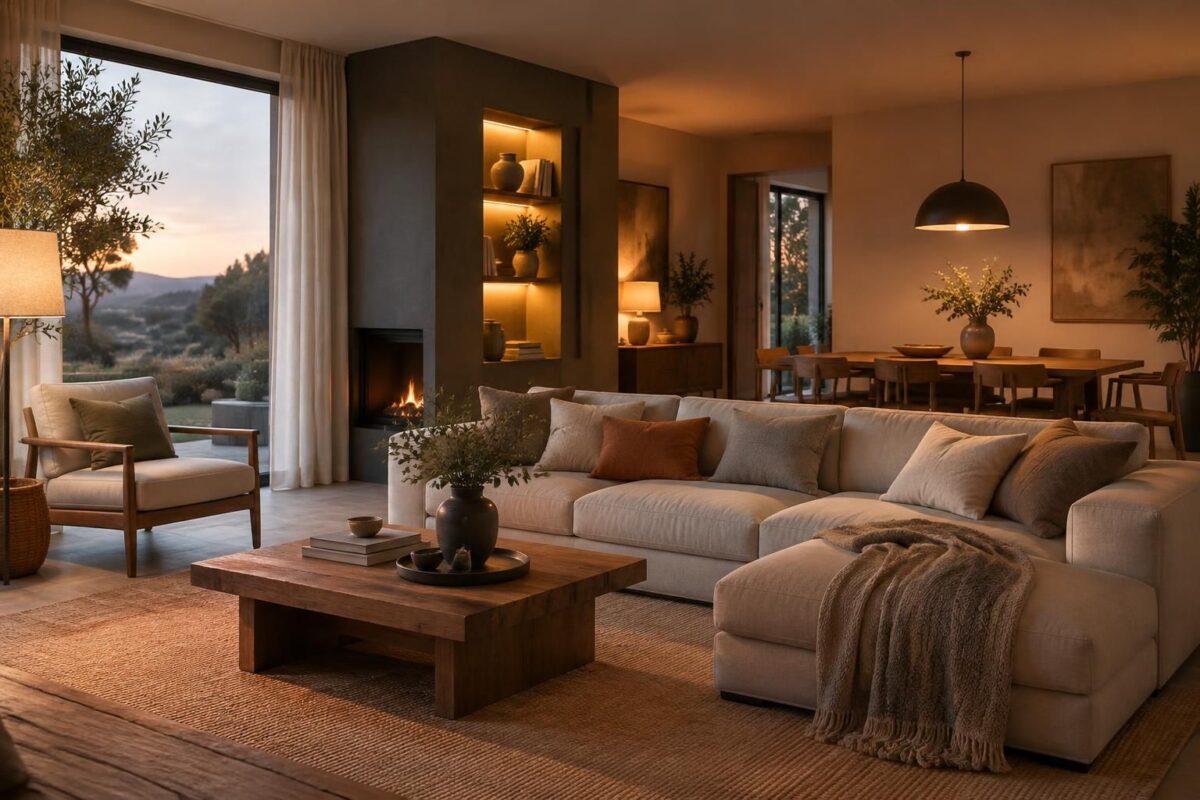
The solution is often to layer several light sources: a ceiling light for the whole room, a lamp for a specific task, and indirect lighting to soften the atmosphere. “Good lighting supports the way you use a space without taking center stage.” This is a helpful guide when deciding where to make changes.
Choosing the right color temperature
In spaces meant for relaxation, warm light creates a cozy feeling. For cooking, reading, or working, a more neutral light often makes it easier to see details.
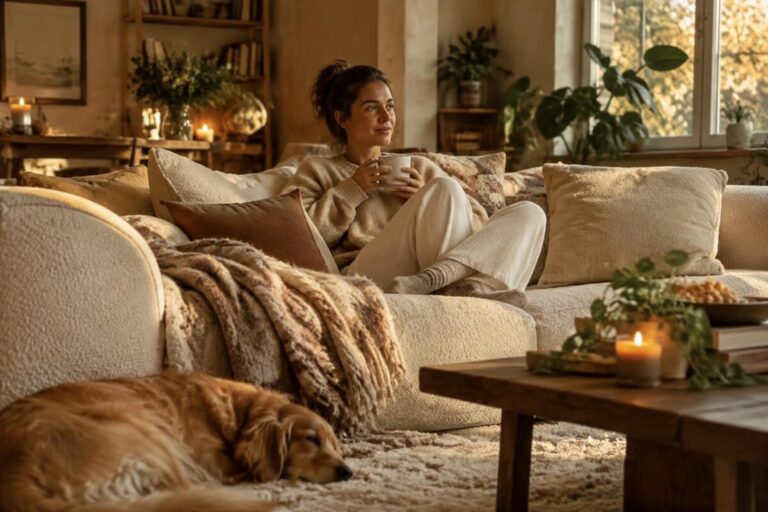
A common example: after replacing a very white bulb above the sofa with a warmer light, a living room immediately feels calmer, even without changing the furniture. So color temperature affects how a space feels just as much as how well you can see.
Combine task lighting with indirect lighting
Task lighting should be directed at the area you need to use: the countertop, desk, or reading nook. Indirect lighting, on the other hand, bounces off a wall or ceiling and reduces harsh contrasts.
Designer lamps can also become decorative features in their own right. In a small home, a floor lamp aimed at a light-colored wall adds depth without cluttering the coffee table.
| Area | Recommended type of lighting | Simple idea |
|---|---|---|
| Living room | Soft, indirect lighting | Aim a lamp at a light-colored wall |
| Home office | Focused lighting | Place a lamp near the work surface |
| Kitchen | Task lighting | Add more light above the work surfaces |
| Bedroom | Warm, adjustable lighting | Install a bedside lamp with a dimmer |
Two situations to distinguish
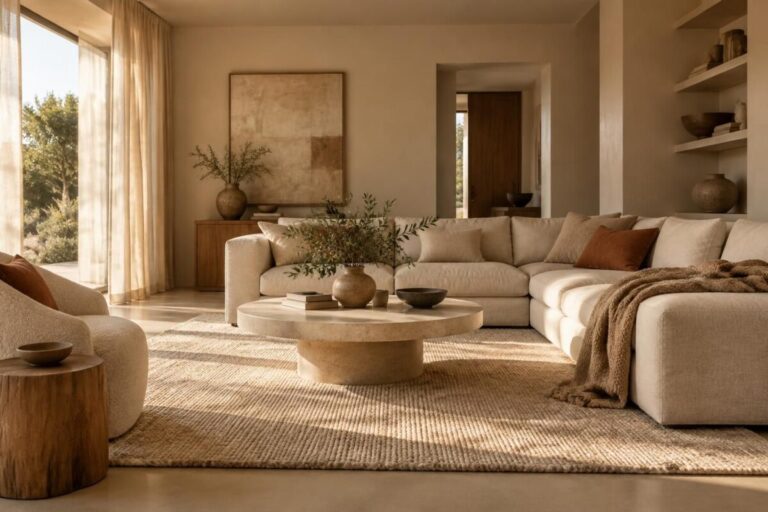
If your room lacks brightness all day, clear the windows and opt for light colors around them. If it is mainly dark in the evening, add an indirect light source and adjust the brightness to avoid too much contrast.
A three-step method for optimizing your lighting
- Step 1: note where you read, cook, work, or relax, then identify the areas that remain in shadow.
- Step 2: add a suitable light source for each need: a reading lamp, pendant light, or indirect lighting.
- Step 3: test the settings in the evening and adjust the position of the lamps before considering a lighting renovation.
This lighting optimization helps you avoid impulse purchases. A dimmer may be all you need in a multipurpose room, while a better-positioned light fixture can sometimes solve the problem on its own.
See lighting ideas in practice
This video can help you visualize how to combine light sources and choose an atmosphere suited to your home.
Do you need to replace all the light fixtures to improve a room?
No. Start by moving your existing lamps and identifying areas that lack light. A new purchase is only useful if an area still isn’t properly lit.
What kind of light should you choose for a living room?
Soft, adjustable light is often suitable for relaxing. Add a focused light source for reading or a specific activity.
Are dimmer switches useful?
Yes, especially in a room used for several purposes. They let you adjust the brightness without adding more light fixtures.
How can you light a small home without cluttering it?
Opt for wall lights, slim floor lamps, and light sources aimed at the walls. They free up surfaces and can make a space feel larger.
Thanks for your interest; Olivia. P.S. I’d be delighted if you left me a comment at the end of the article.