Decorative storage: what to put under the TV
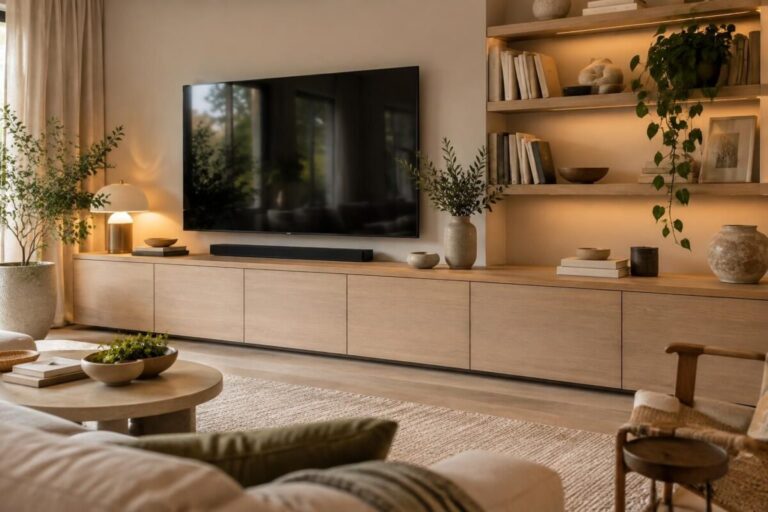
Hello, it’s Olivia. Under the TV, a low-profile, shallow cabinet with closed storage for small items and compartments suited to your devices provides a simple base. Add an accessible cable route and just a few decorative objects. The right choice depends mainly on what you need to store, the space available, and the ventilation planned for your equipment.
Start by taking inventory: remotes, a game console, a set-top box, games, and books all need different kinds of storage. Boxes work for unplugged accessories; devices in use need the clearances specified in their manuals. A well-sized existing cabinet may be enough: custom-made furniture is an option if no standard solution meets your requirements.
Here’s what you can do now:
- Choose a TV stand with closed compartments for optimal storage under the TV.
- Use storage boxes to organize your remotes, cables, and accessories.
- Install a cable concealer to avoid a messy look behind your cabinet.
- Add a wall shelf to display your DVD collection or decorative objects.
- Give an old cabinet a makeover with paint or fabric for a personalized look that complements your living room decor.
For more ideas, take a look at these resources to help you create a harmonious, highly functional TV area: tips for decorating your TV stand and how to set up a TV area.
Storage under the TV: TV stand, organization, and decor combined
A TV stand combines storage and decoration without requiring you to fill the entire wall. Compare its width and depth, and the height of its compartments, with your devices. Also check the space needed for the TV’s feet and the stand’s weight limit. If your screen is wall-mounted, you can choose a separate storage unit suited to the items you want to keep underneath.
A well-designed TV stand has several advantages:
- It reduces clutter by hiding cables and accessories.
- It contributes to the room’s visual harmony.
- It enhances the viewing experience by beautifully framing the TV, sometimes with paint or decoration.
For example, in a small living room, a two-door cabinet can hold games and spare cables, while an open compartment remains available for the console. Put the remotes in an easy-to-reach tray. You’ll have the essentials close at hand without turning the top of the cabinet into a catch-all shelf.
Choosing the ideal furniture for under your TV
A custom-made TV stand is often the solution when standard furniture doesn’t work in your room. This lets you incorporate cubbies, shelves, or storage boxes for added functionality and style. Choosing the right materials and colors is crucial to making the stand suit the atmosphere of your living room.
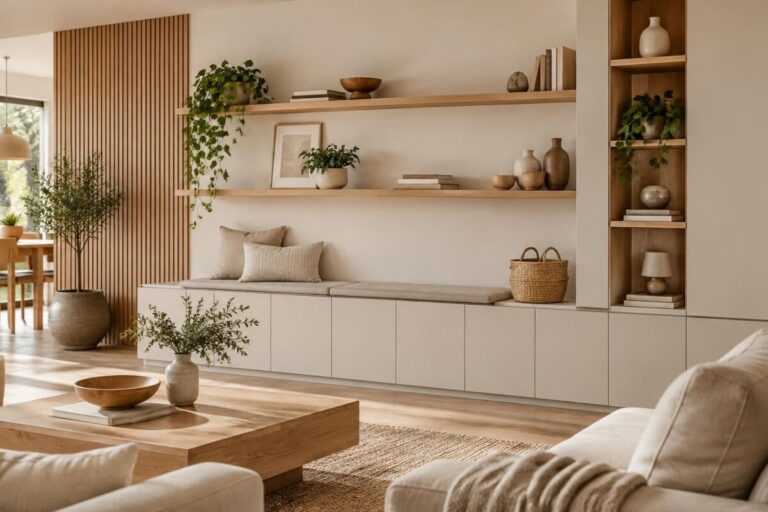
If you prefer a minimalist style, a slim wall shelf paired with a discreet cable concealer is often enough to keep your TV area uncluttered. Accessories such as baskets or boxes made from natural fibers add warmth without making the space feel crowded.
Installing a shelf and keeping cables accessible
Before choosing a floating shelf, identify the wall, the intended load, and the fixings compatible with both the wall surface and the shelf. These tips for choosing your tools and organizing DIY projects will help you prepare for the installation. Then make sure connections remain accessible and follow the manufacturers’ installation instructions.
3 simple steps to a perfectly organized and decorated TV area
- Assess your space: measure the area under your TV and consider how easy it is to access your multimedia devices.
- Choose your furniture: a closed TV stand, bookcase, custom-made unit, or wall shelf to suit your decor.
- Organize and decorate: use boxes for small items, conceal the cables, and add decorative accessories around the area (plants, frames, personal items).
In a small living room, first use masking tape to mark out the footprint on the floor. Open the doors or drawers and check that you can walk past without moving the coffee table. A wall-mounted unit frees up floor space visually, but it still takes up depth, so this check is still important.
Comparison table of different TV stands
| Type of furniture | Advantages | Disadvantages | Which style? |
|---|---|---|---|
| Classic closed cabinet | Hides everything, keeps things organized | Can look visually heavy | Traditional, cozy |
| Built-in bookcase | Combines storage and decor | Takes up more space | Eclectic, warm |
| Custom-made unit | Fits the space, customizable | Higher cost | Modern, minimalist |
| Wall shelf | Saves space, streamlined design | Less closed storage | Minimalist, contemporary |
For even more inspiration, explore these ideas for transforming your TV area into a spectacular, super-organized space: TV area decor ideas and how to set up your TV area.
Accessorizing and brightening up storage under the TV
Storage isn’t just functional—it can be decorative too! Add a touch of originality with colorful storage boxes or wicker baskets. What’s more, surrounding your TV with accessories, such as art objects or decorative letters, can transform your space.
A painted frame on the wall behind the TV can also create a striking visual effect that highlights the TV rather than hiding it. It’s all about balancing function and aesthetics. Remember that successful living room decor avoids a cold, impersonal feel by combining storage and charm.
Which TV stand should I choose for a small living room?
Choose a shallow unit with storage that suits your equipment. Check the walkways and make sure the doors can open; custom-made furniture may be useful if standard dimensions don’t work.
How can I effectively hide TV cables?
Use a cable concealer or a unit with a built-in system to hide the cables and keep the area looking uncluttered.
Can I coordinate a TV stand with my existing decor?
Yes, give an old cabinet a makeover with paint or fabric so it goes perfectly with your current living room decor.
Which accessories should I choose to decorate around the TV?
Choose storage boxes, baskets, personal items, or works of art to personalize the space.
Do I need a closed cabinet to store multimedia equipment?
Doors can hide accessories, but a device in use needs the ventilation and clearances specified in its manual. Also check that outlets are accessible and controls work before closing a compartment.
Thank you for your interest; Olivia PS, I’d be delighted if you left me a comment at the end of the article