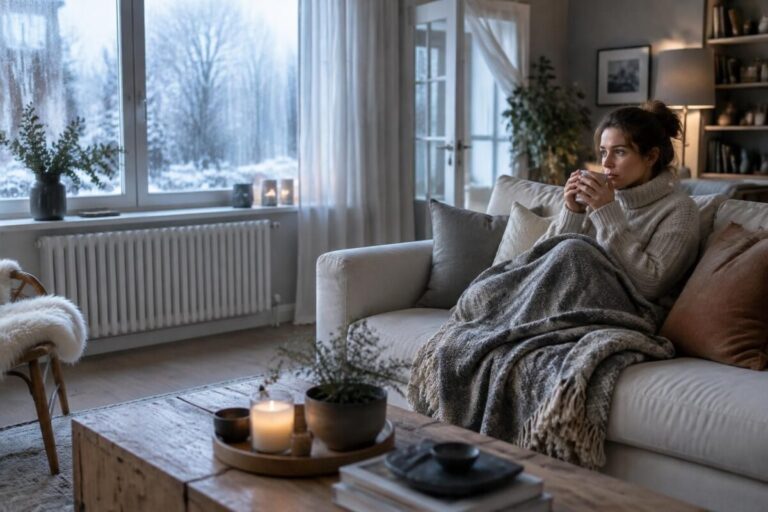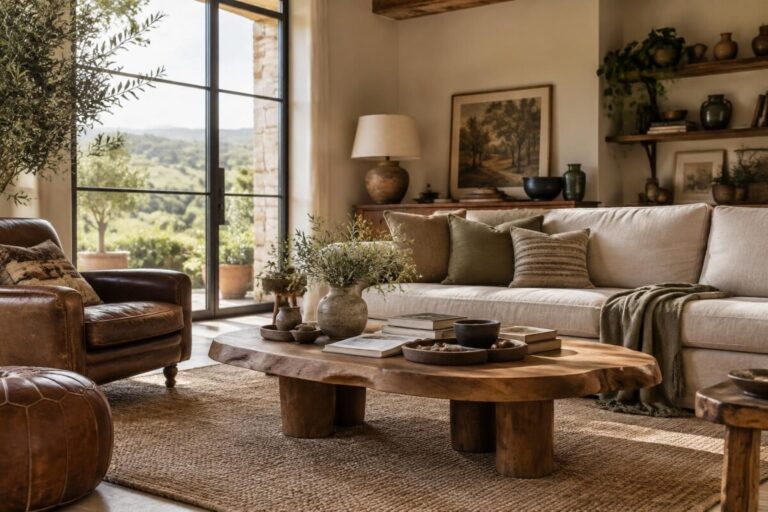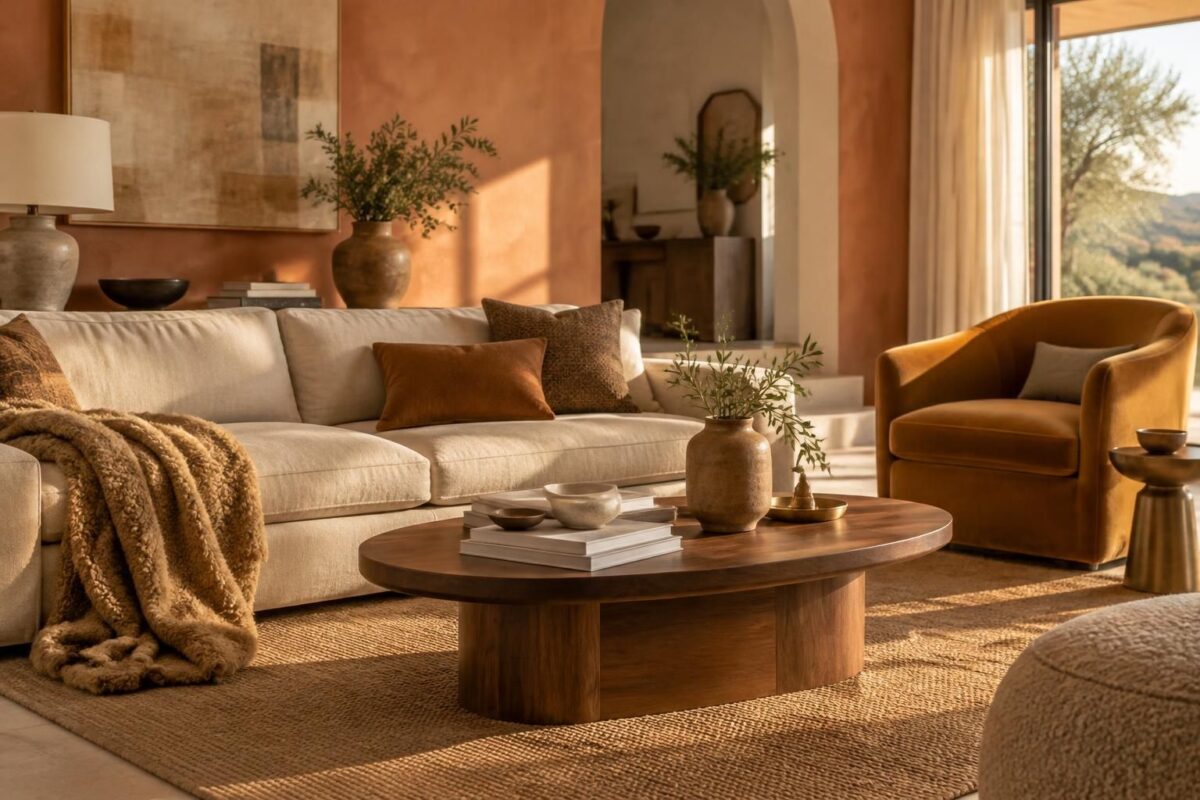
Colors & Materials: Which Shades Really Add Warmth?
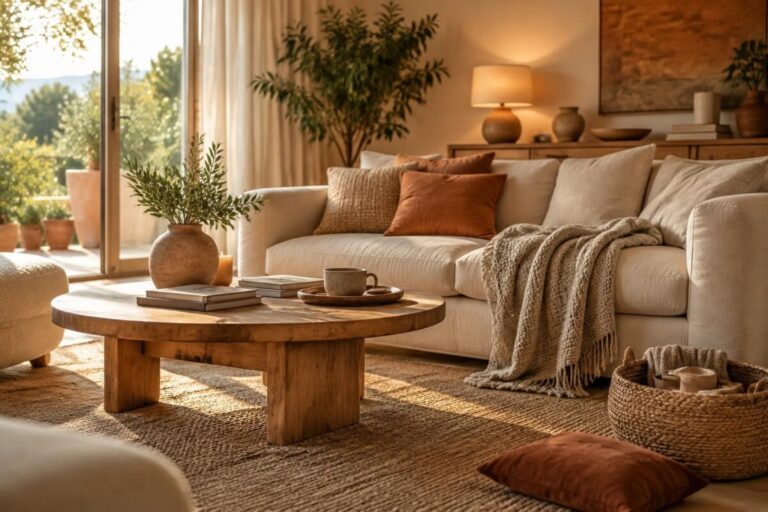
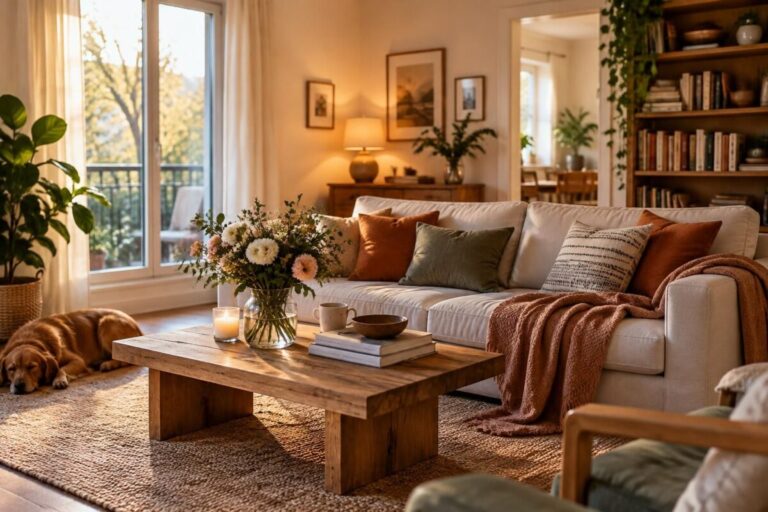
Hi, Olivia here. The warm shades that truly make an interior feel cozier are terracotta, ochre, brown, and creamy whites. Paired with natural wood and textured materials, they make the living room more inviting without changing its actual temperature. The secret: choose an intensity that suits the light, then use the colors in small touches.
What you can do now
- Test a paint sample at different times of day.
- Add a wool throw or a corduroy cushion.
- Place a thick rug near the sofa to soften the floor.
- Choose a warm-light bulb, ideally under 3,500 K.
- Keep one dominant shade and limit colorful accents.
Before replacing your sofa, start by looking at the textiles and light already in the room. A rug, lined curtains, or softer cushions may be enough to change the atmosphere; you can also explore shades that open up a space and the balance between warm and cool colors.
Which warm shades make a living room more inviting?
Terracotta brings natural warmth and is easy to pair with beige, wood, or linen. Ochre adds a sunny accent, while rust and brown create a deeper atmosphere.
Deep red and burgundy create a cozy, intimate effect, especially on a single wall or with a few accessories. To keep the room bright, consider warm whites too: cream, ivory, and off-white are softer than pure white.
A simple little anecdote: in a small north-facing living room, replacing two gray cushions with ochre ones was enough to make the sofa look more inviting. “A room’s warmth often comes down to the details.”
Choose a color based on the light and the room’s size
A north-facing living room often gets cooler light: terracotta and ochre can help warm up how the room feels. In a south-facing room, abundant light makes it possible to try brown or deep red, as long as you keep some surfaces light.
In a small room, reserve dark shades for one wall, an armchair, or a few textiles. To test a paint color, apply a sample measuring about 50 cm by 50 cm, then look at it in the morning and at the end of the day: its appearance can vary considerably.
If it’s a dark living room, start with cream walls and a few terracotta accessories. If it’s a very bright room, try a soft brown or a touch of deep red on a limited surface.
Textured materials that add a tangible sense of warmth
Bouclé wool and corduroy trap small pockets of air in their raised textures. They often feel more pleasant to the touch than a smooth fabric, such as leather or fine polyester, which can feel cold against the skin.
These materials also affect the look and sound of a room: they absorb more light and soften echoes. A textured sofa paired with natural wood adds depth to a living room without introducing lots of colors.
To keep the decor from looking cluttered, combine two or three main textures: for example, a wool rug, bouclé cushions, and linen curtains. A thick throw over an armrest completes the look without crowding the room.
A simple three-step process
- Step 1: Identify the room’s light and the colors already present in the furniture.
- Step 2: Choose a soft dominant shade, such as sand beige, then add a warm accent for the textiles or a wall.
- Step 3: Add two or three inviting textures, then adjust the lighting with warm or dimmable bulbs.
You can start with an easy-to-visualize balance: about 70% dominant color, 25% secondary shade, and 5% accents. For example, sand-beige walls, a terracotta sofa, and a few copper accessories create a cohesive look without overdoing it.
Pair comforting colors without darkening the room
Comforting colors work best when they belong to the same family: terracotta, ochre, and brown naturally complement one another. A colored wall can be balanced with light curtains, a neutral rug, and wooden surfaces.
Textiles contribute just as much to perceived comfort as the color palette. A thick rug reduces the feeling of a cold floor, heavy curtains soften drafts near windows, and a throw invites you to settle in. Before changing the sofa, these additions are often the easiest things to try.
For evening lighting, a bulb under 3,500 K generally gives off a more golden light. Warm colors then feel more enveloping, while very white lighting can make them look cooler.
| Shade or material | Effect in the living room | How to use it |
|---|---|---|
| Terracotta | Warm and natural | On an accent wall or cushions |
| Ochre | Bright and sunny | In small touches in a dark room |
| Brown or deep red | Cozy and enveloping | On a limited surface, with light shades |
| Bouclé wool | Soft to the touch and visually matte | For cushions, a throw, or upholstery |
| Corduroy | Pronounced texture and interplay of shadows | On a sofa or armchair |
Mistakes that make decor feel cold or heavy
Using too many bright colors can tire the eye. Choose one strong shade, then use variations of it instead of combining several unrelated accents.
Also, avoid painting an entire small room brown or deep red without testing the color first. Intense shades can make a space look smaller; an accent wall leaves more room to breathe.
Finally, don’t mix too many highly contrasting materials. Bouclé wool, satin, and raw cotton can coexist, but two or three well-chosen textures often create a more harmonious result.
Practical questions about warm colors and materials
Which warm color should I choose for a dimly lit living room?
Soft terracotta, ochre, and cream beige are good starting points. Always test the shade on a sample, as the light can change how it looks.
Which materials create a sense of warmth?
Bouclé wool and corduroy are often pleasant to the touch because their texture traps small pockets of air. A thick rug and heavy curtains also enhance perceived comfort.
How can I use a dark color in a small living room?
Limit it to a single wall, an armchair, or a few accessories. Light walls and cream textiles will help preserve a sense of space.
What kind of light should I choose with earthy tones?
A warm-light bulb, generally under 3,500 K, works well with earthy shades in the evening. A dimmable bulb lets you adjust the atmosphere.
Thank you for your interest; Olivia P.S. I’d be delighted if you left me a comment at the end of the article