Small spaces: how to furnish a narrow bedroom
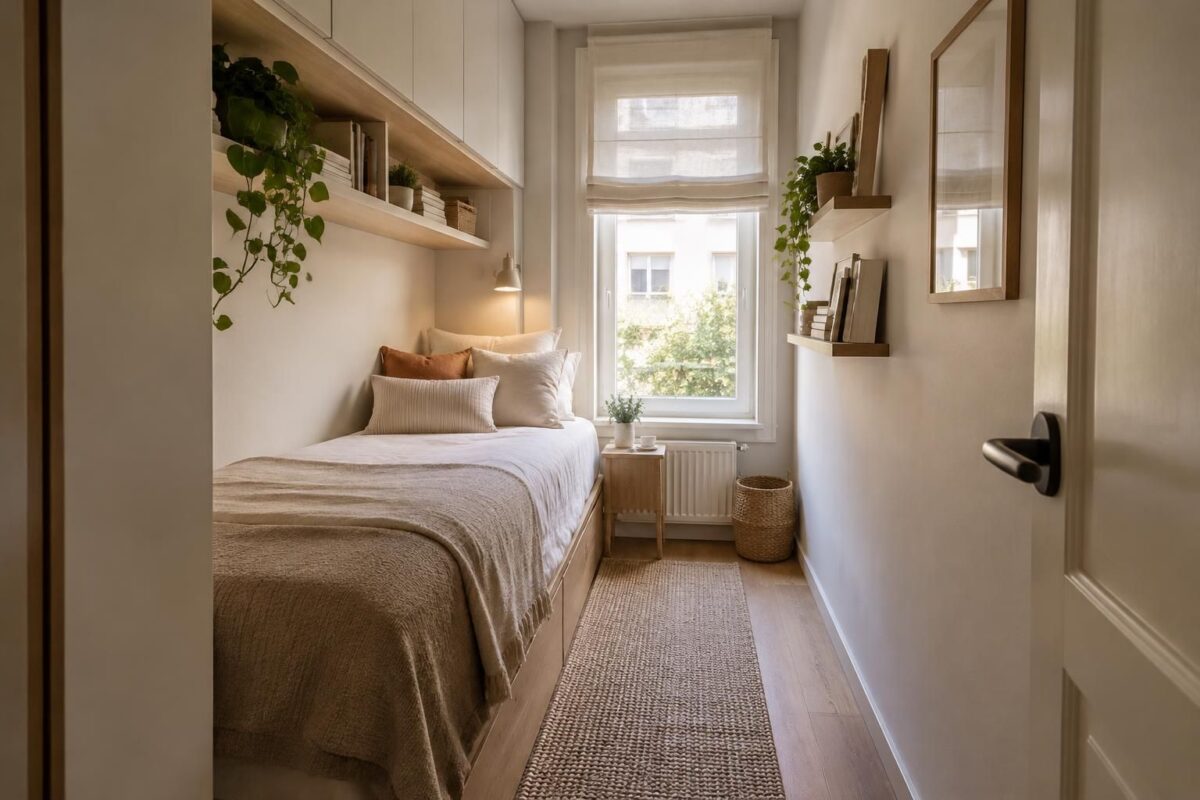
Hi, this is Olivia. To furnish a narrow bedroom, offset the bed, preserve a comfortable walkway, and choose shallow furniture with built-in storage. A few well-placed focal points break up the corridor effect without emptying the room. Soft materials and several light sources make the whole space more welcoming.
What you can do now
- Measure the room and note the doors, windows, and radiators.
- Offset the bed to avoid an arrangement that emphasizes the corridor effect.
- Leave a walkway of about 60 to 70 cm where the layout allows.
- Use the walls for vertical storage rather than adding furniture on the floor.
- Add a lamp and a rug to distinguish the different zones.
For ideas on arranging a small space, check out these tips for furnishing small spaces. A storage bench can also combine seating and storage, as shown in this guide to benches and decorative storage.
Narrow bedroom layout: breaking up the corridor effect
Clearing everything out doesn’t necessarily make the room feel bigger. A low piece of furniture, a rug, or a compact armchair gives the eye reference points and helps structure the length of the room. The goal is to choose a few useful pieces, not to accumulate things.
In a bedroom measuring 2.4 m by 4.8 m, moving the bed just a few dozen centimeters was enough to create a more natural walkway and better define the sleeping area and storage zone. This little anecdote shows how simply changing the position of something can alter the way the entire room feels.
“One well-placed piece of furniture is better than one too many.” A compact bed, a wall-mounted bedside table, or a storage bench frees up floor space without sacrificing comfort.
Positioning the bed and organizing traffic flow
When the room allows, place the bed against the longest wall and avoid pushing it all the way to the back. Shifting it slightly off-center creates a walkway and breaks up the vanishing-point effect. Leave around 60 cm of clearance if possible; this measurement varies depending on the bed’s width and the layout.
If the bedroom is more than about 4 m long, try offsetting the bed to create two zones. If it’s very narrow, choose a compact bed against one wall and limit the amount of furniture on the floor.
Choosing suitable space-saving furniture
Multifunctional furniture helps keep a room practical without adding more pieces: a bed with drawers, a storage bench, or a console that also serves as a bedside table. A fold-down shelf can replace a fixed desk when space is limited.
| Solution | Main benefit | What to consider |
|---|---|---|
| Bed with drawers | Stores bedding beneath the bed | Check how much space is needed to open the drawers |
| Fold-down shelf | Creates a small work area when needed | Choose a location that won’t block the walkway |
| Shallow wardrobe | Structures the back of the room | A depth of 40 to 60 cm, depending on the model and clothing |
| Storage bench | Combines seating with storage space | Place it where it won’t obstruct access to the bed |
Making the most of your space: three simple steps
- Step 1: Measure the width and length, then draw the furniture to approximate scale on a floor plan. Map the route between the door, bed, and closet.
- Step 2: Position the bed first, then check the traffic flow. Next, move the storage furniture around to avoid lining everything up along the walls.
- Step 3: Add vertical storage, a rug, and several light sources. Keep only the items that are useful or give the room character.
This method makes it easier to test your bedroom layout before buying anything. It also helps you avoid choosing an attractive piece of furniture that turns out to be too bulky once it’s in place.
Vertical storage, colors, and lighting to create an illusion of space
Wall shelves, hooks, and tall furniture make use of the walls without taking up floor space. For a lighter look, limit open shelving to a few areas and store small items in boxes.
Minimalist decor doesn’t mean an empty room. A subtly textured wall, a rug, or a contrast between matte and natural materials adds depth without overwhelming the eye. Light colors can enhance the illusion of space, while a bolder color on a single wall creates a focal point.
Use multiple light sources: a lamp by the bed, a wall sconce, or indirect lighting in the storage area. Curtains hung close to the ceiling also create a sense of height, and mirrors can reflect natural light.
Wardrobe and desk: furnishing the room without blocking it
A wardrobe at the back of the room can help structure the space, as long as it doesn’t block the view. Sliding doors or lightweight panels are often more practical than hinged doors. Depending on the clothes and the model, a shallower storage unit can free up space for a walkway.
For working in the bedroom, choose a fold-down shelf or a small secretary desk that can be closed away. A different rug or lamp can mark the division between work and rest without installing a partition.
Avoid bulky headboards, overly crowded rows of shelves, and scattered small pieces of furniture. One well-chosen piece often makes moving around and cleaning easier.
Frequently asked questions about narrow bedrooms
How should you position a bed in a narrow bedroom?
Ideally, place it along the longest wall and keep a clear walkway. Shifting it slightly off-center can break up the corridor effect if the room is long enough.
Which furniture should you choose to save space?
Choose a bed with drawers, a wall-mounted bedside table, a fold-down shelf, or a storage bench. These space-saving pieces serve several purposes without cluttering the floor.
How deep should a wardrobe be?
A depth of about 40 to 60 cm may work, depending on the model, hangers, and clothes. Always check how much space will remain for moving around and opening doors.
How can you make a narrow bedroom look bigger?
Use light colors, curtains hung close to the ceiling, a mirror, and several light sources. A rug or subtle texture can also help structure the room without dividing it.
Thank you for your interest; Olivia. P.S. I’d be delighted if you left me a comment at the end of the article.