Interiors: Which lamp transforms the room in the evening?
Hello, Olivia here.
In the evening, a table lamp with warm, adjustable light transforms the living room more effectively than an overhead light alone.
It creates a soft pool of light, highlights the interior decor and makes the room feel more welcoming. The right choice depends mainly on where you place it and the atmosphere you want to create.
Things to do right away
- Choose a warm white bulb, around 2,700 K.
- Place the lamp near an armchair or sofa.
- Direct the light toward a wall for indirect lighting.
- Choose a lampshade that diffuses the light without causing glare.
- Test the lamp at dusk before settling on its location.
To create more balanced living room lighting, first find out where to place lights without getting in the way, then check that the new light source works with the rest of your decor.
Why a table lamp changes the mood of the living room
In the evening, the overhead light often illuminates the whole room evenly. A table lamp instead creates a pool of light at eye level, drawing the eye and making the space feel more intimate.
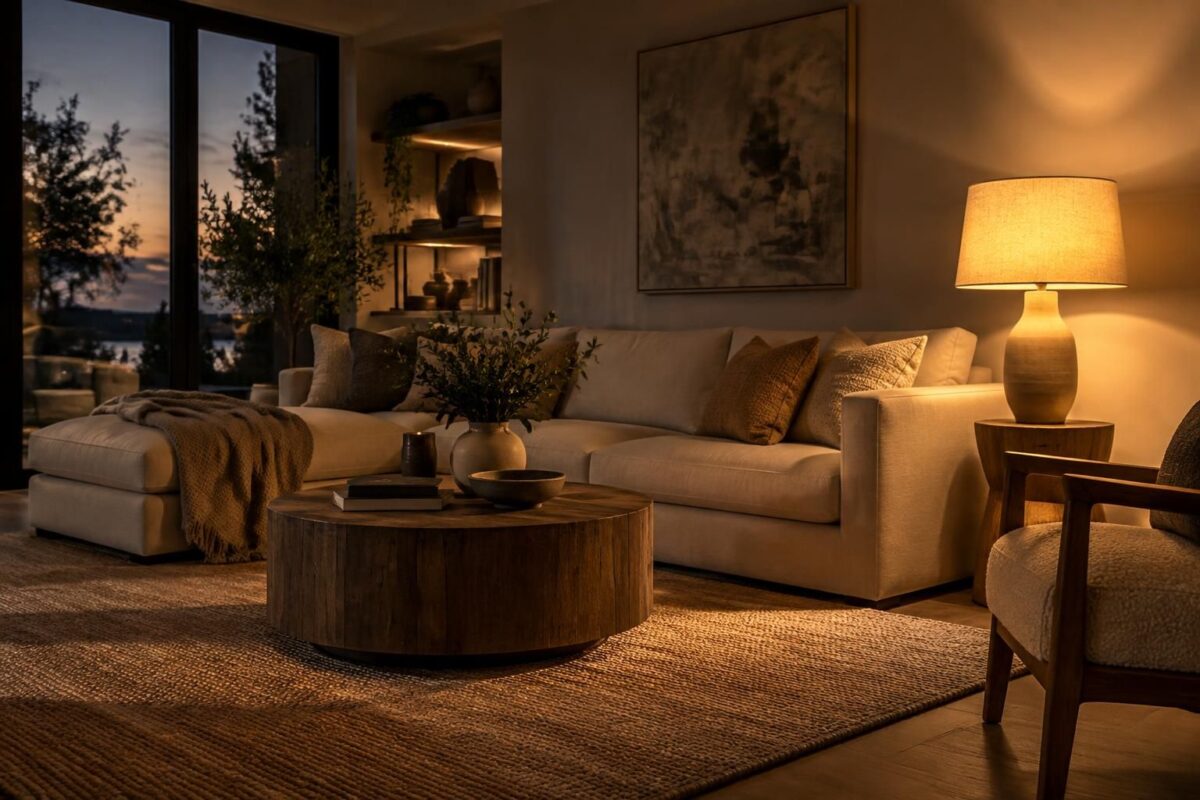
Picture Nora’s living room: her overhead light stays off in the evening, while a lamp near the sofa illuminates a reading nook and warms the wall behind it. This simple arrangement adds depth to the room without changing the furniture.
Soft light instead of uniform lighting
For a pleasant evening atmosphere, look for soft, subdued light that keeps the room’s outlines visible without making it feel dark. An opaque lampshade directs the beam more narrowly, while a fabric or opal glass shade diffuses it more widely.
A designer lamp can also become a decorative accent, even when it’s switched off. The key is to choose a shape that complements the materials and colors already in the room.
Which lamp to choose for the effect you want
The position and spread of the light matter just as much as the lamp itself. A focused light helps you read, while diffused lighting is better suited to a relaxing evening or conversation.
| Desired effect | Type of lamp | Recommended location |
|---|---|---|
| Read comfortably | Adjustable lamp | Next to the armchair, slightly behind your shoulder |
| Soften the atmosphere | Lamp with a diffusing shade | On a console or side table |
| Highlight a wall | Upward-facing lamp | Near a corner or a plain wall |
In a small living room, a compact lamp on a shelf can free up the coffee table. A dimmable bulb offers even more flexibility: you can turn up the brightness to read, then dim it to create a cozy atmosphere.
Set up ambient lighting in three steps
There’s no need to add light sources at random. A simple method is all it takes to test the effect and find the right balance for your space.
- Choose the spot you want to highlight. It could be a reading nook, a textured wall or a plant you love.
- Place the lamp nearby. Make sure it lights the intended spot without creating distracting reflections on a screen or glare from the sofa.
- Test the light in the evening. Adjust the height, direction and bulb until the lighting feels comfortable.
This simple adjustment contributes to well-being at home: the living room feels more welcoming and each area becomes easier to use. A well-placed lamp often changes how a room feels more than a new decorative accessory does.
Frequently asked questions about the ideal evening lamp
Which bulb should I choose for a warm atmosphere?
Choose a warm white bulb, around 2,700 K, for soft light suited to evenings. A dimmable bulb lets you adjust the brightness to suit the activity.
Where should I place a table lamp in the living room?
Place it near a sofa or armchair to create a cozy nook. It can also light a wall indirectly, as long as it doesn’t obstruct movement or the view of the screen.
Is one lamp enough for the living room?
It may be enough to create ambient lighting in a small space. To read or light several areas, pair it with another suitable light source.
Which lampshade should I choose to avoid glare?
A fabric or opal glass shade that diffuses the light helps reduce glare. Also make sure the bulb isn’t directly visible from the sofa.
Thanks for reading! If this resonates with you, share your experience in the comments. — Olivia