Interiors: why your living room stays cold
Hello, it’s Olivia. Your living room often stays cold because of icy walls, drafts, or dampness: start by addressing leaks and cold surfaces without automatically turning up the heating. The temperature on the thermostat doesn’t always reflect how comfortable the room feels. A few simple checks can already make a difference.
What you can do right now
- Check for drafts near doors and windows.
- Close the shutters and thick curtains at dusk.
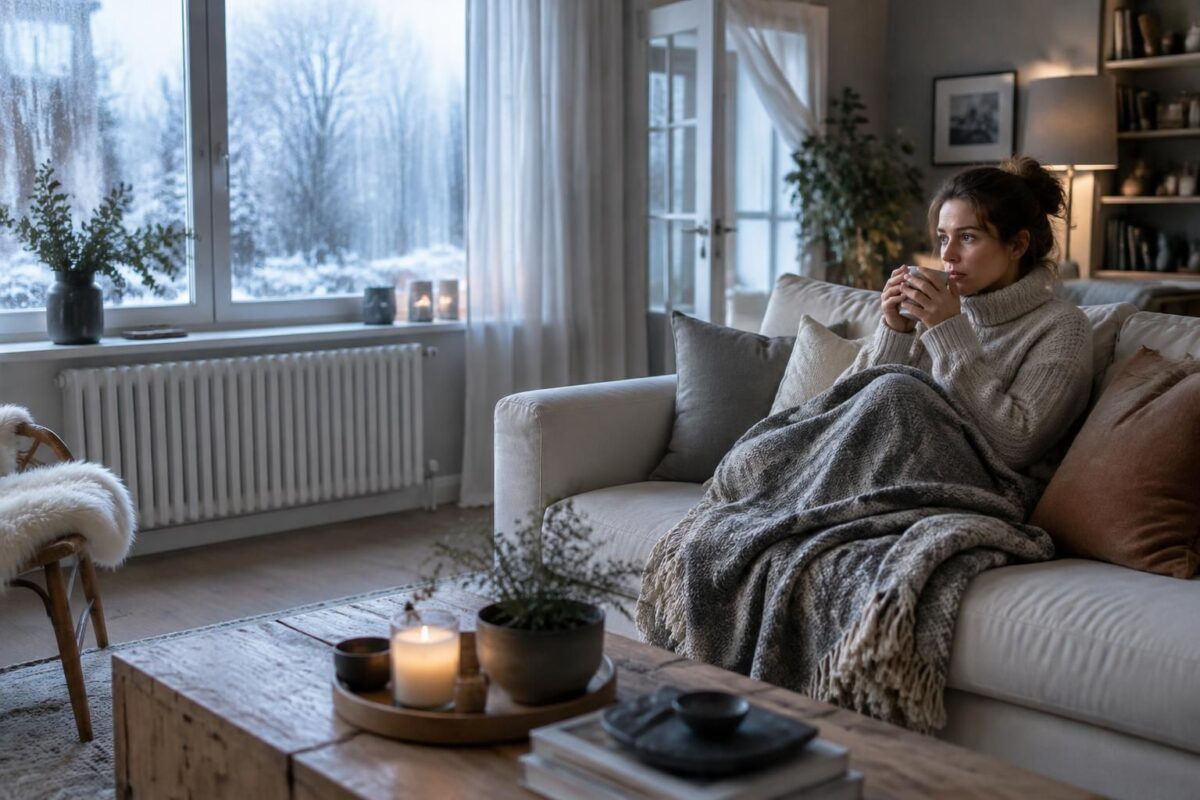
- Put a rug on a cold floor and add a throw to the sofa.
- Air out the room briefly every day to refresh the air.
- Make sure the radiators heat evenly.
To make the room look warmer, take a look at these ideas for colors and materials that balance warm and cool tones, as well as these storage tips for avoiding a cold-looking living room.
Cold living room: causes the thermostat often misses
A living room can show 19 °C and still feel chilly if the walls, floor, or windows are cold. Your body exchanges heat with these surfaces: this is the cold wall effect. A thermometer measures the air, not the thermal comfort of the entire room.
Poorly insulated windows, damaged seals, or thermal bridges also cause heat loss. Excessively high humidity can sometimes make the room feel less comfortable; generally aim for a level of around 40 to 60%, depending on the situation.
A simple little anecdote: in one living room, putting a rug over the tiled floor was enough to make the sofa area more comfortable, even without changing the heating setting. “Warmth is something you feel with your feet, too,” this small everyday change reminds us.
Signs to look for in your living room
- Frequent condensation on the windows or signs of damp.
- Walls and floors that feel cold to the touch, especially near exterior walls.
- Small drafts around windows, doors, or baseboards.
- Radiators that are hot, but heat that is unevenly distributed around the room.
If it’s mainly cold near the windows, check the seals and add thick curtains. If the whole room stays chilly, even with the radiators on, look instead for a weakness in the thermal insulation or a heating problem.
Ways to warm up your living room without turning up the heating
Start with easy steps: close the shutters in the evening, place a draft stopper under the door, and move anything blocking the radiators so warm air can circulate. Rugs, curtains, and throws make the room feel warmer, but they don’t replace wall insulation if the walls remain very cold.
Air out the room for about 10 minutes a day, then close the windows. This habit helps remove moisture without letting the walls cool down for too long. You can also make the most of the sunshine during the day by opening the curtains on the sunny side.
| Possible cause | Common sign | Helpful action |
|---|---|---|
| Poorly insulated windows | Draft or cold windowpane | Replace the seals and hang thick curtains |
| Excess humidity | Condensation, stuffy air | Air out the room and check the ventilation |
| Cold walls or floors | Icy walls or floor | Add rugs and textiles, assess the insulation |
| Inefficient heating | Room heats unevenly | Check the settings and condition of the radiators |
Insulation and heating problems can occur together. To better understand the possible causes, you can read this advice on persistent cold in the home and this guide to the feeling of cold indoors.
A three-step method to restore thermal comfort
Work through the steps in order: address small leaks before considering renovation work. This approach helps you target the cause rather than compensate for the cold by turning up the heat.
- Step 1: identify cold spots near windows, doors, the floor, and exterior walls. A damp hand or an infrared thermometer can help locate temperature differences.
- Step 2: improve the airtightness with suitable seals, then add curtains and rugs, and close the shutters at night.
- Step 3: if the discomfort persists, have the heating checked and request an assessment of heat loss. A professional can identify thermal bridges, among other issues.
When heat loss seems significant, an assessment can help you prioritize renovations: roof, walls, windows, or floor. Good insulation can improve comfort and reduce the energy needed to heat the room.
When decor fixes are no longer enough
Textiles provide an immediate improvement, but a living room that remains cold despite these steps may point to a building defect or an unsuitable heating system. Avoid using a space heater continuously: depending on the model, it can consume a lot of energy.
If you’re considering renovations, start by comparing the options and having your home’s needs assessed. Priorities vary depending on its age, orientation, and the condition of its insulation.
Why is my living room cold despite the heating?
Cold walls, dampness, drafts, or unevenly distributed heat can make a room uncomfortable even when the thermostat shows a suitable temperature.
How can I spot drafts near windows?
Slowly move your hand near the frames and seals. If you feel a stream of air, check the condition of the seals and how airtight they are.
Can a rug really help in a cold living room?
Yes, it reduces contact with a cold floor and makes the living room area more comfortable. However, it doesn’t replace inadequate insulation.
When should I request an energy assessment?
If the walls remain cold, the heating runs for a long time, or several rooms are uncomfortable, a professional can identify heat loss and recommend suitable priorities.
Thank you for your interest; Olivia P.S. I’d be delighted if you left me a comment at the end of the article.