Decorative Storage: How to Keep Everyday Life Beautiful
Hello, Olivia here. To keep your home looking beautiful every day, give everything a place, combine closed storage with displayed objects, then spend a few minutes tidying up each day. A low cabinet, a basket for throws, and a spot for the mail are often all it takes to change the atmosphere. The secret: think practical before adding furniture.
What you can do now
- Identify the objects that are most often left lying around in the room.
- Sort them into three groups: keep nearby, put away, or donate or recycle.
- Choose a closed cabinet to hide small objects and papers.
- Add a basket or storage ottoman for textiles and games.
- Set aside a few minutes each evening to put the room back in order.
This method helps create a simple home organization system without turning the living room into a storage area. To find ideas that suit your room, check out these tips for keeping clutter at bay and these ideas for choosing between open and closed storage.
Storage that really works for everyday life
Before buying a piece of furniture, take stock of what tends to pile up: remote controls, chargers, books, throws, mail, games, or accessories for entertaining. This little decluttering session shows what needs to stay within reach and what can be put away behind a door.
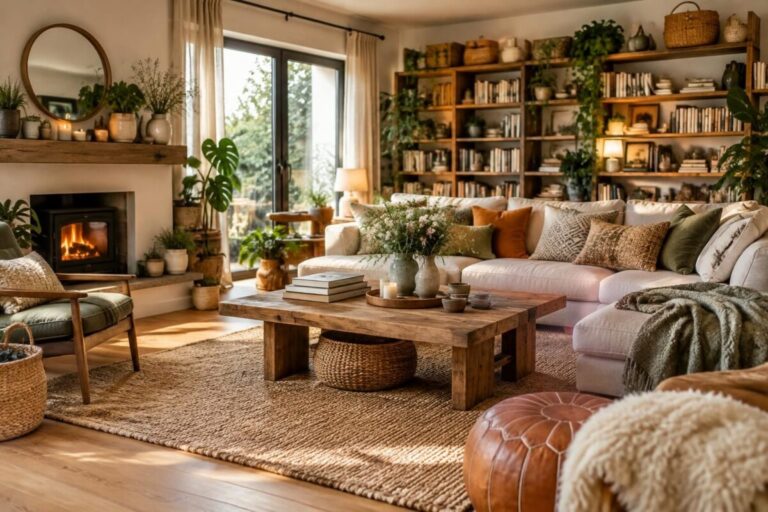
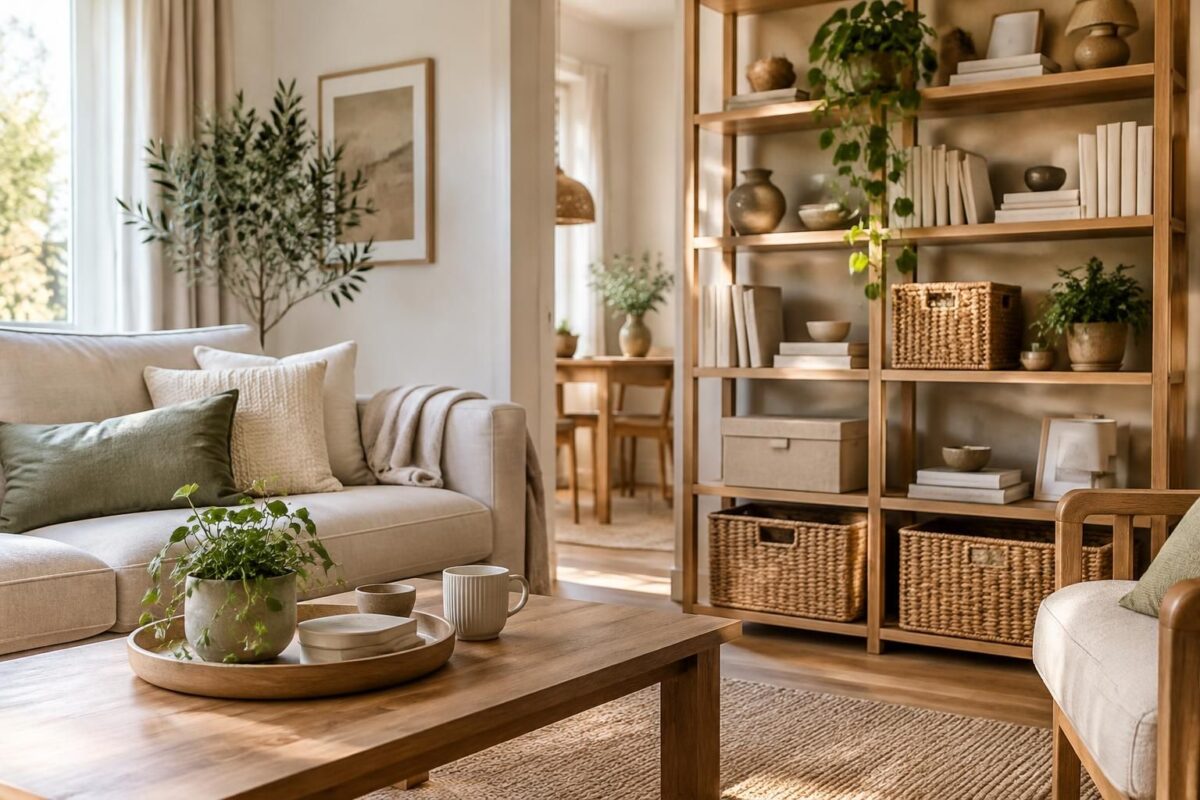
In most living rooms, a combination works well: closed storage to hide visual clutter, and a few open niches for books or decorative objects you like to see. Too many open shelves can quickly make a room feel cluttered; too much closed furniture can make it feel heavy.
If you have a small living room, choose a low, multifunctional piece of furniture to make the most of the available space. If it’s a family room, provide easy-to-reach bins for games and everyday accessories.
Choose storage solutions according to what you need to put away
| Items to put away | Practical solution | For a polished look |
|---|---|---|
| Remote controls and cables | Drawer or dedicated box | A compartment that’s easy to find |
| Throws and cushions | Storage ottoman or basket | A material that complements the living room |
| Mail and papers | File sorter or closed box | A designated spot away from the coffee table |
| Books and decorative objects | Bookcase or wall shelf | Alternate displayed objects with open space |
| Games and toys | Bins or cube storage unit | Containers that are easy to use |
A low, closed cabinet with drawers and doors often makes a good starting point. A depth of around 40 to 45 cm works for many sideboards, depending on the model and the room; above all, make sure the piece doesn’t obstruct the walkway.
Combining attractive storage with functional decor
A TV stand is still useful even if the screen is wall-mounted. It can conceal the set-top box, power strips, and controllers; choose a model with cable management and ventilation if you’re installing electronic equipment inside.
A bookcase looks more visually calming when books are grouped together and small objects are tucked into baskets. Leave some empty spaces too: they make the whole arrangement feel lighter and keep every shelf from becoming a dumping ground.
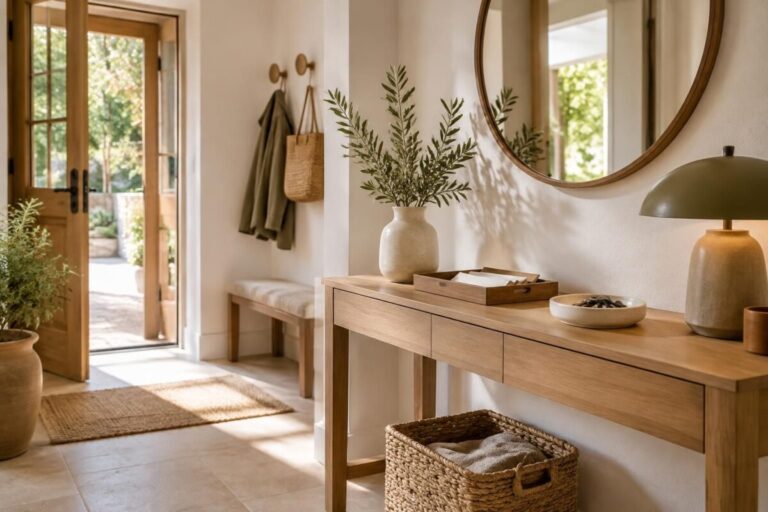
In a living room that also serves as a passageway, create a small drop zone for keys, a bag, and the mail. A slim console, a catchall tray, and a basket are sometimes all it takes to stop clutter from migrating to the dining table.
A simple little anecdote: in one family living room, the throws ended up on the sofa every evening. Since a storage ottoman was placed nearby, they can be put away in just a few moves, and the room immediately looks neater.
A three-step method for keeping your home tidy
- Step 1 — Sort: gather items by category and remove anything that’s no longer useful in the room.
- Step 2 — Give everything a place: keep what you use every day within reach; put the rest in a closed cabinet or up high.
- Step 3 — Reset: spend five to ten minutes, depending on the situation, putting everything back in its place at the end of the day.
“A place for everything, and everything in its place.” This simple rule makes tidying easier to share and helps maintain a harmonious everyday life.
Keep a room pleasant without overcrowding it
Concealed storage, such as a sofa with a storage compartment or flat bins under the sofa, is handy for spare textiles and seasonal decor. For a coffee table with a drawer, set a clear rule: for example, reserve the drawer for remote controls and cables rather than turning it into a catchall.
Cables easily draw the eye. A cable box or wall-mounted cable cover can hide them neatly; just make sure electronic equipment is properly ventilated.
A catchall basket can hold items that need to be put away elsewhere when time is short. It should only be temporary: empty it regularly so it doesn’t become a new hiding place for clutter.
To personalize the room, choose a few decorative objects that really matter to you and give them space to breathe. Decorative storage isn’t about hiding everything, but about displaying what adds character and carefully putting the rest away.
Answers to common questions about decorative storage
How can you tidy a living room without making it feel cold?
Mix closed cabinets with open shelving. Hide everyday items, then keep a few books, plants, or keepsakes on display to preserve a warm atmosphere.
What storage should you choose for a small space?
Choose a low, multifunctional piece of furniture, a storage ottoman, or wall storage for lightweight items. Make sure the furniture doesn’t block the flow of traffic.
How can you stop mail from piling up?
Set up a file sorter or a dedicated box with a place for papers that need attention. Set aside a regular time to file or discard them.
How much time should you spend tidying every day?
Five to ten minutes is often enough to put things back in their place, depending on the size of the room and the household’s lifestyle.
Thank you for your interest; Olivia P.S. I’d be delighted if you leave me a comment at the end of the article