Small Spaces: How to Create a Warm Atmosphere Without Feeling Hemmed In
Hi, Olivia here. To warm up a small space without making it feel stuffy, go for soft lighting, a few well-chosen textiles, and targeted heating. Lightweight furniture and clever storage keep the room pleasant to live in. The idea: create a cozy cocoon that still feels airy, without accumulating objects or heat sources.
What you can do right now
Start by clearing the floor, then add a rug and a warm-light lamp: these two touches quickly change how comfortable the room feels. To take it further, discover ideas for making a small space cozy and choosing colors and materials suited to your home.
- Clear the walkways and remove objects cluttering surfaces.
- Choose a rug or throw to add a soft touch without piling on layers.
- Place a lamp with soft lighting near the sofa or bed.
- Stick to a limited palette: light shades as a base and one warm accent color.
- If the room feels chilly, choose a compact radiator suited to its size rather than an overly powerful unit.
Create a warm atmosphere without cluttering the room
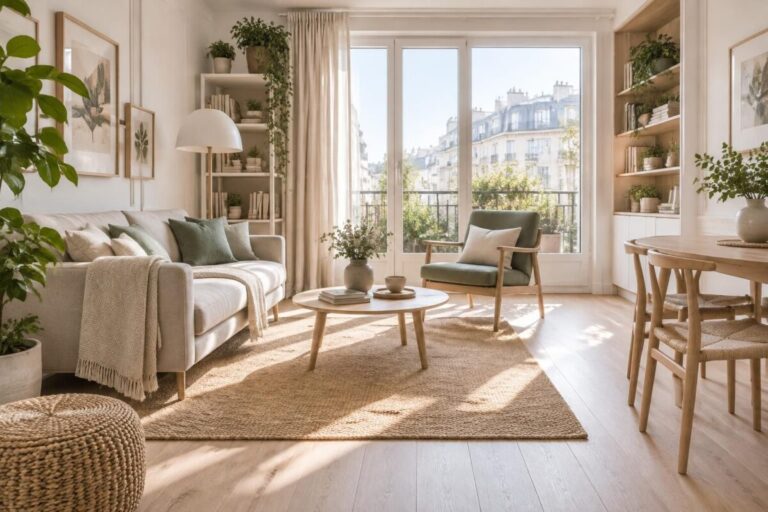
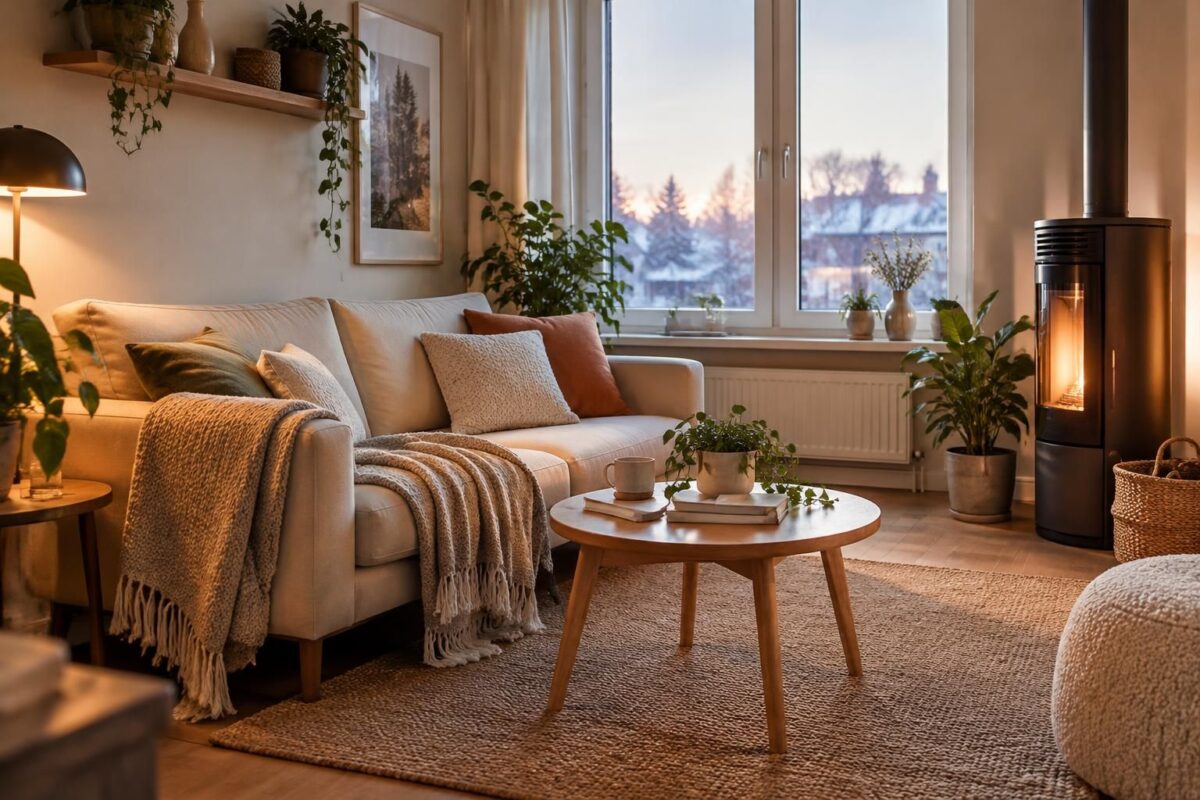
In small spaces, visual warmth matters just as much as temperature. A rug, a textured cushion, or a throw is often enough to create a sense of comfort, without covering every piece of furniture with textiles.
Choose two or three complementary materials: light wood, linen, wool, or heavyweight cotton. Bright walls and a few terracotta, caramel, or deep green accents add character without making the room look smaller.
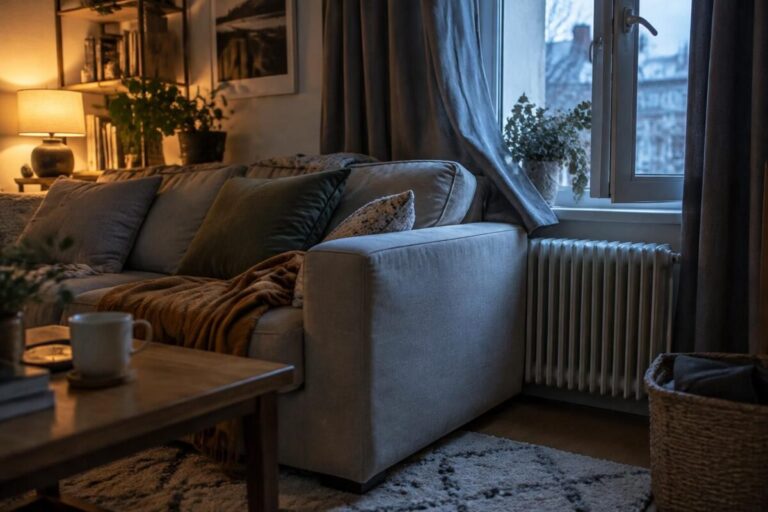
A friend simply replaced her white ceiling light with a lamp and put a rug beside the sofa. Her studio felt more welcoming in the evening, without adding furniture or cluttering the walkways.
As a saying often attributed to Florence Knoll puts it: “Simplicity is the ultimate sophistication.” In a small room, every item should provide comfort or serve a real purpose.
Soft lighting and colors: add warmth without darkening the room
Keep windows clear to make the most of daylight, then add several small lamps instead of one powerful light. A warm bulb, around 2700 to 3000 K depending on the model, creates a more relaxing atmosphere.
A mirror placed opposite a window can also reflect light and create a sense of depth. It’s a simple way to support space optimization without adding bulk.
Interior layout: make the most of space and keep traffic flowing
A cozy interior shouldn’t become an obstacle course. Choose furniture with light, airy lines and visible legs, and reserve bulky pieces for essential needs.
Nesting tables are easy to tuck away, a pouf can serve as both a seat and storage, and an extendable console can adapt to mealtimes. These multifunctional pieces of furniture help maintain good flow and make the room easier to adapt to different times of day.
Make use of vertical space with shelves or closed storage, too. Natural-fiber baskets hold small items and reduce visual clutter without adding a bulky piece of furniture to the floor.
Textiles and thermal insulation: add comfort without overdoing it
A thick rug can make a cold floor more comfortable underfoot. Lined curtains help reduce drafts near windows, but keep them light enough so they don’t make the room feel stuffy.
For better thermal insulation, check the window seals and place a draft stopper at the bottom of the door if air is getting through. These steps are generally inexpensive, but their effect depends on the condition of the home and its windows and doors.
Space heater: choose warmth suited to the room
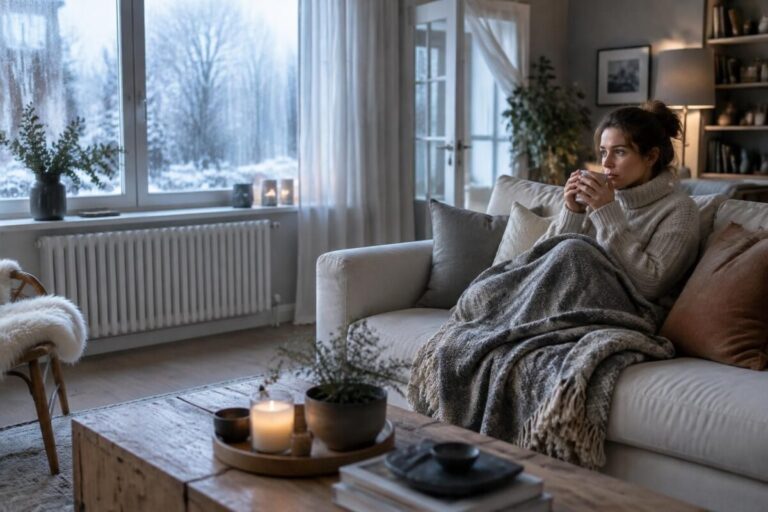
If textiles and simple fixes aren’t enough, a space heater can add extra comfort. Choose a unit based on the room’s size, insulation, and how often you’ll use it. A compact model with a thermostat helps avoid unnecessary heating.
| Solution | Main benefit | Keep in mind |
|---|---|---|
| Compact radiator | Easy to place in a small room | Check the recommended output for the room’s size and insulation |
| Radiant panel heater | Provides a quick feeling of warmth nearby | Comfort depends on its location and the room layout |
| Lined curtains and seals | Reduce drafts and heat loss around windows | Effectiveness varies depending on the windows and the home |
| Rug and throw | Improve how comfortable the room feels without taking up much space | Choose sizes suited to the room |
An electric heater should be kept clear and used according to the manufacturer’s instructions. Don’t cover it or place it near curtains, and never use a combustion appliance in a room without adequate ventilation.
Cozy decor: organize the space in three steps
- Step 1: clear the walkways and identify anything unnecessarily cluttering the floor.
- Step 2: choose a limited palette, then add a rug or textile with a pleasant texture.
- Step 3: place one or two warm-light lamps and, if needed, a space heater suited to the room.
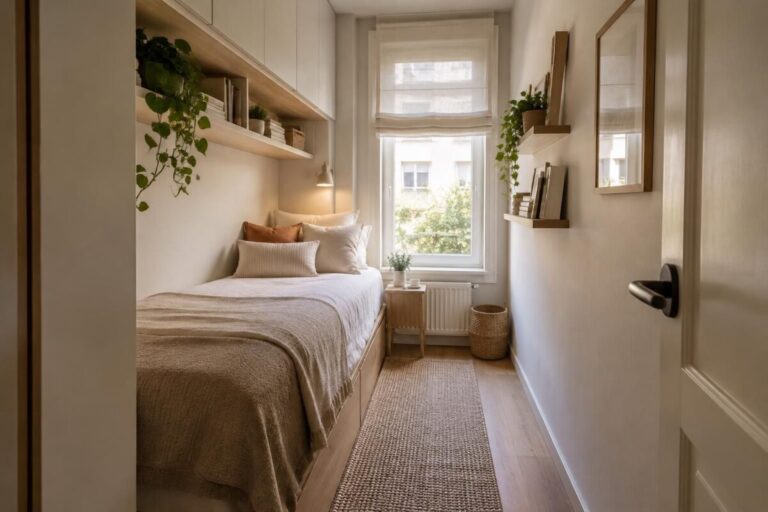
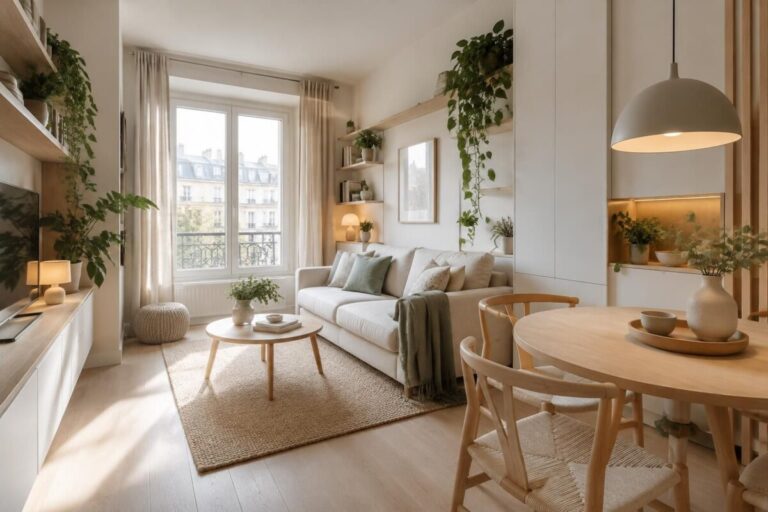
If it’s a studio, choose modular furniture and lighting that defines different areas without putting up partitions. If it’s a small bedroom, focus on a rug, a comfortable blanket, and a lamp by the bed.
Small details that improve thermal comfort
Closing the shutters at nightfall and making the most of the sun during the day can help retain heat, depending on the orientation and windows. Remember to air the room briefly, then close the windows again: fresh air helps prevent excess humidity, which often makes a room feel less comfortable.
Thermal comfort comes from a balance between temperature, air circulation, humidity, and how materials feel. There’s no need to transform everything: a few thoughtful adjustments can already make a room more welcoming.
Practical questions about warming up a small space
How can you make a small space feel warm without cluttering it?
Keep surfaces fairly clear, choose a few pleasant textiles, and use several small light sources. A limited palette also helps maintain a harmonious overall look.
What lighting should you choose for a cozy atmosphere?
Warm light, around 2700 to 3000 K depending on the bulb, is often suitable for relaxing. A table lamp or floor lamp creates softer light than a ceiling light alone.
How can you heat a small room without making it feel stuffy?
Keep the area around the heater clear and choose a space heater suited to the room’s size and insulation. Add curtains, make sure the seals are in good condition, and use textiles rather than accumulating heat sources.
What furniture should you choose to make the most of a studio?
Choose multifunctional furniture, nesting tables, and vertical storage. Light designs and clear walkways help make a room more practical and visually airy.
Thank you for your interest; Olivia P.S. I’d be delighted if you left me a comment at the end of the article