Small spaces: how to make 20 m² feel more inviting
Hello, it’s Olivia. To make 20 m² feel more inviting, clear the floor, choose a few versatile pieces of furniture, and combine soft materials with well-distributed lighting. A small space can become a true cozy retreat without accumulating objects or undertaking major renovations. The idea is to create distinct, practical, welcoming zones. Every choice should help you enjoy the room more, not simply fill it up.
What you can do now
- Sort through anything cluttering surfaces and walkways.
- Measure the walls, doors, and ceiling height before making any purchases.
- Move storage against the walls and clear the floor.
- Choose a piece of furniture that serves at least two purposes.
- Add soft lighting and a pleasant textile to each living area.
For more ideas on making the most of your space, check out these tips for creating a cozier corner in a small space and these ideas for warming up the atmosphere without making the room feel cramped.
Furnishing 20 m² without losing the sense of space
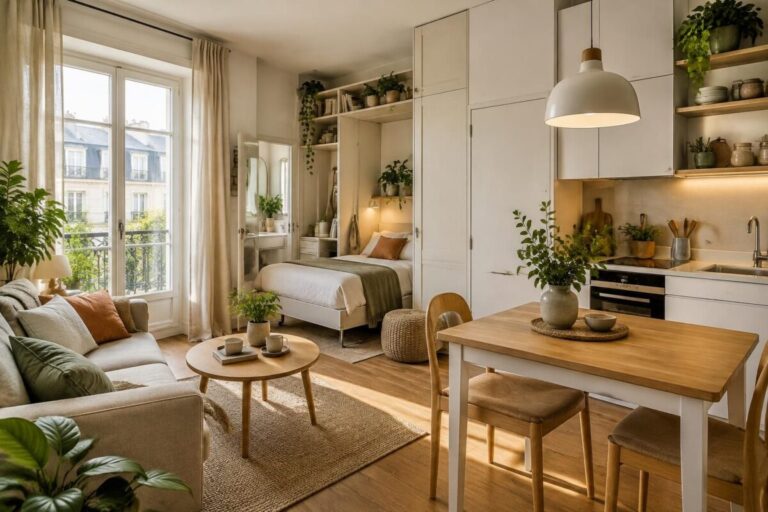
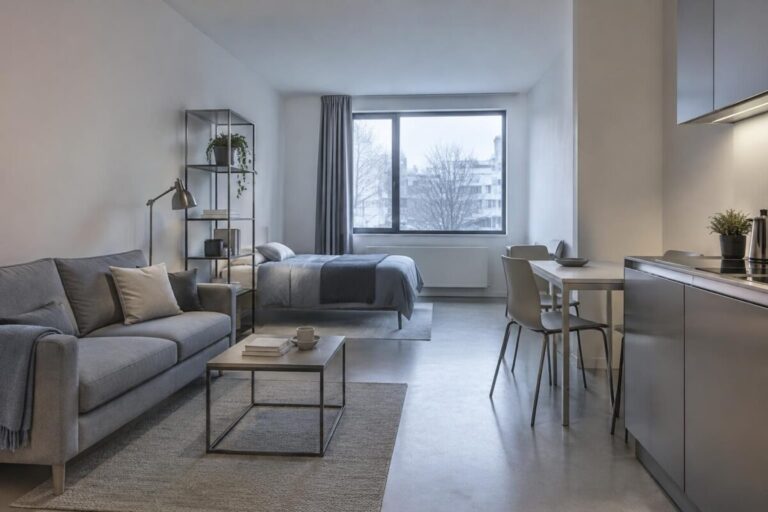
A studio apartment feels more comfortable when each area has a clear purpose: sleeping, eating, working, or relaxing. Before moving furniture, identify the walkways and keep access to windows, doors, and storage clear. Visible floor space and easy circulation often make a room feel more spacious.
In a small home, smart storage starts with decluttering. Keep what you use often within easy reach, then store seasonal items up high. Wall shelves, hooks, and boxes under the bed free up space without adding more furniture to the floor.
Step 1: Measure and clear the space
Measure the room, the furniture you’re considering, and the walkways. You can use masking tape to mark out the space a sofa or bed would take up before buying it: this simple test quickly shows whether there’s still enough room to move around comfortably. It’s a useful precaution to avoid a tempting piece of furniture blocking the room.
Step 2: Choose multifunctional furniture
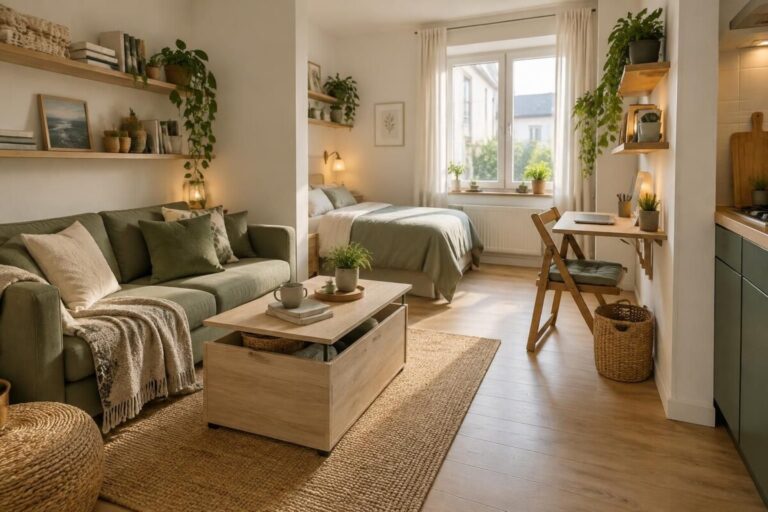
A sofa bed, a bed with built-in storage, or a drop-leaf table can meet several needs in the same space. For everyday sleeping, choose a comfortable sofa bed rather than a model designed just for occasional use. Multifunctional furniture works even better when it’s simple and quick to use every day.
A small extendable table can serve as a desk during the week and seat two for a meal. In a narrow kitchen, a board placed over the sink can also create extra counter space. The right piece of furniture isn’t necessarily the biggest one; it’s the one that suits your habits.
Step 3: Define areas without making them feel closed in
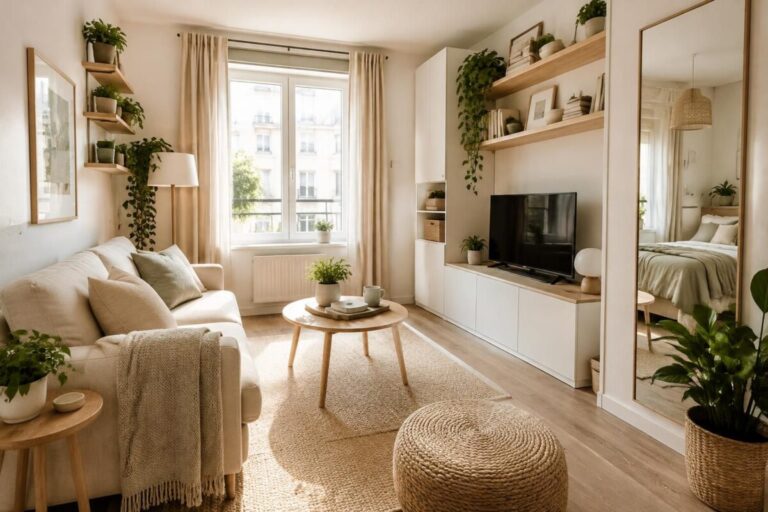
An open bookcase, a curtain, or a rug can mark the division between the sleeping area and the living room without blocking the light. A mirror placed near a window helps spread light around the room. As a simple decorating principle goes: “A well-organized space breathes better.”
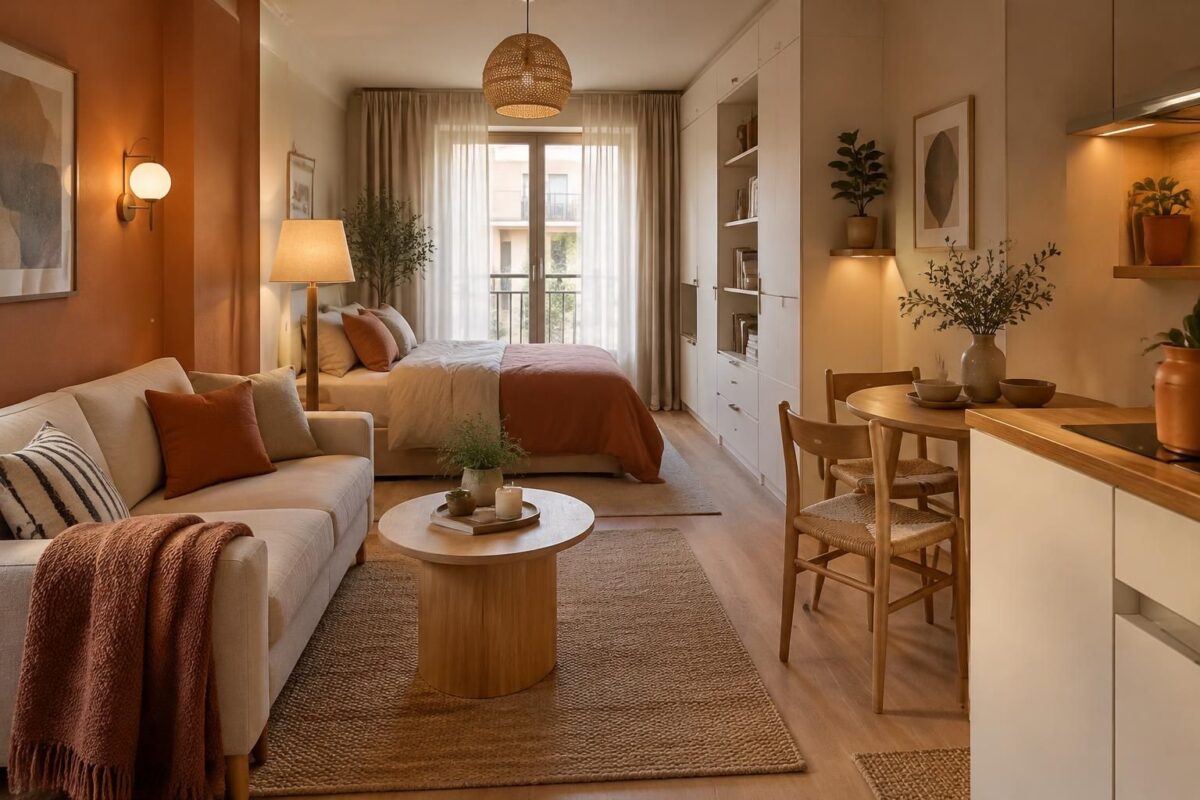
If it’s a studio apartment, place the bed away from the entrance and opt for a light partition. If it’s a small living room, choose a compact sofa and a rug large enough to visually bring the seating area together.
Colors and lighting for a cozy atmosphere
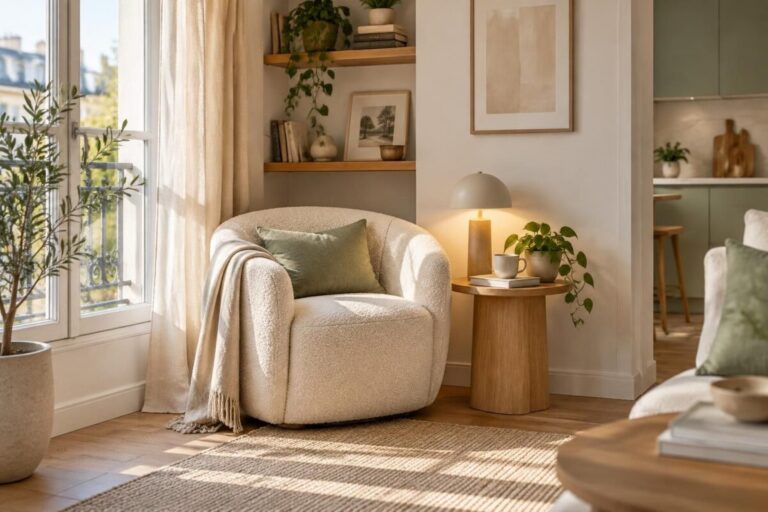
Light-colored walls, such as off-white or soft beige, reflect light and create a unified feel. To add depth, introduce a stronger color on a cushion, throw, or accent wall. Warm colors and a few natural materials create a cozy decor without making the room feel heavy.
Choose lightweight sheers that let daylight in, then supplement the ceiling light with two or three light sources at different heights. An adjustable wall light by the bed and a soft lamp in the living room are often enough to make the corners feel more welcoming. This soft lighting prevents dark spots and creates a cozy atmosphere as soon as evening falls.
A little story illustrates how much details can matter: in a redesigned studio apartment, a simple rug large enough to bring the sofa and coffee table together made the living area feel more defined. The room hadn’t changed size, but it seemed more harmonious.
| Need | Suitable solution | Desired effect |
|---|---|---|
| Clear the floor | Wall shelves and high-level storage | Easier movement around the room |
| Add another function | Drop-leaf table or sofa bed | Versatile furniture |
| Create a sleeping area | Curtain or open bookcase | Division without a heavy partition |
| Warm up the atmosphere | Natural textiles and accent lamps | Visual and tactile comfort |
For more ideas on interior design, this video showcases solutions for small spaces.
Small details that make everyday life better
Avoid placing too many objects on furniture: a few carefully chosen pieces add more character than a cluttered display. Furniture on legs leaves the floor visible and often looks lighter. In the kitchen and bathroom, use the walls and the insides of doors for storage without encroaching on walkways.
To keep your space comfortable, make sure air vents are unobstructed and air it out regularly, especially if you cook and dry laundry in the same room. A cozy space should also be healthy and easy to maintain. The best layout is the one that makes everyday tasks easier.
How can you separate the sleeping area in a 20 m² studio apartment?
Use a curtain on a track, an open bookcase, or a rug to distinguish the areas without blocking the light or making the room feel heavy.
Which colors should you choose to make a small space feel warmer?
Start with light shades for large surfaces, then add a few warm accents and natural materials such as wood, linen, or cotton.
Which furniture should you choose to make the most of 20 m²?
A sofa bed, a bed with storage, a drop-leaf table, or a storage bench can serve several purposes and reduce the need for furniture.
How can you light a small home in the evening?
Combine several light sources at different heights: a table lamp, an adjustable wall light, and soft general lighting.
Thank you for your interest; Olivia. P.S. I’d be delighted if you left me a comment at the end of the article.