Decorating styles: how to make an impersonal living room feel personal
Hello, Olivia here.
To make your living room feel less impersonal, pair a cohesive color palette with warm materials and a few objects that tell a story about you.
You don’t need to replace everything: a few targeted changes are often enough to transform the atmosphere. The secret is to create a common thread rather than accumulate trends.
What to do now to personalize your living room
- Choose two or three colors that work well together and repeat them in several elements.
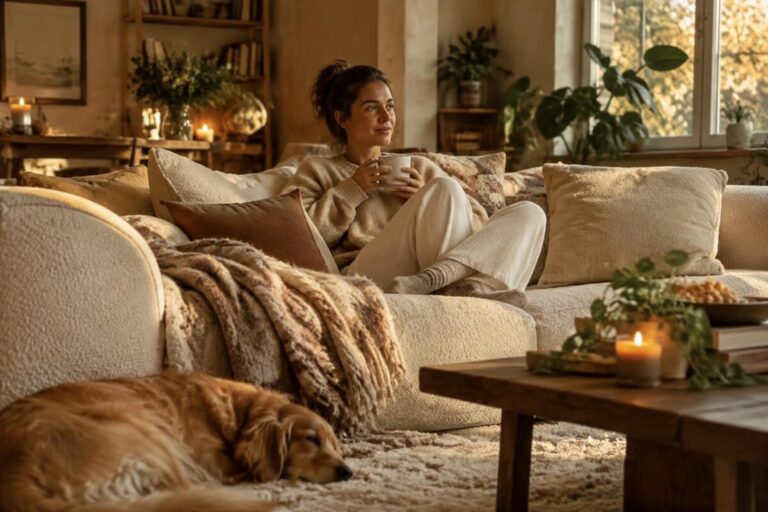
- Add a soft home textile: a cushion, throw, or rug.
- Display a decorative object that has real meaning to you.
- Warm up the lighting with a soft-glow lamp.
- Move a piece of furniture or an accessory to create a focal point.
If your living room is small, these ideas for choosing a decor style suited to a small living room can help guide your choices. To keep the room lively without letting clutter take over, also check out these decorative storage ideas for a lively living room.
The mistake that makes a living room feel impersonal
A room can be elegant and still lack character if all the furniture comes from the same set or the accessories seem to have been chosen solely to follow a trend. The result often feels uniform, like a staged setting that doesn’t reflect the lives of the people who live there.
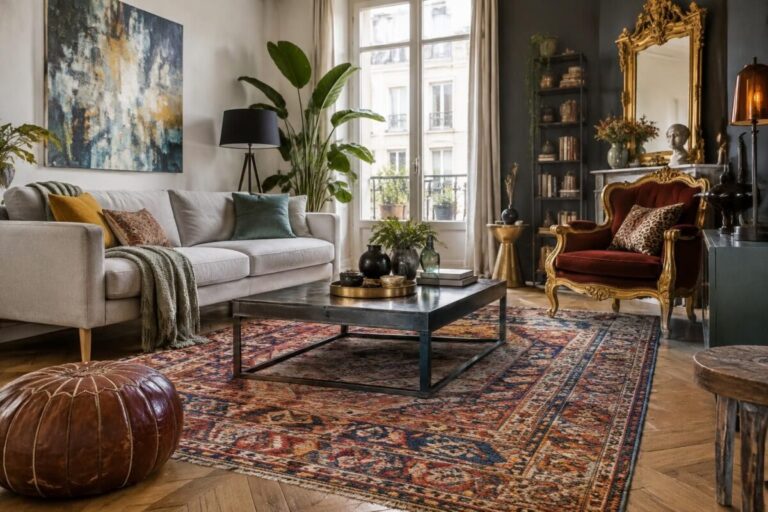
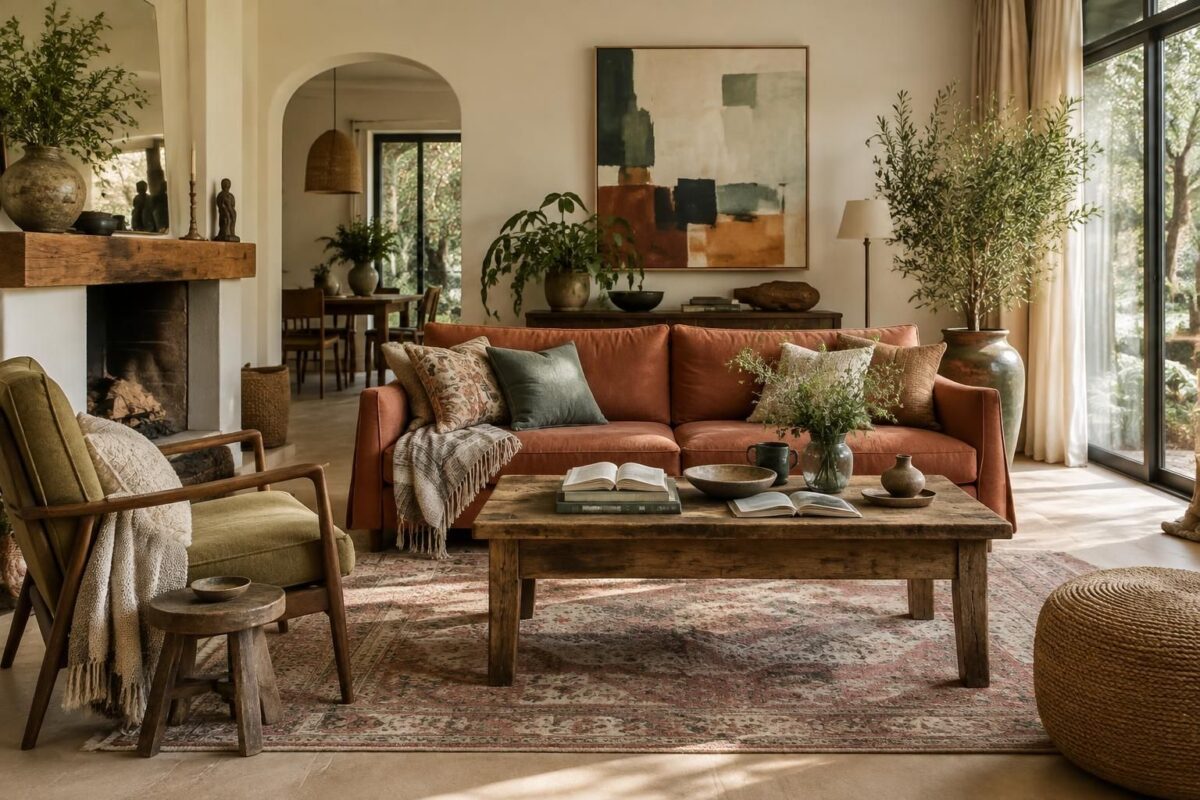
To avoid this, mix styles with restraint. A simple sofa can sit beautifully alongside an antique table, a graphic print, and a handmade basket: this contrast adds depth, as long as you maintain a visual connection between the elements.
A real-life example: giving a neutral living room its own identity
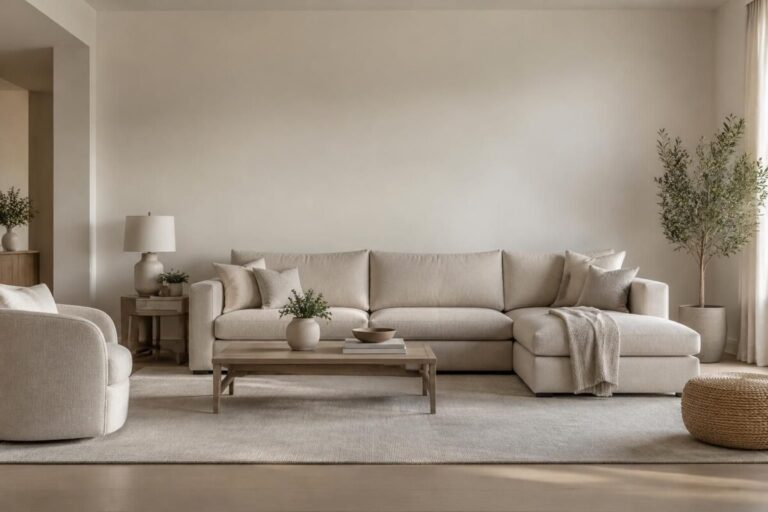
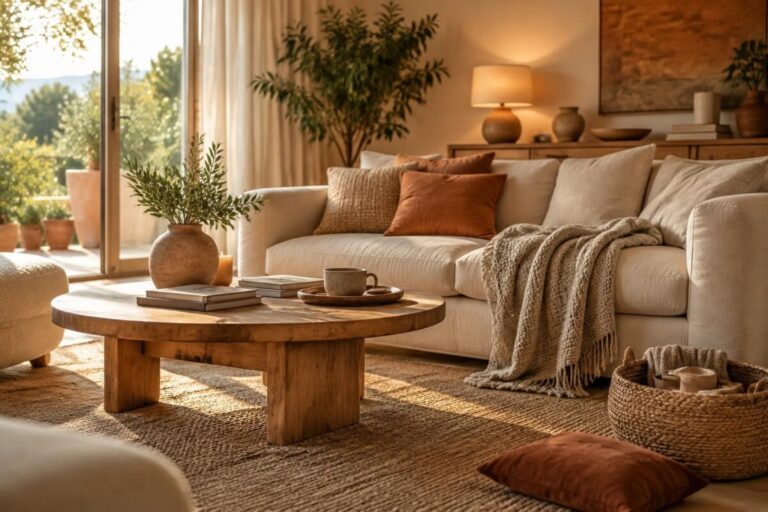
Imagine a living room with white walls, a beige sofa, and an understated coffee table. Rather than replacing all the furniture, add a patterned rug, two colorful cushions, and a sculptural lamp; a few carefully chosen books or keepsakes can then add a personal touch.
This personalized decor works because it combines a calm foundation with distinctive details. The living room remains easy to update, but immediately feels more inviting.
Choosing the right elements for a warm living room
Start by deciding on the atmosphere you want: natural, contemporary, bohemian, or more classic. Limiting your palette to three main colors helps harmonize the walls, home textiles, and small accessories.
Materials matter just as much as colors. Wood, linen, wool, and ceramic add depth and make the interior feel more lively, while a distinctive piece of furniture creates an anchor in the room.
| Element | Effect in the living room | Simple idea |
|---|---|---|
| Colors | Unify the overall look | Repeat one color in three accessories |
| Textiles | Add comfort and texture | Pair a throw with contrasting cushions |
| Lighting | Create a softer atmosphere | Combine a floor lamp with an accent lamp |
| Decorative objects | Reveal your personality | Display a few carefully chosen pieces rather than an entire collection |
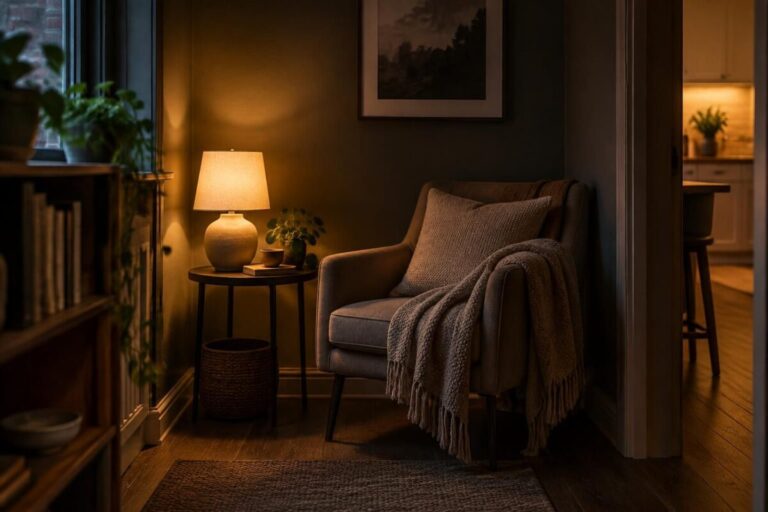
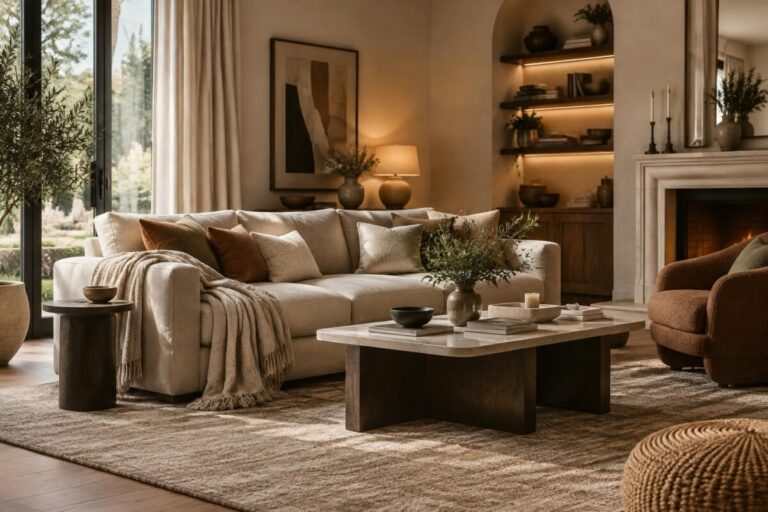
Thoughtful ambient lighting also makes a real difference: a single pendant light illuminates the room, but several light sources create a more nuanced effect. A lamp by the sofa and another in a dark corner are often all it takes to create a warm living room.
A 3-step method to transform the room
- Identify what’s missing. Observe the room at different times of day: does it need more color, light, texture, or a focal point? Note one top priority.
- Choose a common thread. Select a color palette and two materials to repeat in several areas. For example, sage green and light wood can tie together cushions, a shelf, and accessories.
- Add, then adjust. Bring in a few elements, then step back before buying anything else. A living room gains personality when every object has its place, not when every surface is filled.
This process helps you avoid impulse purchases and build a decor style that evolves with your tastes. A successful room doesn’t have to be perfect: above all, it should feel lived-in and cohesive.
Frequently asked questions about personalizing a living room
How can I personalize a living room without changing the furniture?
Refresh the cushions, add a rug, change the lighting, and display a few personal decorative objects. These targeted changes transform the atmosphere without replacing the furniture.
Which colors should I choose for a warm living room?
Start with a neutral base and add one or two warm shades, such as terracotta, ochre, or brown. Repeating these colors in several accessories helps create a cohesive palette.
How can I avoid making a living room feel too cluttered?
Keep surfaces clear and select a few objects that really matter. Limiting patterns and main colors also helps maintain a sense of harmony.
What lighting should I choose to make a living room more inviting?
Combine several sources of soft light: a pendant light, a floor lamp, and a small accent lamp. This arrangement creates a warmer atmosphere than a single ceiling light.
Thanks for reading! If this topic speaks to you, share your experience in the comments. — Olivia