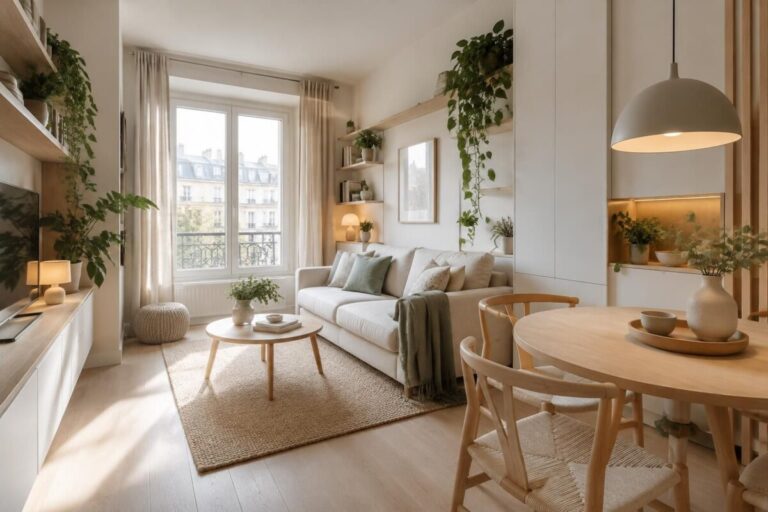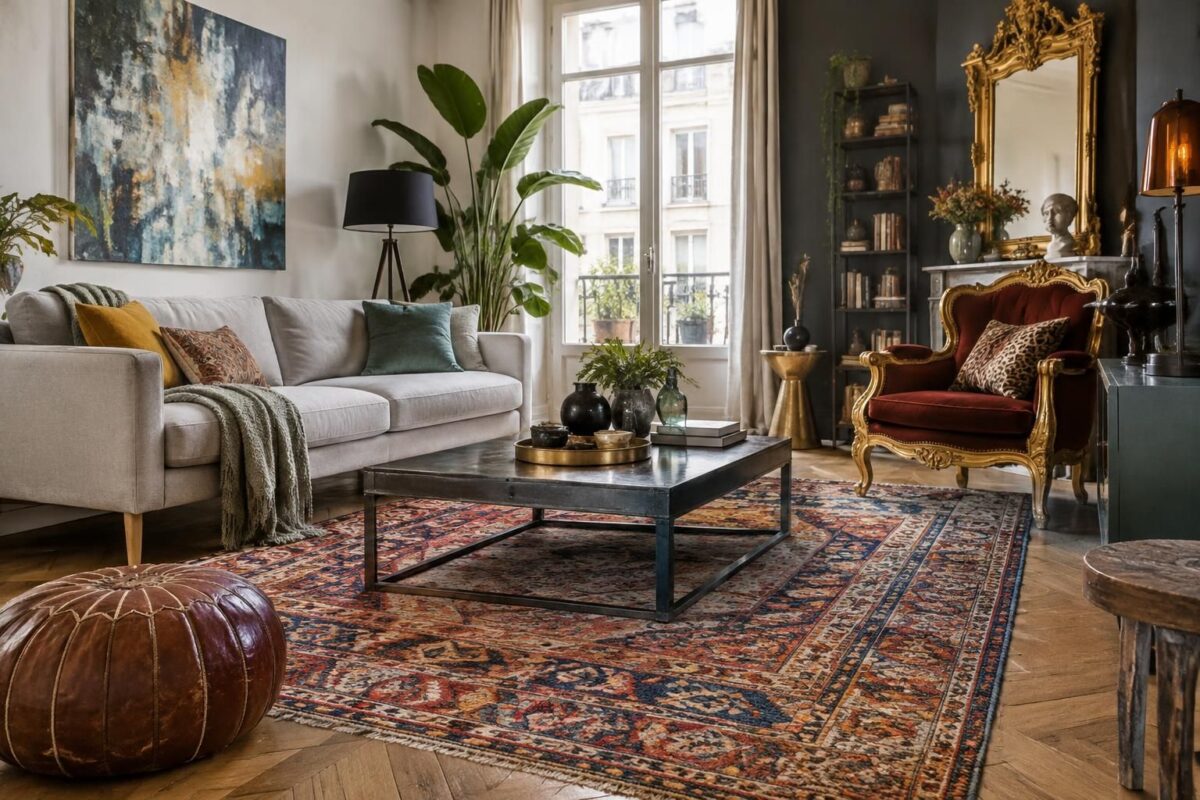
Decorating styles: does your decor lack cohesion?
Hello, Olivia here. To make your decor feel cohesive, choose one dominant style, then tie the others together with a recurring color or material. You don’t need to buy matching furniture: a few visual echoes are often enough to create a real sense of unity. A mood board and samples will help you test combinations before making a decision.
What you can do now
- Choose a dominant style to serve as your guiding thread.
- Limit secondary styles to a few pieces or accessories.
- Repeat the same color or material in several places.
- Test colors and textures at home using samples.
- Leave space around standout furniture to let the room breathe.
To explore possible combinations, check out these tips for harmonizing several styles and these ideas for integrating objects into your decor without cluttering it.
Signs that a mix of styles lacks cohesion
A room can feel cluttered when the furniture, patterns, and colors are all vying for attention. The problem isn’t necessarily the mix of styles, but the lack of hierarchy among the elements.
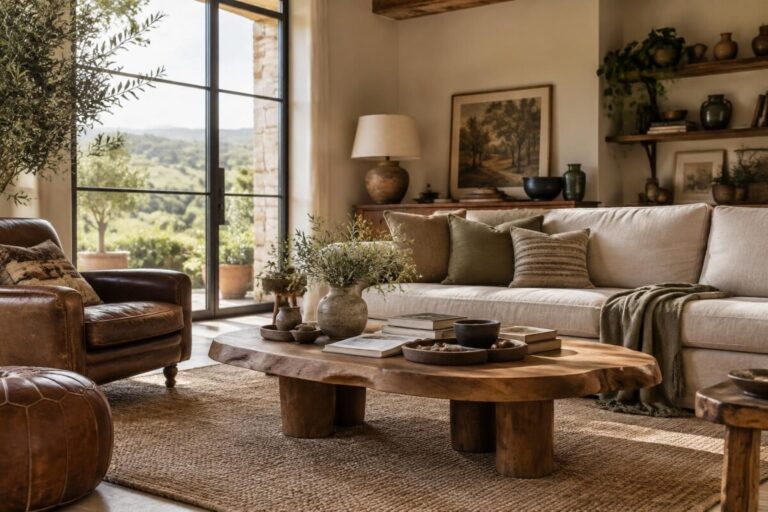
Imagine a room with a modern sofa, a rustic table, and a retro armchair. These pieces can coexist beautifully if they share a decor palette, an atmosphere, or a material. As a simple rule goes: “Every piece should have a reason to be there.”
If it’s a small space, keep the visual foundation simple and favor a few contrasting accents. If it’s a large room, you can vary the influences more, as long as you create visual echoes between the different areas.
Choose a guiding thread to create visual unity
Start by deciding what ties your choices together: a color, wood, metal, or a soft, natural atmosphere. This point of reference strengthens decor cohesion and makes contrasts easier to embrace.
In 2026, natural materials and surfaces that show their texture offer a strong foundation. Wood, for example, can balance bolder colors and work well with stone or ceramic. Color harmony matters, but balance between materials also plays an essential role.
| Element | Simple guideline | Intended effect |
|---|---|---|
| Dominant style | It takes center stage | A clear sense of the room |
| Colors | One main shade and a few accents | A palette that’s easy to tie together |
| Materials | Two or three standout materials | Added texture without visual overload |
| Anchor point | A piece of furniture, artwork, or light fixture | A focal point that guides the eye through the space |
A three-step method for harmonizing your decor
- Step 1: Take a photo of the room and notice what already draws the eye. Then choose the style or element that will remain dominant.
- Step 2: Gather images, samples, and the objects you want to keep. Look at them together in the room’s light before making any purchases.
- Step 3: Add secondary elements gradually. Repeating a color or material in two or three places is often enough to create a connection, depending on the size of the room.
A reader had paired an antique armchair with a contemporary living room, but at first the armchair seemed out of place. A cushion that picked up its color and a metal lamp then brought the two styles together.
Patterns, lighting, and proportions: the details that make all the difference
To avoid a patchwork effect, pair patterns of different scales: a large design can sit alongside a subtle print. Lighting also helps highlight textures and connect spaces; several soft light sources often create a more pleasant atmosphere than a single ceiling light.
In a small living room, a bulky piece of furniture can quickly take up all the space. Consider modular furniture and leave some areas uncluttered: a balanced interior atmosphere needs breathing room as much as it needs carefully chosen objects.
These decorating tips are a starting point, not rigid rules. Keep the combinations you like, then adjust them to suit the light, the proportions, and everyday life.
How many decorating styles can you combine?
Two or three influences can coexist if a dominant style, color, or material ties everything together.
How can you avoid a patchwork effect?
Limit the elements that draw attention, repeat a few visual cues, and test combinations at home before buying.
Do all the furniture pieces need to match?
No. Different furniture adds character; a shared color, material, or shape may be enough to tie everything together.
What should you do if the room already feels too cluttered?
Temporarily remove a few accessories, keep one focal point, and reintroduce the objects one by one to restore a sense of hierarchy.
Thanks for your interest; Olivia. P.S. I’d be delighted if you left me a comment at the end of the article.