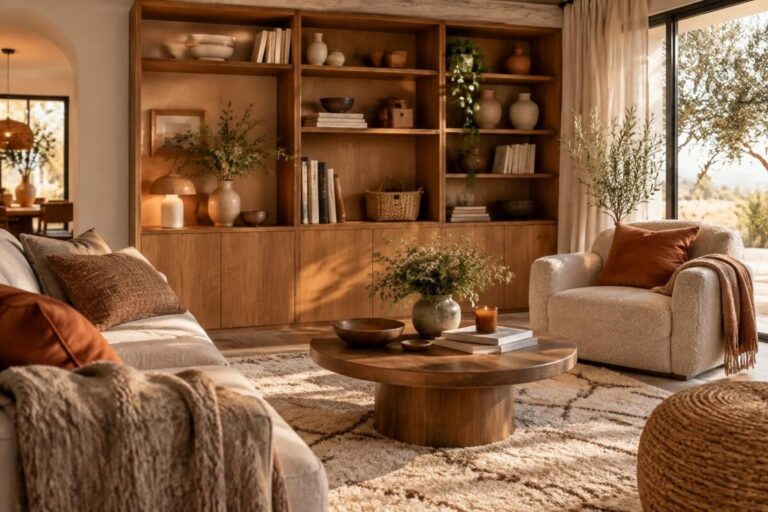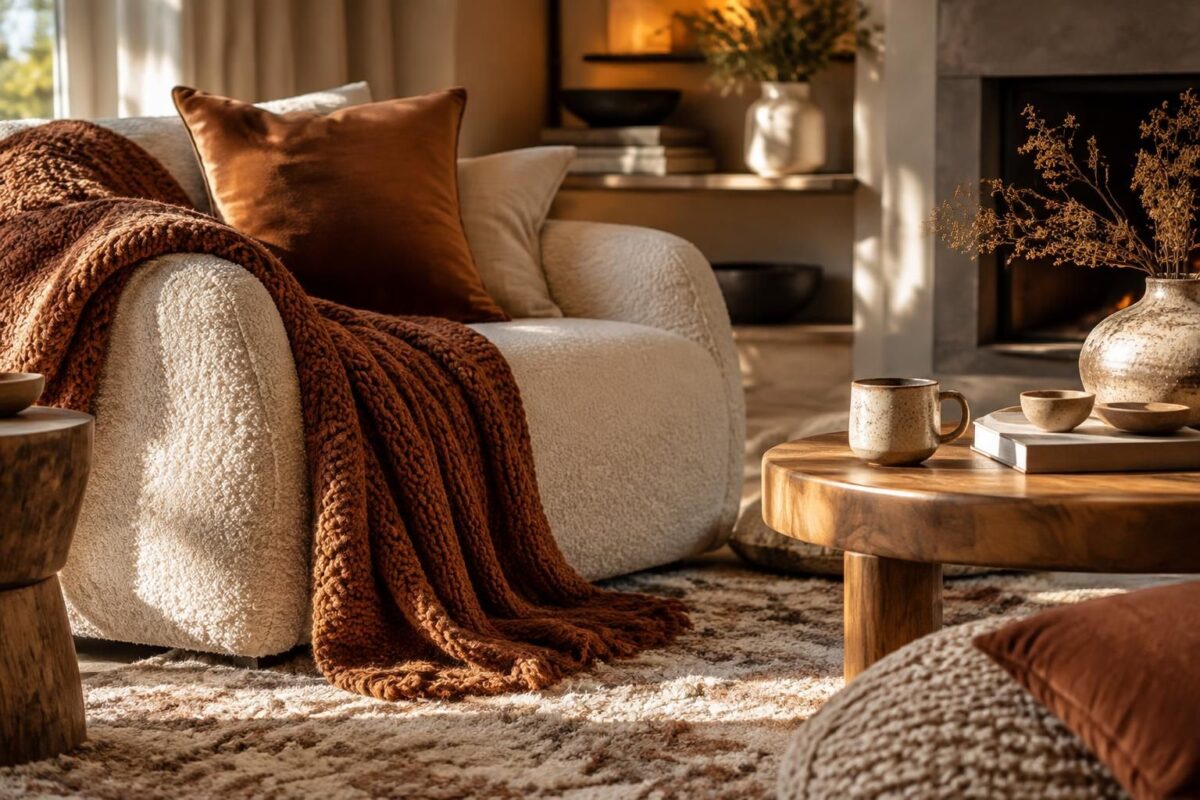
Colors & Materials: Which Materials Bring Comfort Instantly
Hello, Olivia here. The materials that instantly bring comfort are wool, velvet, soft cotton, and light wood: their enveloping textures and natural tones create a warm atmosphere. For a cocooning effect, pair them with beige, ochre, terracotta, or sage green. A few well-chosen elements are enough; you don’t need to redo the whole room. The light and materials already in your home will guide your best choices.
What you can do now
- Drape a wool or soft cotton throw over the sofa.
- Add a velvet cushion to create a tactile contrast.
- Choose an accessory in light wood or terracotta.
- Gather samples in beige, ochre, and sage green.
- Look at the shades in your home in the morning and evening before deciding.
To create a cohesive atmosphere, start with what’s already in the room: the floor, furniture, and natural light. You can also find ideas in these tips on materials that make a home feel warmer and this guide to combining colors, textures, and materials.
Comforting materials that transform the atmosphere
Wool brings an immediate feeling of warmth. As a throw, rug, or cushion, it softens the lines of a sofa and makes the living area more inviting.
Velvet catches the light and adds depth, especially in ochre, warm brown, or sage green. Soft cotton, meanwhile, is easy to live with day to day: it works well for covers, lightweight curtains, and bed linen. For a more luxurious touch, cashmere works well in small doses, for example on a throw or blanket.
Light wood warms up surfaces without making the room feel heavy. Pair it with terracotta ceramics or beige textiles to maintain a natural, bright feel.
Textures that complement one another without matching everything
A room feels more lively when materials complement one another rather than being identical. A soft cushion beside a wooden table, or a matte vase next to a slightly shiny textile, creates a pleasing contrast both to the eye and to the touch.
“You don’t change the light; you work with it.” In a dark room, matte materials and sand or cream tones help maintain a soft feel. In a very bright space, velvet or a deeper shade can balance the overall look.
Which colors pair well with soft materials?
For a soothing base, start with a dominant shade, then add one or two accent colors. Beige pairs easily with light wood, while ochre and terracotta add character without imposing an overly bold palette.
| Combination | Desired effect | Simple example |
|---|---|---|
| Beige and light wood | Brightness and softness | Cotton curtains and a small light-oak shelf |
| Sage green and wool | Calm and natural feel | Soft green throw on a neutral armchair |
| Ochre and velvet | Warmth and depth | Ochre cushion on a cream sofa |
| Terracotta and soft cotton | Artisanal, welcoming atmosphere | Ceramic vase with off-white textiles |
An easy guideline to adapt is to keep around 60% in main shades, 30% in secondary colors, and 10% in accents. This guideline varies depending on the size of the room, the light, and the furniture already there: there’s no need to follow it to the exact percentage.
A three-step method for creating a cozy retreat
- Step 1: Observe the room. Note the floor color, the furniture you want to keep, and the brightest areas. A north-facing room can feel colder; sand or honey tones often soften it.
- Step 2: Choose two materials and three shades. For example, wool and light wood with beige, sage green, and a touch of ochre. This simple limit helps avoid a scattered look.
- Step 3: Test before buying. Place the samples near the furniture and look at them at different times of day. Then repeat a material or color in two places to create a visual thread.
A small change can be enough: in a living room, a wool throw draped over a beige sofa and an ochre velvet cushion already add more depth. A decorating anecdote comes up often: a reading nook immediately feels more inviting when a cold-looking armchair is paired with a soft textile and a warm light. Comfort comes as much from touch as from visual balance.
Two quick scenarios to help you choose with confidence
If it’s a small space, favor soft cotton, light wood, and beige or cream tones to maintain a light feel. If it’s a large, slightly cold room, add wool, velvet, and a few touches of ochre or terracotta to make it feel more enveloping.
Easy mistakes to avoid
- Using lots of colors without keeping one shade in common.
- Choosing a textile without looking at it in the room’s light.
- Matching everything to the same level of softness or sheen.
- Accumulating several different woods or metals without repeating them.
Good balance comes together in small touches: one standout material, an accent color, and suitable lighting are often enough to transform the atmosphere.
Practical answers for choosing materials
Which material most easily makes a living room feel warmer?
Wool brings a cozy feeling, while velvet adds depth. A throw or a few cushions let you try these materials without changing the furniture.
Which colors go with light wood?
Beige, cream, and sage green pair easily with light wood. A small touch of ochre or terracotta adds contrast.
How can you make a bedroom more comforting without repainting?
Add soft textiles, such as a cotton blanket or a wool throw, then repeat the same color on two accessories. Curtains and warm lighting enhance the cozy effect.
Is cashmere suitable for home décor?
Yes, especially as a small touch on a throw or blanket. Its texture adds a refined feel, but wool and soft cotton are often more practical for items used every day.
Thanks for your interest; Olivia. P.S. I’d be delighted if you left me a comment at the end of the article.