Small Spaces: How to Live Better in 30 m²
Hello, it’s Olivia. In a 30 m² studio, you can live better by keeping pathways clear, creating distinct zones, and choosing furniture that serves multiple purposes. A small space doesn’t have to be uncomfortable: with a few smart choices, every square meter can be useful and inviting. The key is to organize your home around your habits before thinking about shopping or colors.
What you can do right now
- Measure the walls, windows, doors, and pathways before buying anything.
- Identify the activities you need to accommodate: sleeping, eating, working, and relaxing.
- Clear the windows and choose lightweight curtains to let in the light.
- Make use of the walls with high shelves and storage suited to your belongings.
- Keep only the furniture you truly need for everyday life on the floor.
For ideas suited to your home, you can check out this guide to designing small spaces and these ideas for creating a dining nook.
Interior layout: start with circulation
Before looking for the perfect sofa, pay attention to how you move around the room. Draw a floor plan, even a rough one, then mark the pathways between the different zones. A smooth flow often makes a home more enjoyable than a larger but cluttered room.
Leave a pathway of about 70 to 80 cm where the layout allows. Also check that doors can open without hitting furniture and that access to the bed, kitchen, and windows is easy. This first step helps you avoid purchases that block everything.
Define zones without putting up partitions
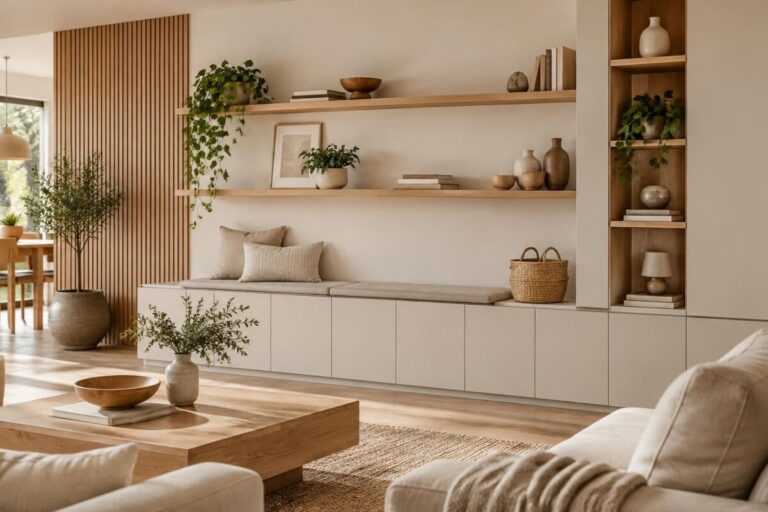
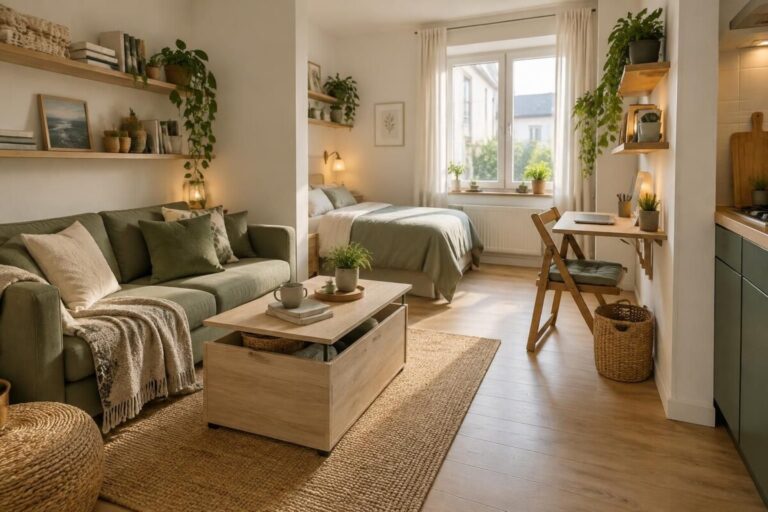
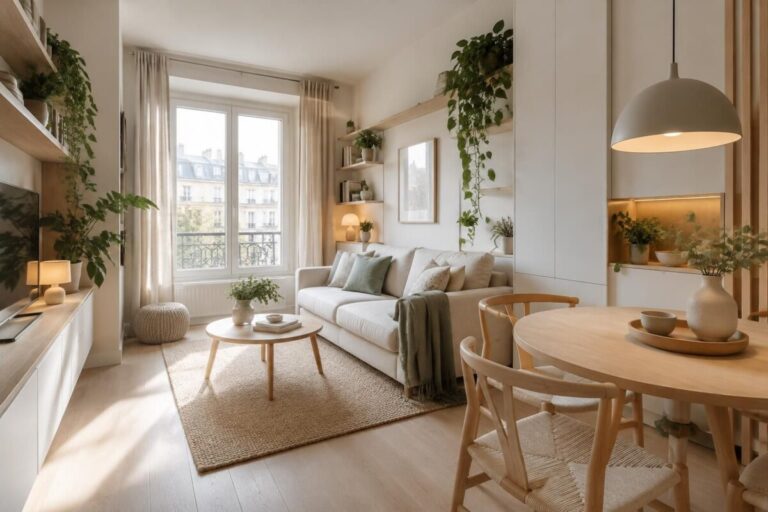
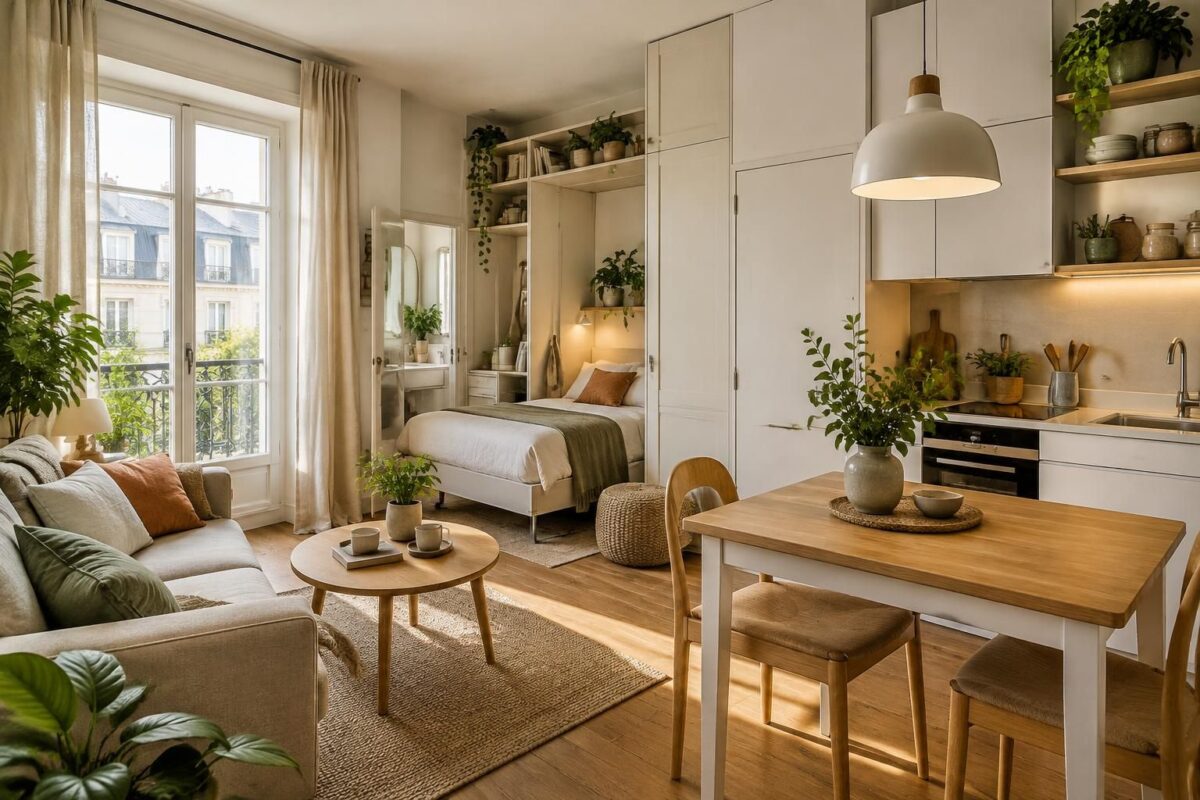
A rug can define the living area, a pendant light can help distinguish the dining nook, and an open bookcase can separate the bed from the rest of the room. This visual zoning provides cues without blocking light or making the space feel smaller.
A familiar story in small homes: a simple open shelving unit placed between the bed and sofa can transform how a studio feels, giving each activity its own place. “A well-designed room is better than a room that’s simply filled.”
Multifunctional furniture and smart storage
In a 30 m² studio, every piece of furniture has to earn its place. An extendable table accommodates meals without taking up the whole space every day; a bed with drawers stores linens; a fold-down desk can be tucked away when the workday is over. The right multifunctional furniture makes life easier without complicating everyday tasks.
Don’t choose a piece of furniture just because it’s small. A home filled with miniature furniture can feel just as cluttered as an overcrowded room. Measure first, declutter next, then choose a solution that truly suits what you want to store: smart storage is what keeps you from simply moving clutter around.
| Solution | Useful for | Things to check |
|---|---|---|
| Extendable table | Meals and guests | The space needed when extended |
| Bed with drawers | Linens and seasonal belongings | Access to the drawers around the bed |
| Fold-down wall desk | An occasional workspace | Stability and ease of use |
| Open bookcase | Storage and separating zones | Making sure light can still pass through |
Make use of height without making the room feel heavy
Walls offer valuable space savings: shelves, hooks, storage above a door, or a floor-to-ceiling wardrobe free up the floor. Put rarely used items up high and keep everyday essentials within easy reach.
To keep the room feeling light, choose a few pieces of furniture on legs rather than bulky units. The floor remains visible underneath, helping the eye perceive the room as more open.
Light and colors to make 30 m² look larger
Natural light changes how an interior feels. Clear the windows, replace heavy curtains with sheer ones, and place a mirror opposite a light source if the layout allows. These adjustments support space optimization without major renovations.
Off-whites, sand, linen, and pearl gray add brightness while still feeling warm. A slightly deeper-toned wall can also add depth, as long as you keep the palette cohesive. For successful compact decor, a few thoughtfully chosen objects are better than a collection of small items.
A kitchen and bathroom designed for everyday life
In a small kitchen, group essential tasks together: get the food, wash it, then prepare it. Well-organized drawers, wall storage, and a rolling cart can make the countertop more practical. Keep only the appliances you use often on the counter.
In a compact bathroom, a shower can free up space compared with a bathtub, depending on the layout and household needs. A narrow storage tower, wall niches, and light colors help you store things without cluttering the floor. Before renovating, check the technical constraints and budget: options vary depending on the home.
A simple three-step method
- Step 1: measure the room and identify pathways, outlets, openings, and activity zones.
- Step 2: draw several layouts and test the furniture using its actual dimensions, including when it’s open or unfolded.
- Step 3: install storage and essential furniture first, then add lighting, textiles, and decor.
If you’re renting, focus on movable furniture, rugs, and lightweight dividers. If you’re renovating, consider built-in storage in walls or alcoves, depending on what the space allows.
The details that make a small home feel more open
One large rug per zone ties the space together better than several small rugs that break it up. Also avoid covering every wall with framed pictures: a few carefully chosen pieces add character without creating clutter. Interior organization works best when every object has a specific place.
If you have a balcony, however modest, treat it as an extension of the living room. Folding or stackable furniture and plants placed up high free up the floor. Using a consistent color scheme indoors and out can also make the whole space feel larger.
How can you make a small living room look bigger without renovations?
Clear the windows, choose light colors, add a mirror opposite the light, and choose a large rug to define the living room. Furniture on legs also leaves the floor visible and makes the room feel lighter.
Which piece of furniture should you prioritize in a 30 m² studio?
Start with the piece that meets your main need: a bed with storage, a quality sofa bed, or an extendable table. Measure the available space and check the flow before buying.
Is zoning useful in a single room?
Yes. A rug, an open bookcase, or a change in color can distinguish zones without partitioning the room. These visual cues make the room easier to navigate while allowing light to pass through.
How can you avoid clutter in a small home?
Start by sorting through your belongings, then plan specific storage for the things you keep. Make use of the walls and height, and avoid buying furniture before measuring the space for it.
Thank you for your interest; Olivia P.S. I’d be delighted if you left me a comment at the end of the article.