Small Spaces: How to Furnish Without Buying Too Much
Hi, Olivia here. To furnish your space without buying too much, start by sorting through your belongings, reorganizing what you have, and adding only one truly useful multifunctional piece of furniture. In small spaces, every item should make everyday life easier without obstructing movement. A smart layout often depends more on good habits than on a big budget. Decluttering, reusing and repurposing items can already transform the room.
What you can do now
Before reaching for your credit card, measure the free areas and identify what’s really missing. For more space-saving ideas, check out this guide to furnishing a small space and these tips for living better in 30 m².
- Remove items you no longer use and donate, sell or recycle anything that could be useful elsewhere.
- Move furniture against the walls to free up the center of the room.
- Make use of the walls with hooks or shelves you already have.
- Repurpose an existing piece of furniture: a sturdy crate can become a bedside table.
- Make a note of what you still need before considering a purchase.
Furnishing a small space without accumulating furniture
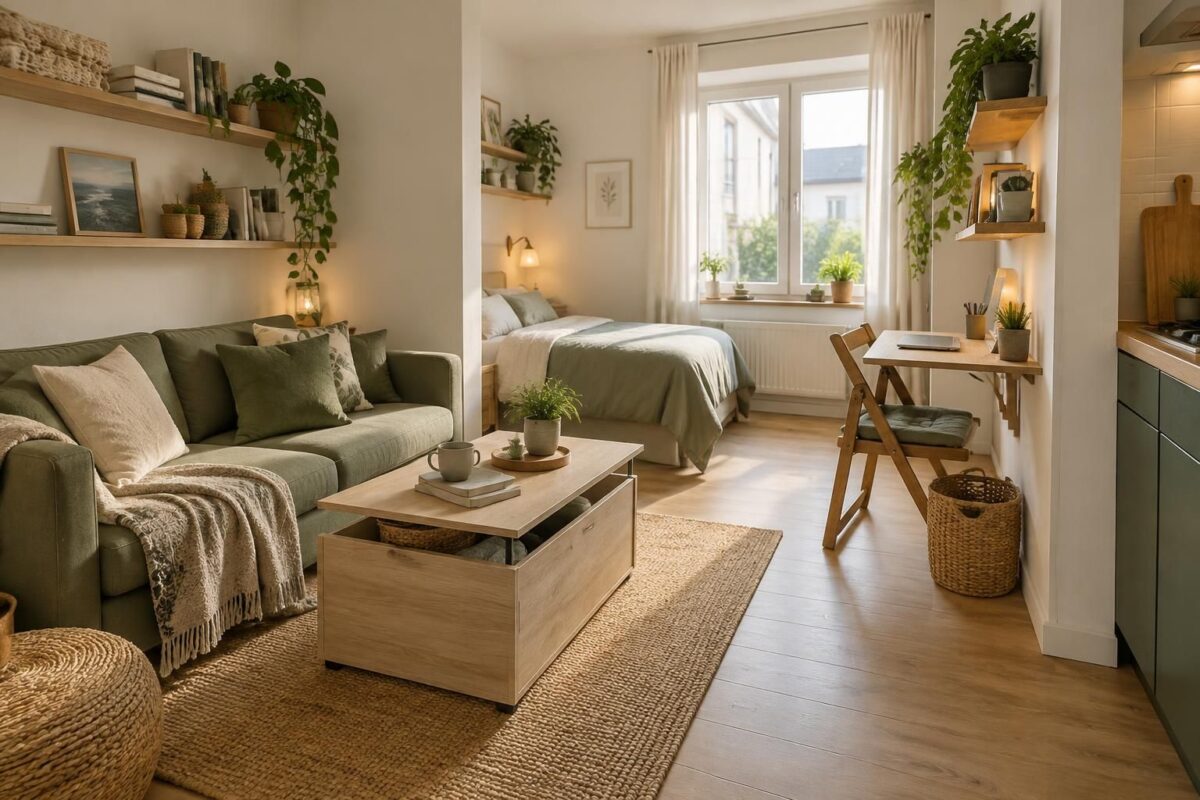
Start by observing how you use the room. If you rarely use the table, you could replace it with a folding shelf or a console table that’s already elsewhere in your home. Multifunctional furniture is useful when it meets two regular needs, not just because it promises to save space.
Smart storage is often found in overlooked spaces: under the bed, above a door or in a corner. Repurposed boxes and baskets let you group your belongings without buying a whole set of new storage units. “You can make more room by making space.”
Choosing between reorganizing and a targeted purchase
If clutter is the main problem, start by decluttering and improving your storage organization. If you’re really missing something essential, such as a place to sleep or a dining area, first look for a secondhand, foldable or convertible solution.
One reader had placed her books in three small pieces of furniture that cluttered the walkway. By gathering them on a shelf already available above her desk, she cleared the floor and made room for a reading nook. Sometimes the best purchase is the one you avoid.
A three-step method for making the most of every square foot
- Step 1: Sort. Group items by use and set aside anything you haven’t used in a long time. Donate or sell anything that’s still in good condition.
- Step 2: Reorganize. Keep everyday items within reach, make use of vertical space and keep walkways clear. Use less accessible areas for seasonal items.
- Step 3: Fill the gaps. Wait a few days, then identify what’s genuinely missing. If you still need to buy something, take measurements and choose a durable, compact piece that fits.
To visualize your options before moving your furniture, sketch a quick floor plan on paper. Allow for comfortable walkways and avoid adding lots of small decorative objects: a simple color palette and a few warm textures often create a more harmonious look.
Which solutions should you prioritize for your budget?
Budget-friendly decorating starts with what you already own. Repurposing jars, baskets or boards can come in handy, while reusing furniture lets you try a new layout without investing in anything new.
| Need | Solution without a major purchase | Buy only if necessary |
|---|---|---|
| More storage | Repurposed boxes, an existing shelf, under-bed storage | A suitable wall-mounted unit |
| Dining area | A relocated table or a tray placed on a sturdy piece of furniture | A drop-leaf or extendable table |
| Work area | A console table or the end of a table used at set times | A folding desk if you need it every day |
| A more open room | Sorting, clear walkways, rearranged furniture | A shallower piece of furniture, if the walkway is still blocked |
Before buying, also check whether a piece of furniture could be moved to another room or used for a different purpose. An unused chair can become a side table, and a sturdy crate can hold blankets while doubling as a seat. The key is to maintain an easy-to-manage organization system.
Color and light without renovating
Light curtains, clear surfaces and a mirror placed opposite a window can make a room feel brighter. There’s no need to repaint your entire home: start by coordinating your textiles and grouping items by color to create a calmer look.
Watch this video for more practical ideas for furnishing small spaces.
Practical questions about furnishing on a budget
How can I make more room without buying furniture?
Sort through items you no longer use, make use of the walls, store things under the bed and move furniture to clear the walkways. Reusing items you already have can also help create new storage.
Which piece of furniture should I buy first for a small home?
Start by choosing something that addresses the need causing you the most trouble. A drop-leaf table, a bed with storage or a multifunctional piece of furniture can be useful, provided you check the dimensions and how often you’ll use it.
How can I keep storage from making the room feel crowded?
Choose a few closed or grouped storage solutions, keep the floor clear and reserve open shelves for useful or decorative items. Regularly reassess what’s accumulating.
Thank you for your interest; Olivia. P.S. I’d be delighted if you left me a comment at the end of the article.