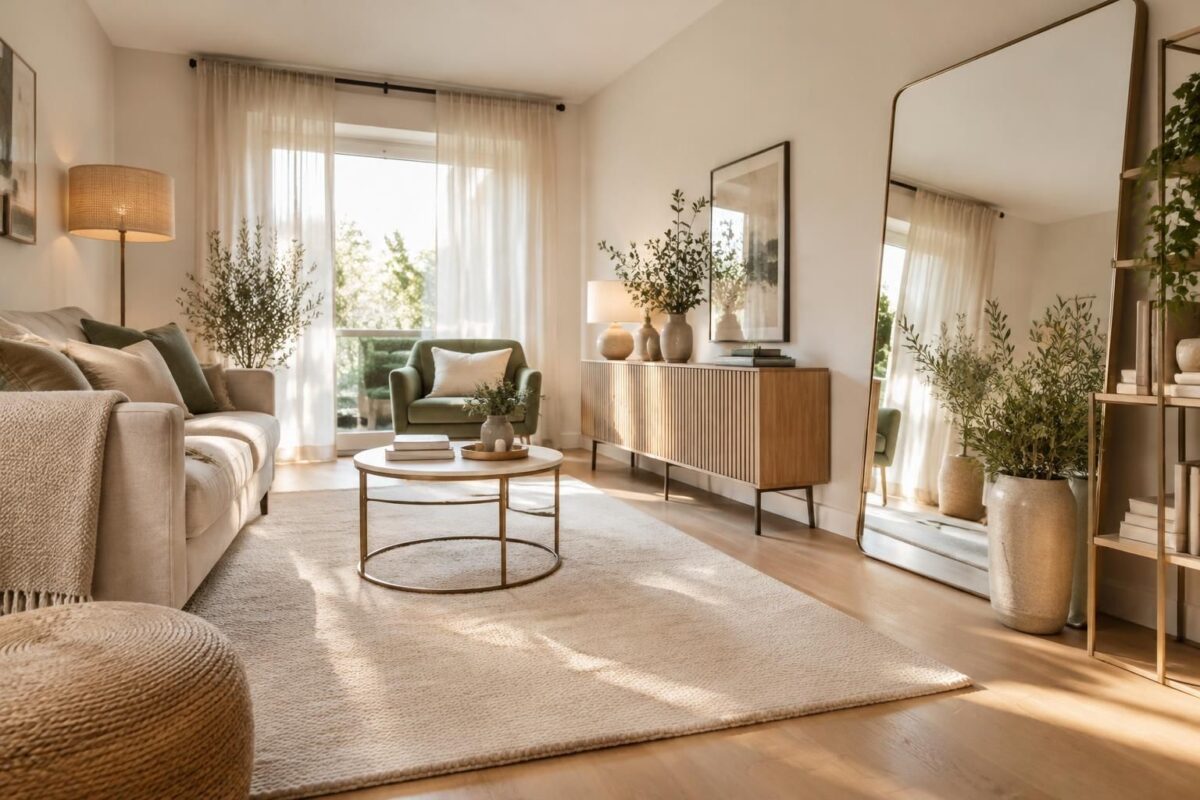
Colors & materials: how to make a space feel bigger without repainting everything
Hello, this is Olivia. To make a room feel bigger without repainting everything, unify the walls and woodwork, add a mirror opposite the window, and reserve color for one strategically chosen wall. The right colors and materials can change how spacious a room feels without touching the walls. The goal isn’t to turn a small room into a large living room, but to create more light and a smoother visual flow. My article guides you through simple steps tailored to your space.
What you can do right now
- Place a mirror opposite a window or a light source.
- Paint doors, baseboards, and walls in similar shades to reduce visual breaks.
- Choose a light, low-saturation color that suits the room’s exposure.
- Test a sample on the wall and observe it in the morning, during the day, and in the evening.
- Keep furniture and textures near walkways light to clear the sightline.
For more ideas that don’t involve major renovations, check out these tips for making a room feel bigger with a well-planned layout and these suggestions for avoiding colors and materials that make a space feel smaller.
Choosing colors and materials that open up a space
A light shade generally reflects more light, but pure white isn’t an absolute rule. In a north-facing room, greige or warm white can help prevent a cold atmosphere. In a sunny room, a slightly pink or sandy off-white adds softness without making the space feel heavy.
Low-saturation pastels, such as sky blue or seafoam green, create a sense of distance. By contrast, a bold color draws the eye: used on just one wall, it can define the room and guide the eye toward a window or a beautiful piece of furniture. Color matters just as much as where you put it.
Materials also contribute to the feeling of space. Lightweight curtains, a low-contrast rug, and a few satin-finish surfaces help light travel through a room, while thick textures and dark furniture can absorb it. “Light shapes a space as much as walls do”—a simple idea to keep in mind when choosing your decor.
Adapt the palette to the natural light
Test the paint on a small section of the wall before making a decision. A shade can look warmer in the sun and grayer in the evening, depending on the room’s exposure and the lighting used. Observing a sample at different times of day helps you avoid unpleasant surprises.
If the room is dark, go for a light greige or a soft pastel and add mirrors to multiply reflections. If it’s a long hallway, keep the side walls light and consider choosing a slightly more pronounced cool shade at the far end to create perspective.
Painting without redoing everything: three steps that change how a room feels
- Step 1: identify what you want to make feel bigger. To create a sense of height, look at the ceiling. To add depth, focus on the far wall. To open up a living room, think about how it connects to the adjoining room.
- Step 2: reduce visual breaks. Use similar colors on the doors, baseboards, and walls. If you paint the upper part of the wall, extend the ceiling color down by about 10 to 20 cm, depending on the height and layout.
- Step 3: add a reflection or a lightweight material. Hang a mirror opposite a window, clear the floor, and choose textiles that don’t block the light.
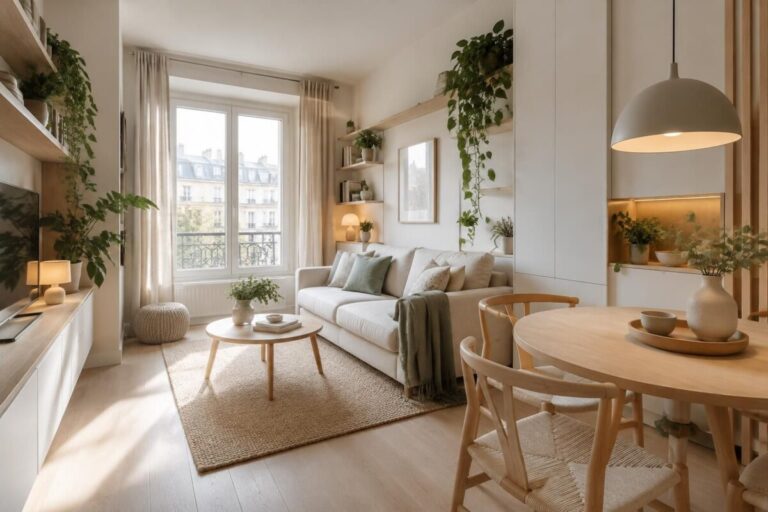
In a small living room, a range of warm tones creates a welcoming atmosphere while minimizing visual boundaries. A common anecdote: after painting her baseboards the same color as her walls, a friend found her entryway felt more open without moving a single piece of furniture. The change was subtle, but her eye no longer stopped at every edge.
Quick tips for different rooms
| Room or layout | Color and material | Desired effect |
|---|---|---|
| Small bedroom | Soft pastel on the walls, light ceiling | Create a bright, restful cocoon |
| Narrow hallway | Light side walls, slightly cooler shade at the far end | Create a sense of perspective |
| Cramped living room | Warm neutral, one well-lit accent wall | Define the space without breaking it up |
| Room with little natural light | Satin finish and a mirror opposite a light source | Help reflections travel through the room |
Mistakes that can make a room feel smaller
Using several bold colors on multiple walls creates boundaries that the eye quickly picks up. In a small room, it’s better to stick to a limited palette, with one dominant shade and one accent shade. A balanced contrast gives the eye room to breathe.
Also avoid choosing a dark paint for an entire room with little natural light. A deep color can look beautiful on a single wall, but it absorbs more light when it covers every surface. Finally, a matte finish can feel less bright in a dark hallway: a satin finish may work better, depending on the condition of the wall and the effect you want.
To create a sense of height, you can extend the ceiling color onto the upper part of the walls. This transition softens the dividing line and often makes the space feel more open. The important thing is to adapt the approach to the layout rather than follow a one-size-fits-all rule.
Video: make a room look bigger with color
This video expands on these ideas with visual tips for choosing shades and arranging the space without major renovations.
Frequently asked questions about colors and materials that make a room feel bigger
Which color makes a room look the biggest?
There is no ideal shade for every interior. A light, low-saturation color, such as greige, warm white, or a soft pastel, often works well if the shade is suited to the room’s light.
Do you have to repaint all the walls to make a room look bigger?
No. You can focus on a single wall, the woodwork, or the upper part of the wall, then add a mirror opposite a window and materials that let light travel through the room.
Is white always the best choice?
No. In a room with little natural light, a white that is too cool can look gray. Light greige or warm white often creates a more welcoming result.
How can you make a narrow hallway look bigger?
Keep the side walls light, limit contrasts, and place a mirror if it works with the traffic flow. A slightly cooler shade at the far end can enhance the sense of depth.
Thank you for your interest; Olivia P.S. I’d be delighted if you left me a comment at the end of the article.